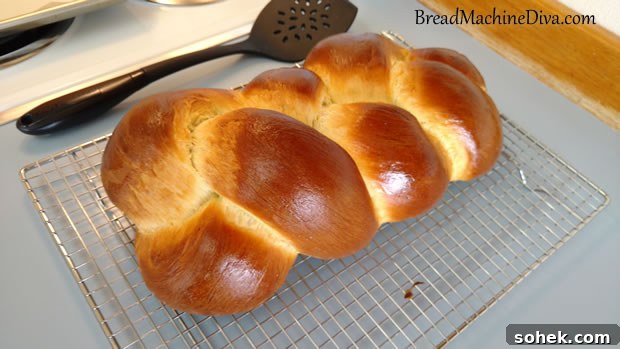
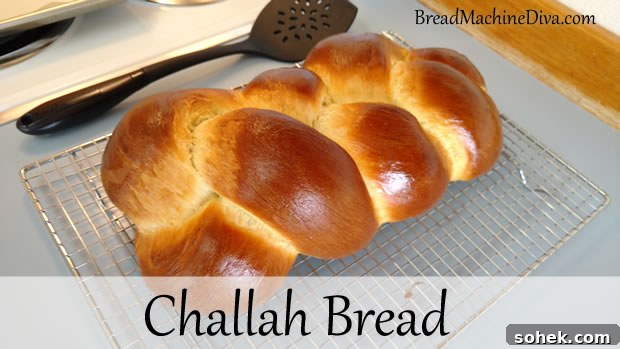
Try this bread machine challah recipe — a true crowd-pleaser. This elegant braided loaf makes a statement, and using your bread machine simplifies the process so you can enjoy classic challah with less fuss.
Updated December 10, 2023 – Originally posted November 24, 2020
Featured Comment
Unbelievable! I’m actually shocked at how good it came out. I’m a total baking amateur and got tagged to bring the challah to a Hanukkah party tomorrow. I tried a similar recipe with the mixer, total fail. Then, I remembered I had a bread maker! I dusted it off and used the similar recipe. It was better, but not great. So, I found your bread machine recipe, and it came out amazing. My family actually can’t believe I made it, and it was really easy. Thank you so much! ~ Hannah
What is Challah Bread?
Challah is a slightly sweet, tender enriched bread commonly used in Jewish cuisine. Traditionally braided, it’s enjoyed on many Jewish holidays (except Passover) and special occasions.
The bread’s pale yellow hue comes from the generous use of eggs, which also add richness and a soft crumb.
Pronunciation tip: the “c” is silent — say “haa-luh.”
Small Warning
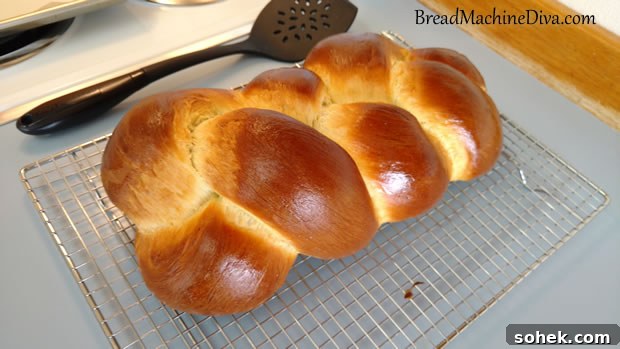
If you’re tempted to skip the braid and bake this as a single loaf, be cautious. I tried that and ended up with a very tall, compact loaf. Braiding helps the dough spread and bake more evenly.
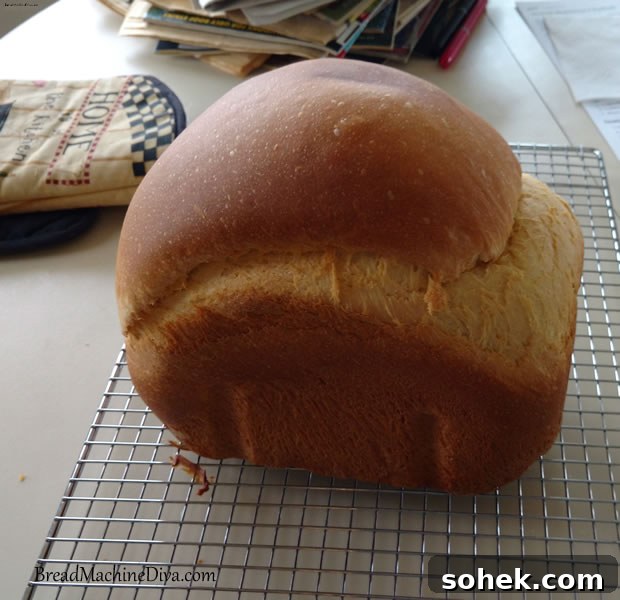
This loaf rose very tall — almost as tall as it was long — so I recommend sticking with the braid. I may develop a loaf-specific variation in the future.
How to Make Challah Bread
Makes one two-pound loaf. Use the dough setting on your bread machine.
Follow your bread machine’s instructions for ingredient order (many machines call for liquids first). Use the dough cycle so the machine mixes and gives the first rise.
Check the dough after five to ten minutes of kneading. You want a smooth, round ball. If the dough is slightly wet, that’s fine — it will handle better with a light dusting of flour. If it’s too dry, add liquid a teaspoon at a time; if too wet, add flour a tablespoon at a time until it comes together.
I’ve had the dough sometimes form a perfect ball and other times come close but remain a bit sticky. Either way, transfer the dough to a lightly floured board when the machine finishes.
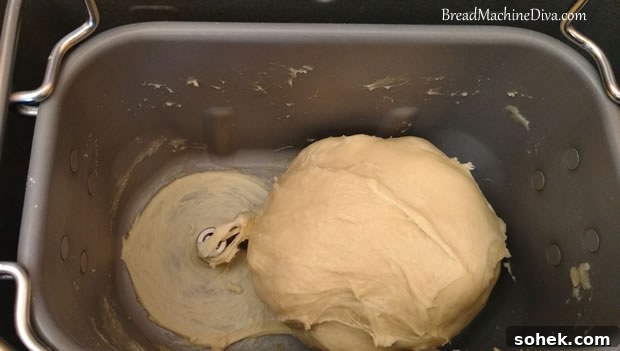
The dough will be sticky — a bench scraper is helpful for handling and dividing it.
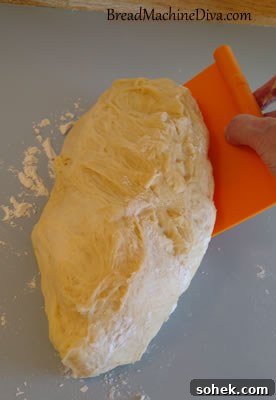
Divide the dough into three equal pieces. Shape each into a ball and place them on a parchment-lined baking sheet. Cover with a clean, lightweight kitchen towel and rest for 10 minutes.
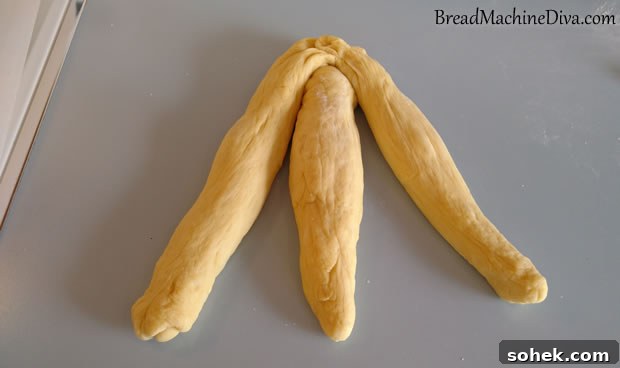
After resting, roll each ball into a rope. Mine were about 16 inches long; longer ropes give a longer, lower-profile braid.
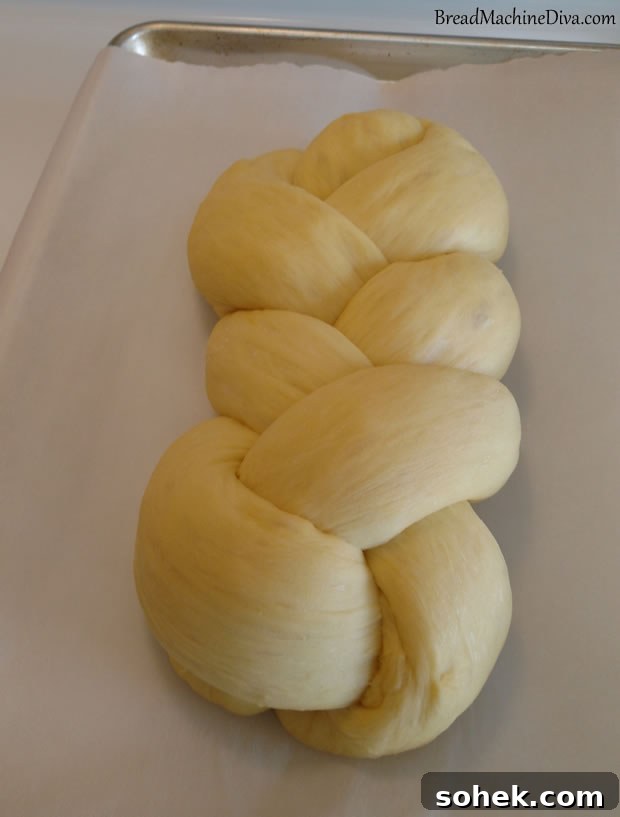
Pinch the three ropes together at the top and braid like hair: move the right strand over the center so it becomes the new center, then move the left over the center. Continue until you reach the ends, then tuck them under.
Transfer the braided loaf to a greased or parchment-lined baking sheet. Cover with a towel and let it rise for about one hour, until puffy.
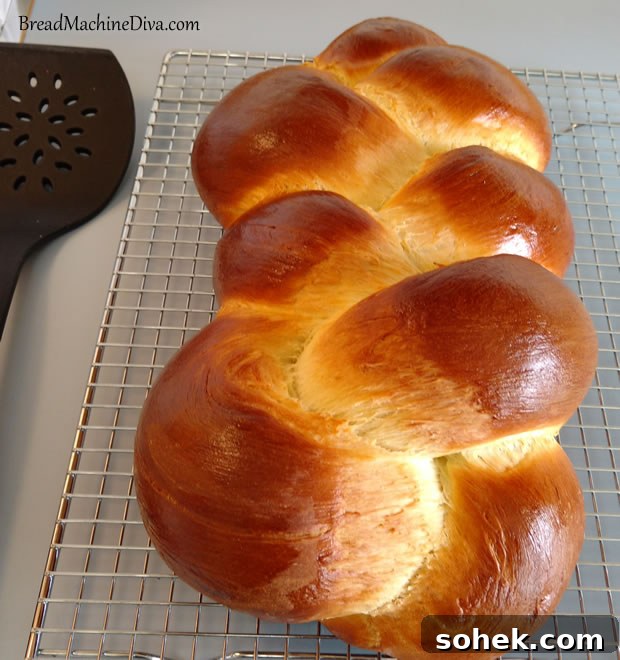
Remove the towel and brush the loaf with the egg wash glaze (recipe below). Bake in a 350°F oven for 30–35 minutes. If the crust browns too quickly, tent with foil for the last 10–15 minutes.
Let the bread cool slightly before slicing so the crumb sets. Fresh challah keeps well for a couple of days at room temperature when wrapped; it also freezes beautifully.
Challah Bread Recipe
Yields one two-pound loaf. Use the dough setting.
Ingredients for the bread:
- 1/2 cup water (118 ml)
- 3 large eggs, beaten
- 1/4 cup canola oil (59 ml)
- 1/4 cup sugar (50 g)
- 1 teaspoon salt
- 3 1/2 cups bread flour (437.5 g)
- 2 teaspoons active dry yeast
Egg Wash Glaze
- 1 egg yolk
- 1 tablespoon water
- Pinch of salt
Bread Machine Challah
Ingredients
Challah Bread
- 1/2 cup water (118.3 ml)
- 3 large eggs, beaten
- 1/4 cup canola oil (59.1 ml)
- 1/4 cup sugar (50 g)
- 1 teaspoon salt
- 3 1/2 cups bread flour (437.5 g)
- 2 teaspoons active dry yeast
Egg Wash Glaze
- 1 egg yolk
- 1 Tablespoon water
- Pinch of salt
Instructions
- This recipe is for a two-pound machine. Use the dough setting.
- Follow your bread machine’s instructions for the order of ingredients. Many machines take liquids first; then add dry ingredients and yeast last. Start the dough cycle.
- After 5–10 minutes of kneading, check the dough. Aim for a smooth, round ball. If it’s slightly wet that’s okay; if it’s too dry add liquid a teaspoon at a time; if too wet, add flour a tablespoon at a time.
- When the dough cycle finishes, turn the dough out onto a lightly floured board. The dough will be sticky; a bench scraper helps.
- Divide into three equal pieces, shape into balls, and place on a parchment-lined baking sheet. Cover with a clean, lightweight towel and rest 10 minutes.
- Roll each piece into a rope (about 16 inches or longer). Pinch the three ropes together at the top and braid: right over center, left over center, repeat to the end, then tuck the ends underneath.
- Transfer the braid to a greased or parchment-lined baking sheet. Cover and let rise about 1 hour, until puffy.
- Brush with the egg wash (yolk + 1 Tbsp water + pinch of salt).
- Bake at 350°F for 30–35 minutes. If the crust browns too fast, tent with foil for the last 10–15 minutes.
Notes
This recipe is designed for a two-pound bread machine. Use the dough setting.
Recipe testing was done using US customary measurements; metric values are provided as conversions.
All information is intended for general informational purposes. Nutritional and other details are estimates.