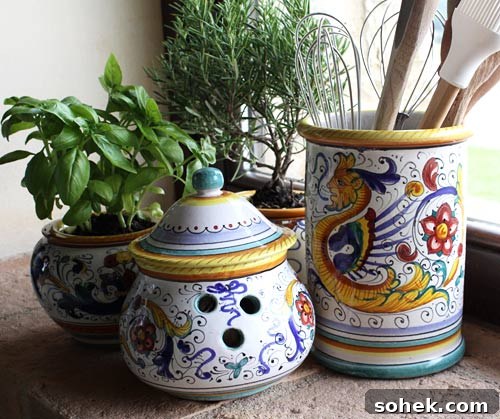
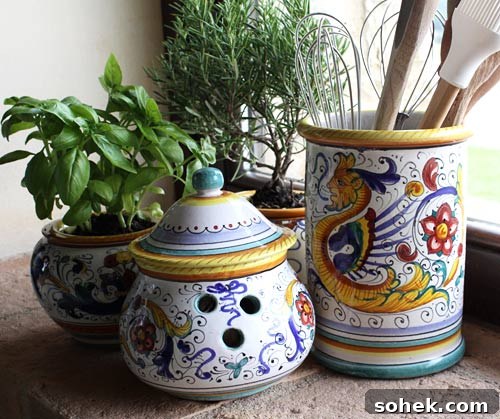
I love Italian ceramics. I’ve collected pieces from Sicily to Liguria, but my favorite place to shop for maiolica—also spelled majolica—is Deruta, a small Umbrian town less than 15 minutes from our farmhouses. Repeated visits to Deruta played a large part in our falling in love with this part of Umbria.
Maiolica refers to brightly glazed, hand-decorated pottery produced in several Italian centers such as Faenza, Orvieto, Castelli, and Caltagirone in Sicily. Yet many collectors consider Deruta the heart of Italian maiolica. About 250 workshops in Deruta still produce colorful ceramics that are shipped worldwide. I can’t count every piece we own, but we treasure each one, from large outdoor pots to tiny hand-painted espresso cups.
Deruta lies less than 20 kilometers from Perugia and might be just another charming hill town—home to a handful of notable works and the Romanesque-Gothic church of San Francesco with its 14th-century frescoes—if not for its long ceramic tradition. The town has been renowned for ceramics for centuries. Although local clay once supported the industry, that supply has been depleted; most artisans now source clay from Tuscany, especially around Sansepolcro.
Ceramics remain Deruta’s calling card, drawing visitors who browse the dozens of small shops along cobbled streets above the town and the larger factories that line Via Tiburina at the base of town. For those interested in the craft itself, Deruta offers a regional ceramics museum and a school where amateurs and professionals alike can learn traditional techniques.
Through my website I met Manuela, who with her partner Tiziana runs thatsArte.com. Their company offers fine Italian ceramics from Tuscany, Sicily, Gubbio and Deruta. ThatsArte’s catalogue is extensive and they ship to the United States, offering free shipping on larger orders. If you can’t travel to Italy, buying from thatsArte is a convenient way to bring authentic Italian maiolica into your home.
On my last trip to Umbria I met Manuela for coffee. She recommended visiting the Fima factory in Deruta, and I followed her advice on a later shopping trip. Fima Ceramics is a small family-run company founded more than 40 years ago. They respect traditional techniques while applying creative approaches to majolica. Their well-known patterns—such as Raffaellesco, Ricco Deruta and Arabesco—reflect both tradition and innovation. I later learned Fima ships many pieces to retailers in the United States.
Michelle, the owner, welcomed us to the shop and insisted on showing us the factory. Fima has a single master potter, Massimo, who has been with the company for decades—about 37 years by the time we visited. He throws nearly all of the greenware freehand, apart from a few items made from molds. We watched him form eight identical jugs in minutes, each perfectly matched in shape and proportion. It was a powerful demonstration of skill and experience.
Michelle then showed us the kilns and explained the full production process, from a lump of clay to a finished piece. We also visited the paint shop, where ten artists plus a master hand-paint every item. Michelle enjoys taking customers on factory tours so they understand the labor and craftsmanship behind each piece. We have returned to Fima many times and brought numerous guests, all of whom have been pleased with their purchases.
Fima also accepts custom commissions. They made a personalized kitchen clock for us and are currently crafting a bathroom mirror framed with Deruta tiles. Michelle’s passion for his work is contagious; hearing him describe the craft makes it easy to appreciate what goes into each object. If you visit Deruta, a stop at Fima is well worth your time.
I highly recommend exploring thatsArte’s website and mentioning Manuela or Tiziana if you contact them.
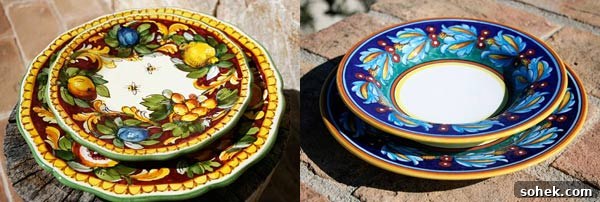
Two Sets Of Plates From ThatsArte.com
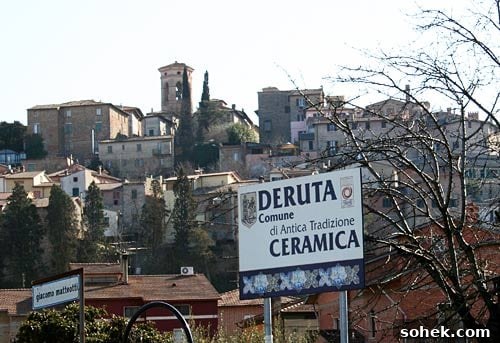
The Town Of Deruta
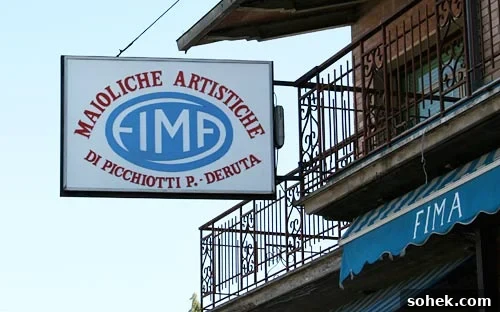
The Fima Shop & Factory
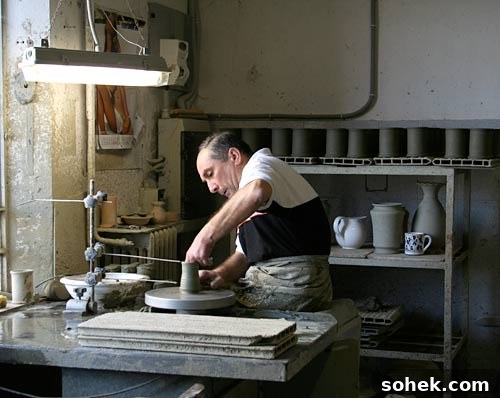
Massimo The Potter Hard At Work
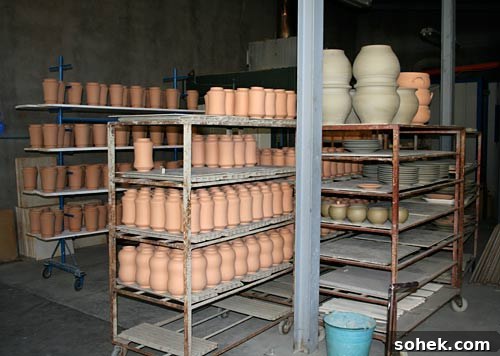
The Greenware Outside The Ovens
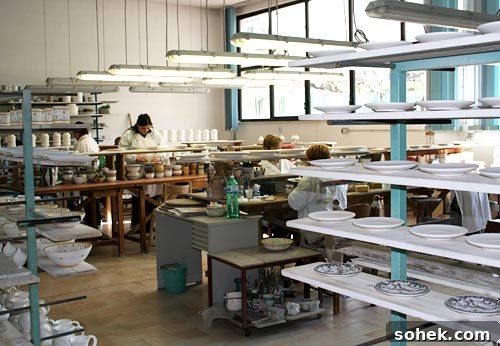
The Paint Shop
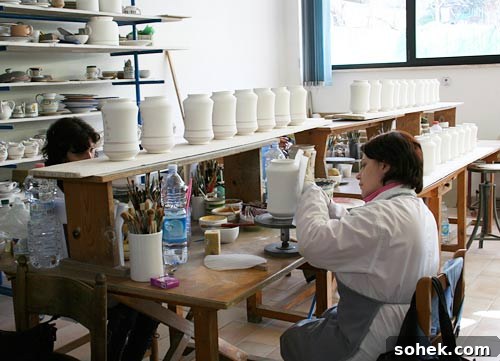
The Artists Hand Painting The Ceramics
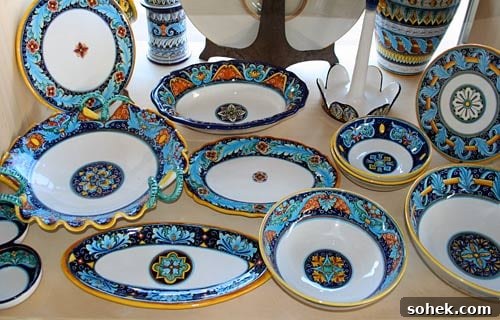
A Selection Of Ceramics On The Shelves At Fima
Deborah Mele
June 2009