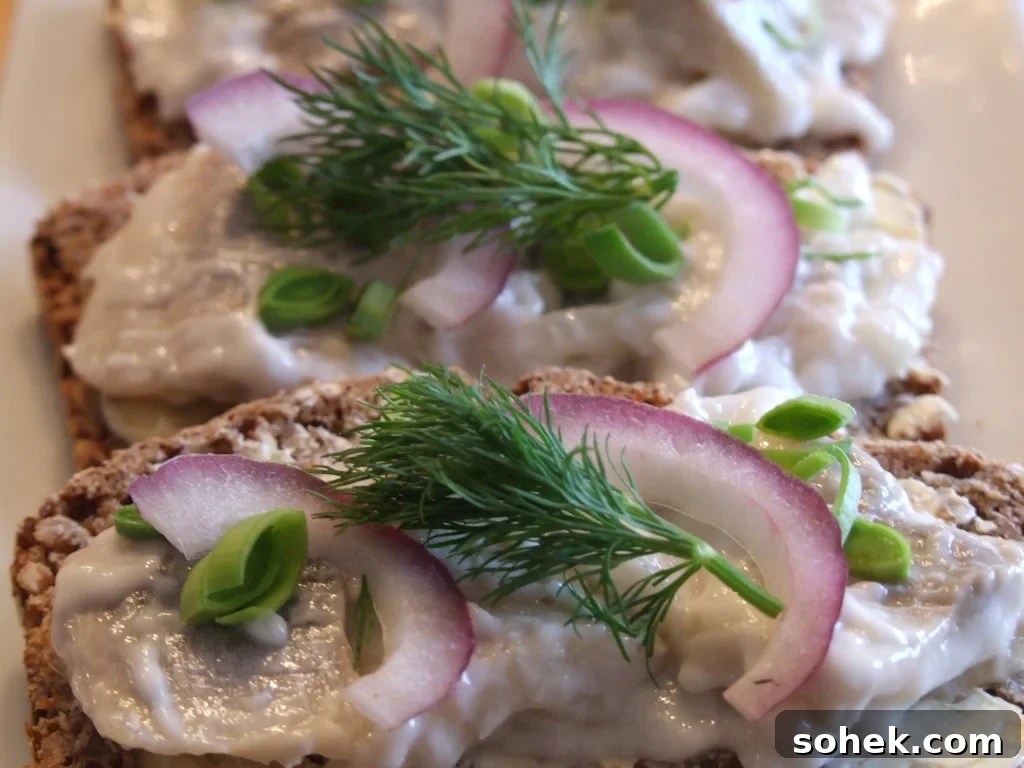
Smørrebrød literally means “butter and bread” in Danish (smør og brød) and refers to the classic Danish open-faced sandwich. In Copenhagen and across Denmark, shop windows often display carefully arranged smørrebrød, reflecting its role as a beloved and everyday part of Danish food culture. The foundation for authentic smørrebrød is rugbrød, a dense, dark Danish sourdough rye bread. Rugbrød’s hearty texture and tangy flavor make it ideal for holding rich toppings while balancing strong flavors.
CC Image courtesy of Nillerdk on Wikipedia
Traditional smørrebrød toppings vary widely and often showcase local ingredients and seasonality. Popular choices include pickled herring, cured and smoked salmon, liver pâté, boiled eggs, a variety of cheeses, cured meats and sausages, and fresh or pickled vegetables. Many servings are finished with garnishes such as dill, red onion, capers or fish roe. Because these sandwiches are open-faced rather than stacked, they are typically eaten with a fork and knife, allowing diners to enjoy each element’s texture and flavor.
There is room for creativity when assembling smørrebrød, and variations can be adapted to personal taste and available ingredients. One simple and satisfying version pairs rugbrød with a smear of good butter, spoonfuls of creamed herring, and fresh accents: thinly sliced red onion, chopped baby leeks, and a small sprig of fennel or dill for brightness. The rye’s sourdough tang complements the richness of the herring and cream, while the onion and leeks add crunch and a sharp, aromatic contrast without overwhelming the other flavors.
Smørrebrød also lends itself to social and seasonal dining. In Denmark, these open sandwiches are enjoyed at lunch, at festive gatherings, and as part of traditional meals. They pair well with clear, savory spirits such as aquavit, which traditionally accompanies many Nordic dishes; the spirit’s herbal notes can enhance pickled and smoked toppings. When experimenting at home, try balancing textures—creamy, crunchy, firm—and combining salty, sour and fresh ingredients to achieve the characteristic harmony of a great smørrebrød.
Whether you choose a classic combination or invent your own, start with a high-quality rugbrød and thoughtful garnishes. Respect the balance of flavors and present the sandwich attractively—part of the appeal of smørrebrød is its visual charm as much as its taste. With a few simple ingredients and attention to balance, you can recreate a genuine taste of Danish culinary tradition at home.