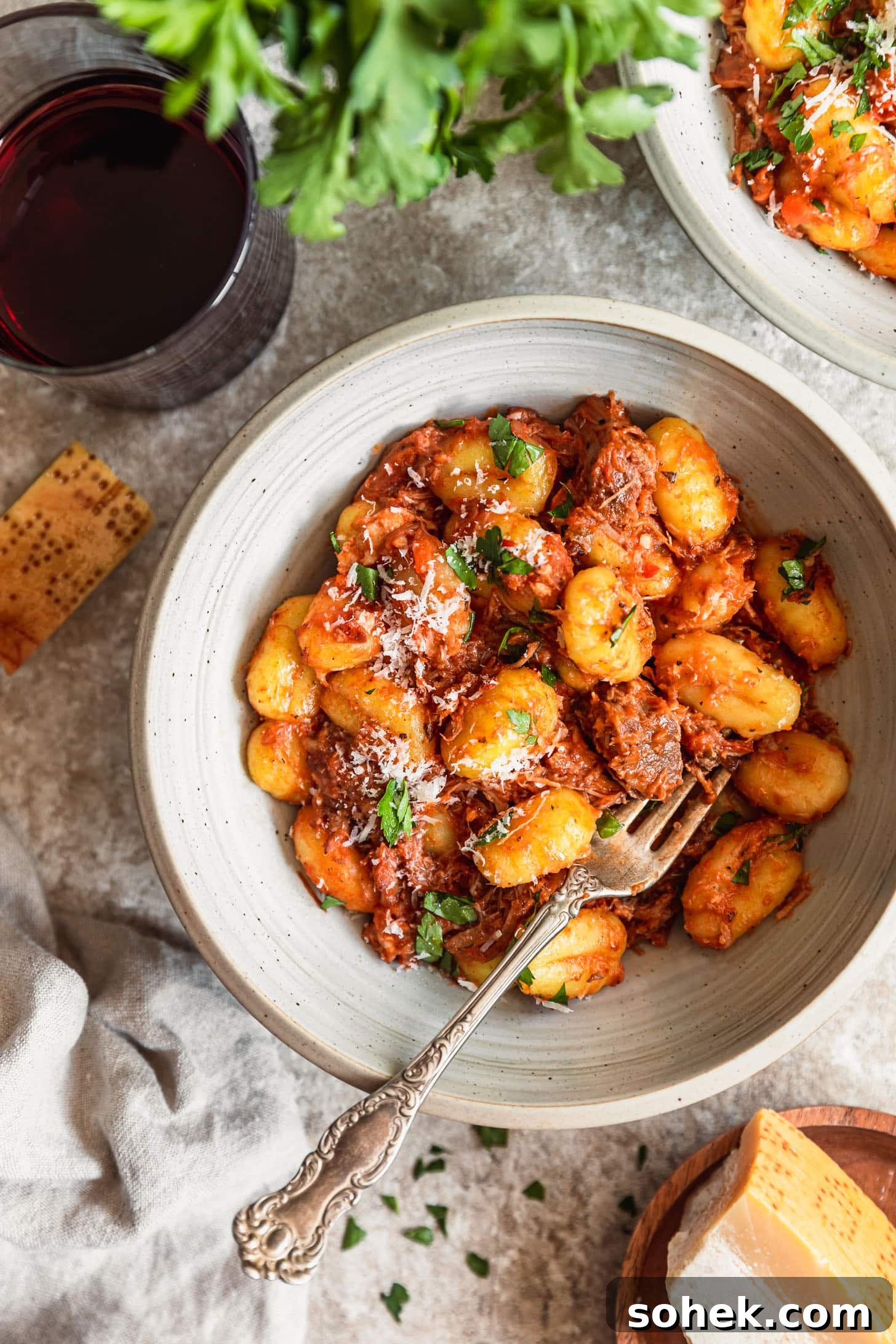
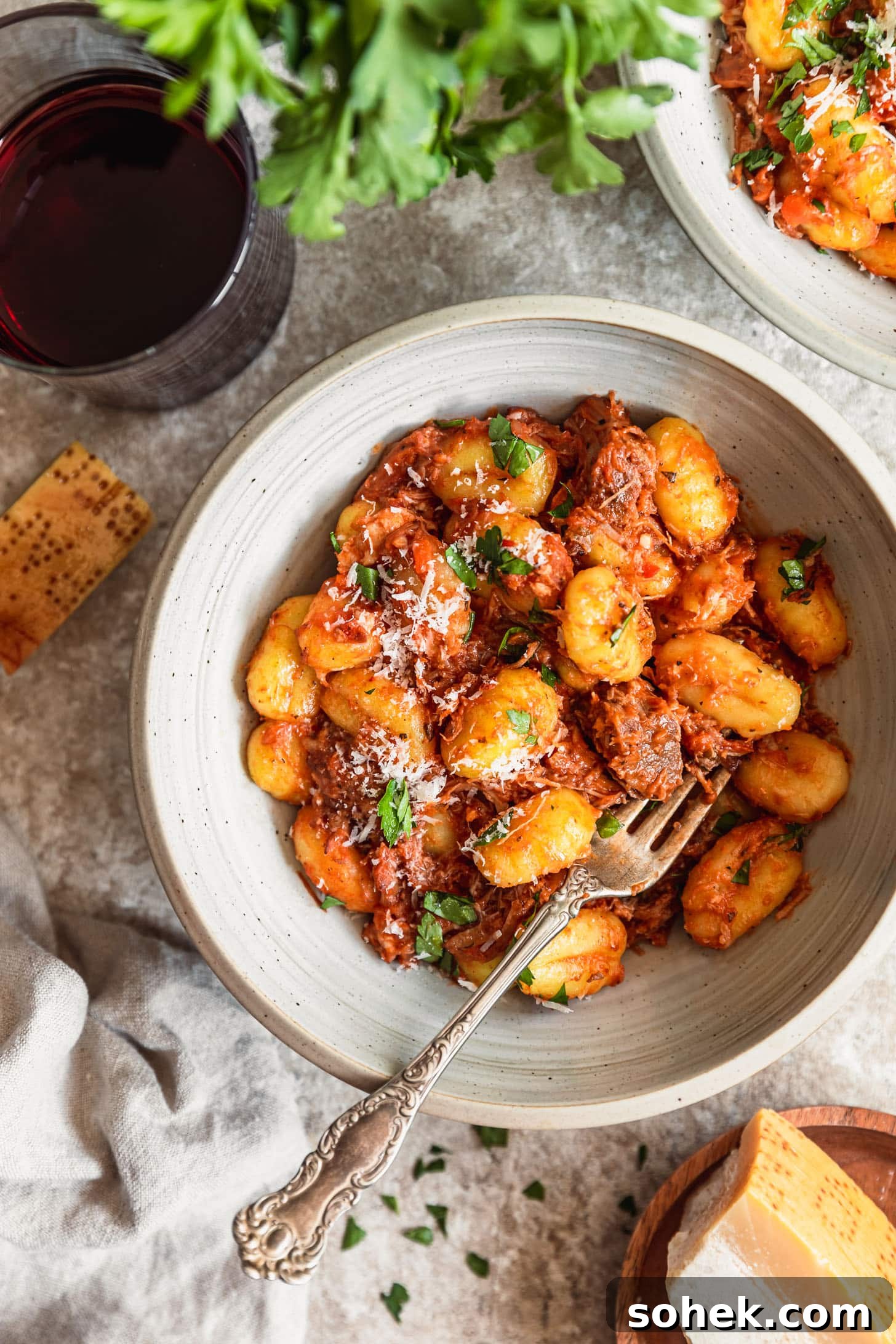
This braised pork ragù with gnocchi is tender, savory, and the ideal meal for a cozy night at home. Simple to prepare yet impressive to serve, it’s a favorite for dinner parties, holidays, or slow Sunday meals. Red wine–braised pork shoulder, fresh herbs, and plenty of Parmesan combine with pillowy potato gnocchi for a comforting, crowd-pleasing dish.
This post is sponsored by Chairman’s Reserve® Meats. All opinions are my own.
If food is your love language, this recipe speaks it fluently: pasta, long braises, and hands-off cooking that yields rich results. It’s the kind of meal meant to be eaten around a table with friends, a shared bottle of wine, and easy conversation.
My repertoire of dinner-party hits includes dishes like spicy bucatini carbonara and shallot-forward bucatini cacio e pepe, but this ragù has climbed to the top of the list. After learning ragù in culinary school, I fell for its slow, savory development of flavor. This gnocchi al ragù is cozy and decadent, with meat that melts into the sauce.
Ragù is an Italian meat sauce traditionally made with beef, pork, or a blend of meats. It starts with soffritto—onion, carrot, and celery—then adds garlic, herbs, wine, tomatoes, and a splash of milk to balance acidity. Ragù is a broad category; bolognese is one regional ragù from Bologna, Italy.
Boneless pork shoulder
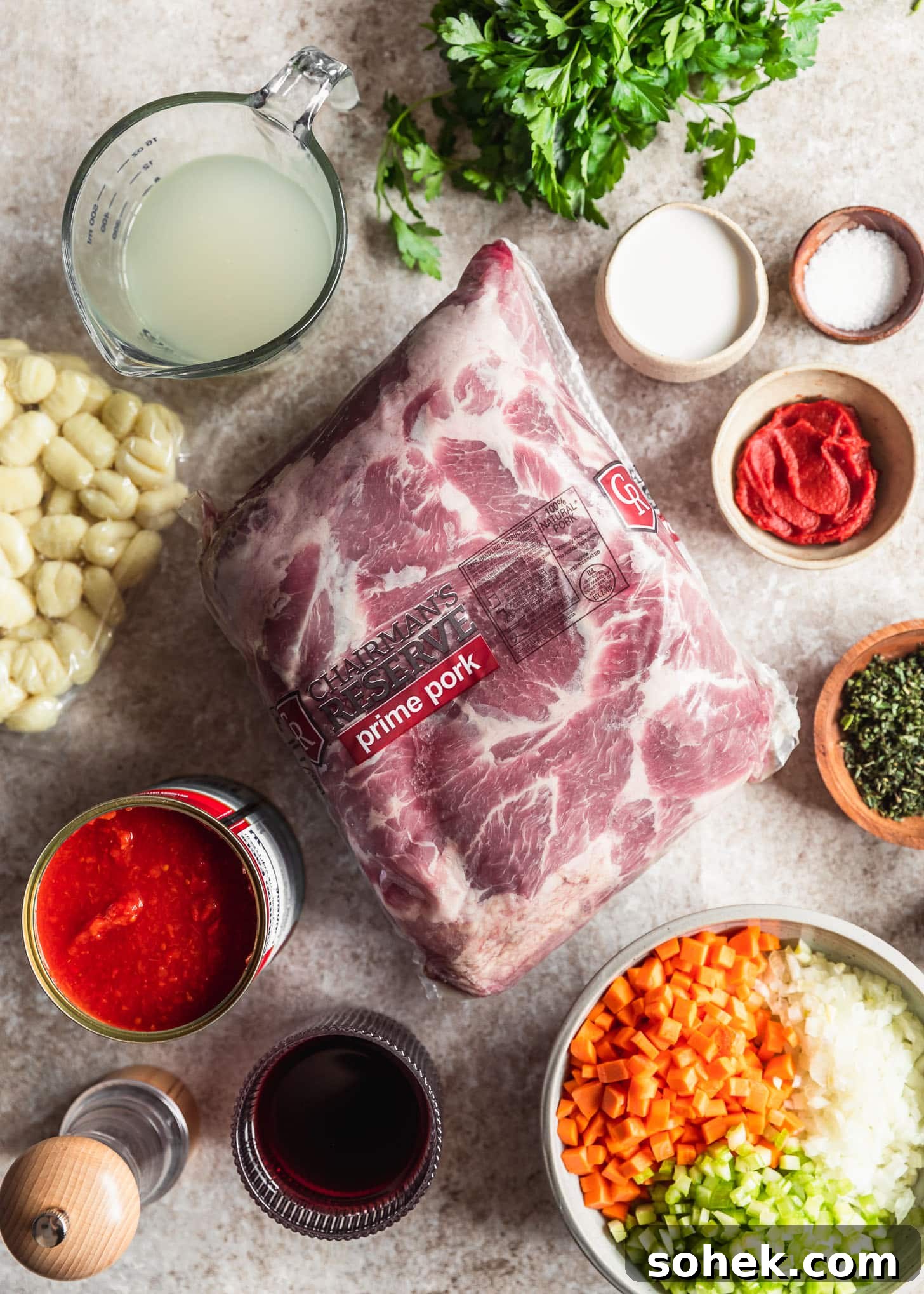
The star here is boneless pork shoulder—Chairman’s Reserve® Prime in the original recipe—because its higher fat content yields rich, moist meat after low-and-slow braising. If you find a bone-in shoulder, you can use it; just remove the bone before shredding.
Recipe instructions
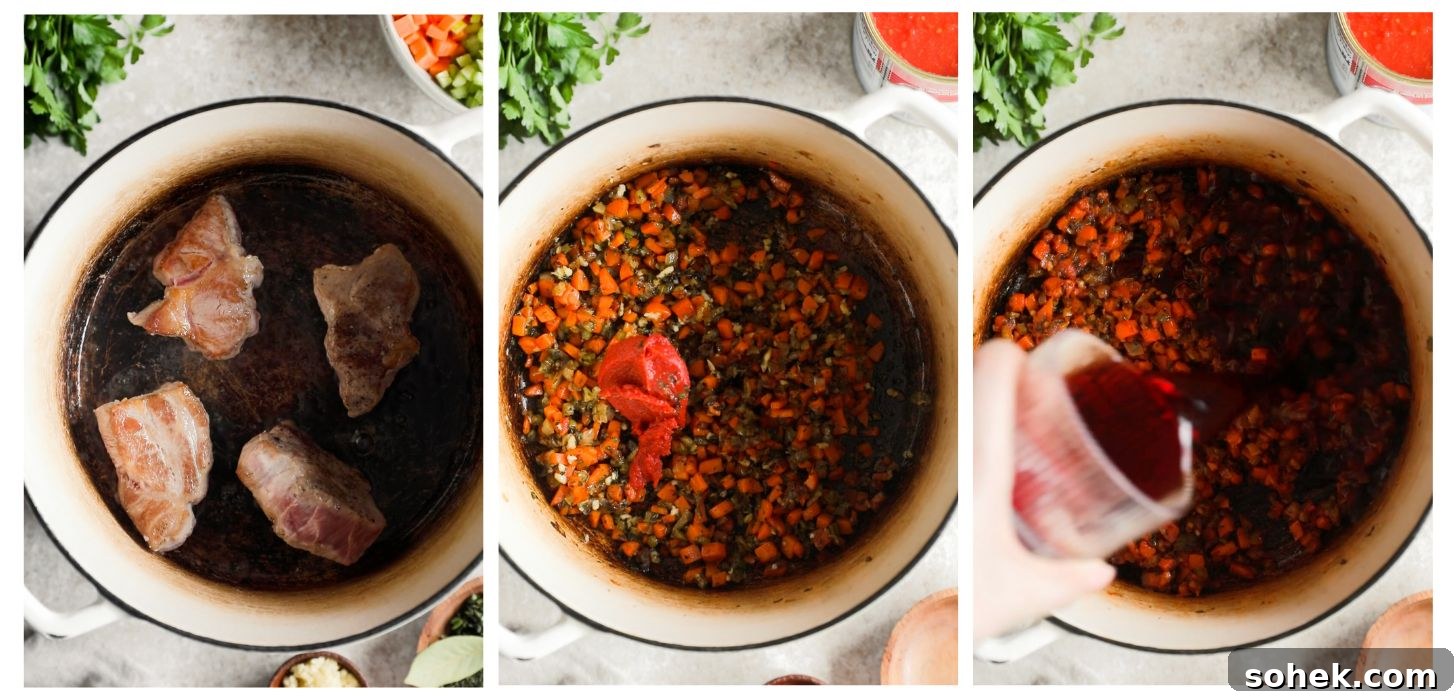
Cook the soffritto until softened and browned at the edges—about 5 minutes—to deepen the sauce’s flavor.
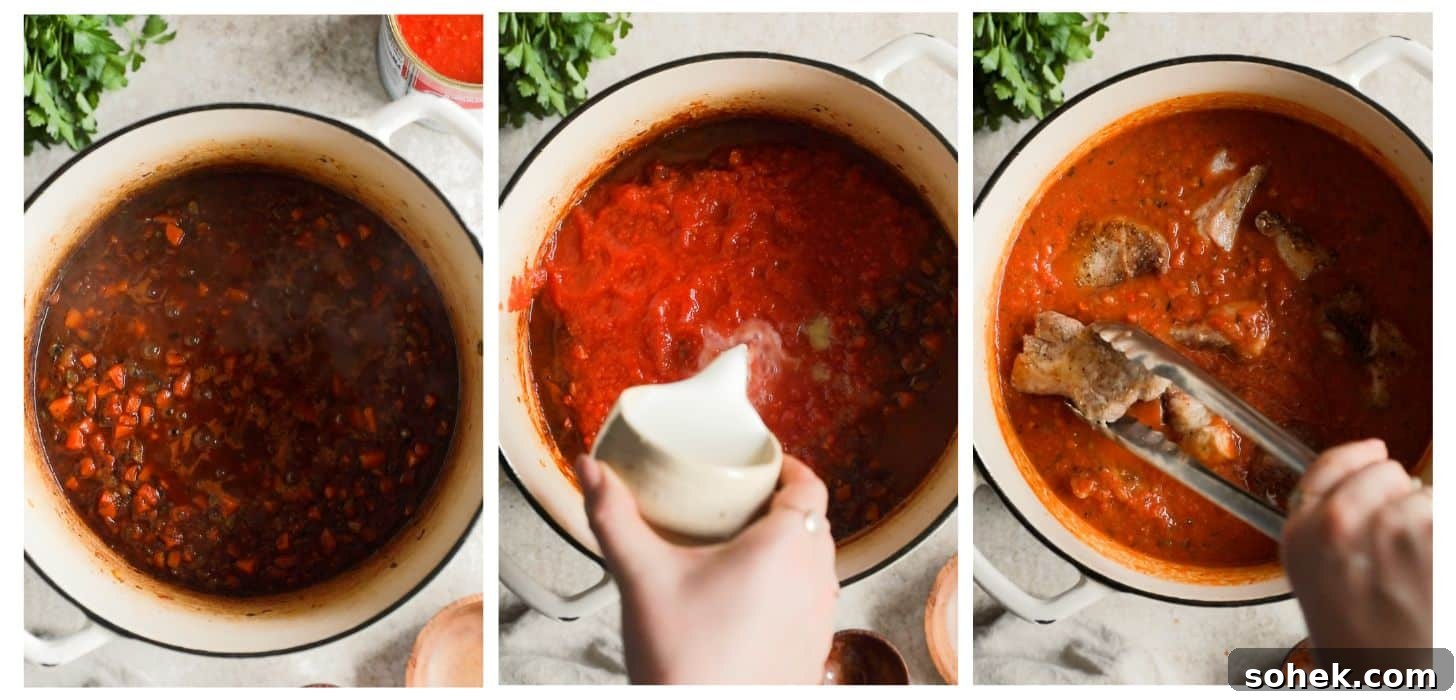
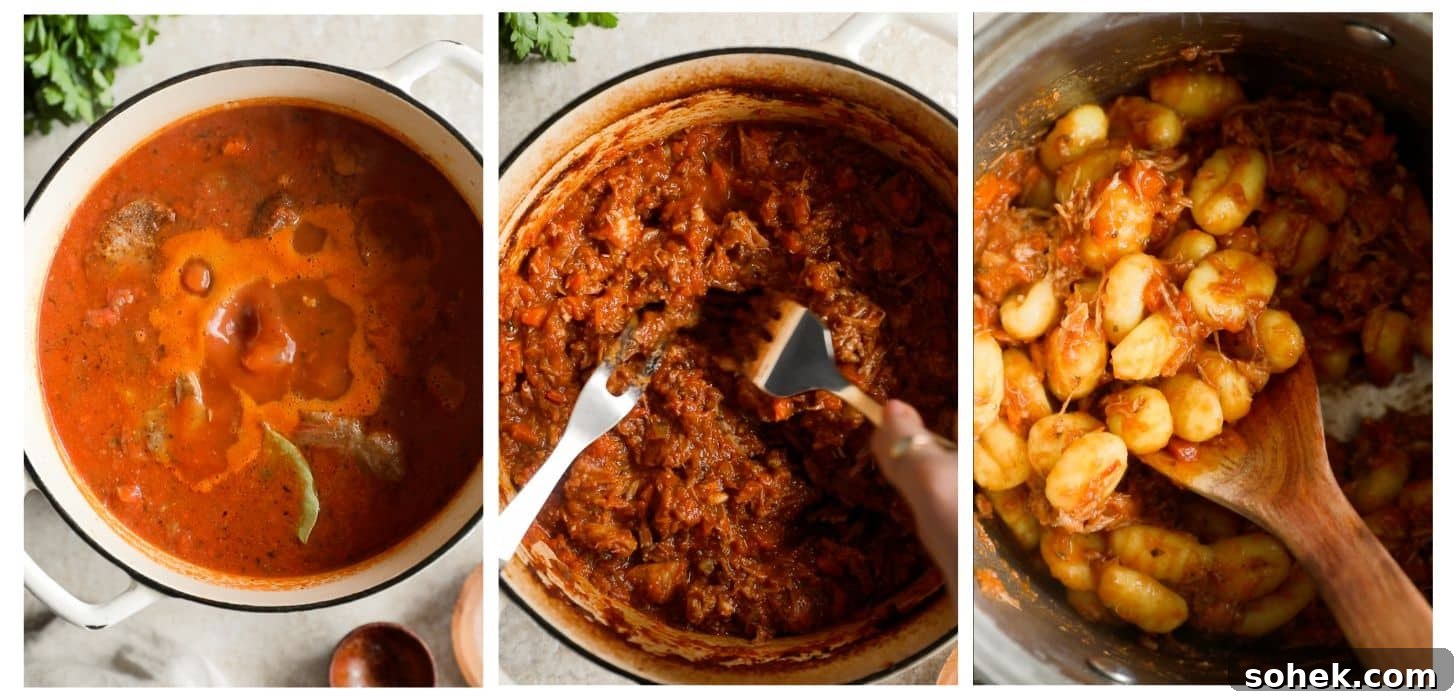
If an excessive layer of fat forms on top of the sauce, skim it off with a spoon to avoid a greasy finish.
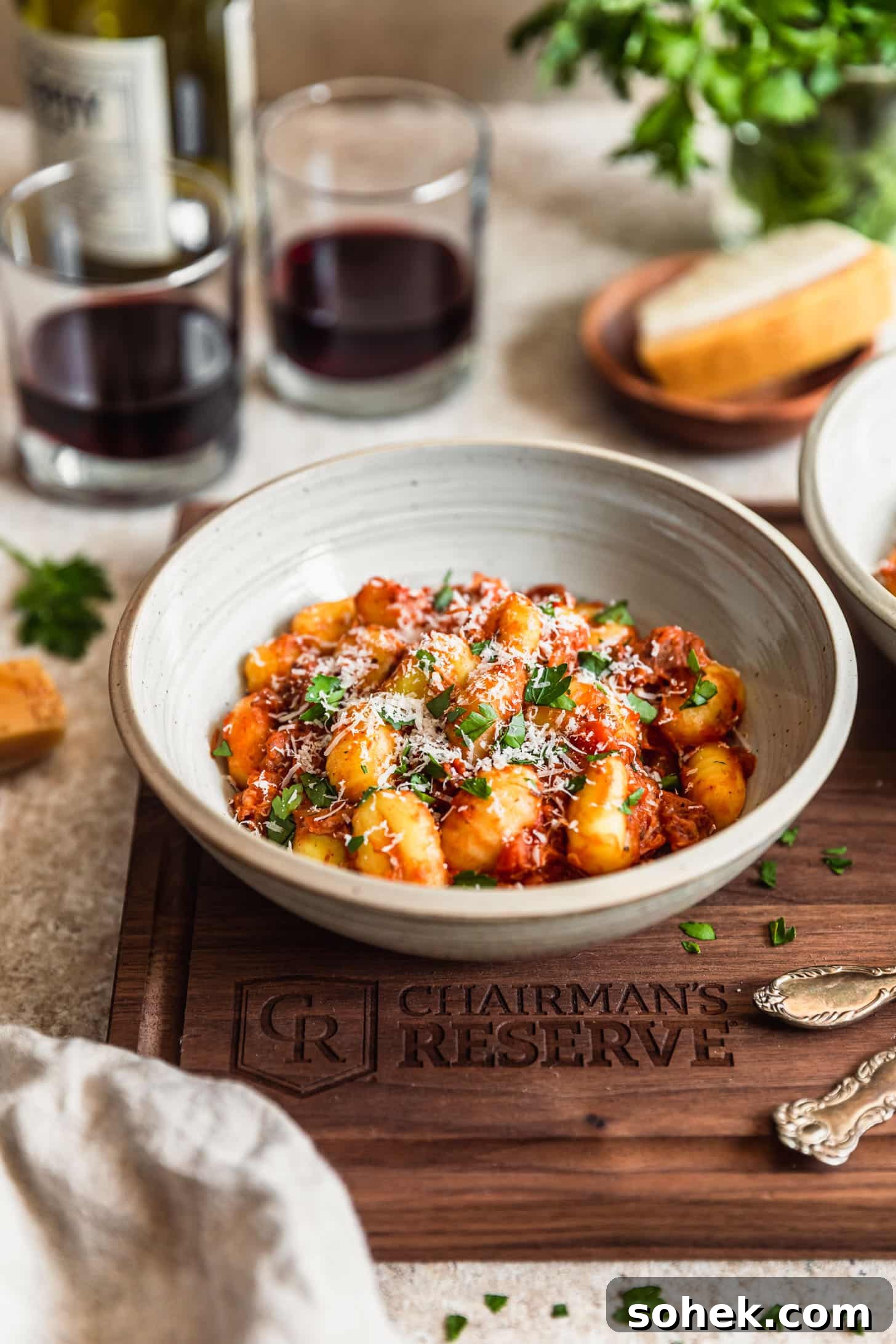
Slow cooker
If you prefer a hands-off approach, finish this recipe in a slow cooker. Cook the ragù on the stovetop up to the point where the tomatoes, broth, and milk are added, transfer to the slow cooker, nestle the seared pork into the sauce, add a bay leaf, and cook on LOW for 6–8 hours or HIGH for 3–4 hours until the pork is fork tender. Shred and mix with gnocchi as directed.
Storing & freezing tips
- Store – Refrigerate the sauce in an airtight container for up to 5 days. The flavors continue to develop as it rests.
- Freeze – Freeze the ragù in a freezer-safe container or zipper bag for up to 3 months. Leave room for expansion. Thaw overnight in the fridge before reheating.
For smaller servings, halve the recipe and use the same cooking methods. Leftover ragù freezes and reheats beautifully.
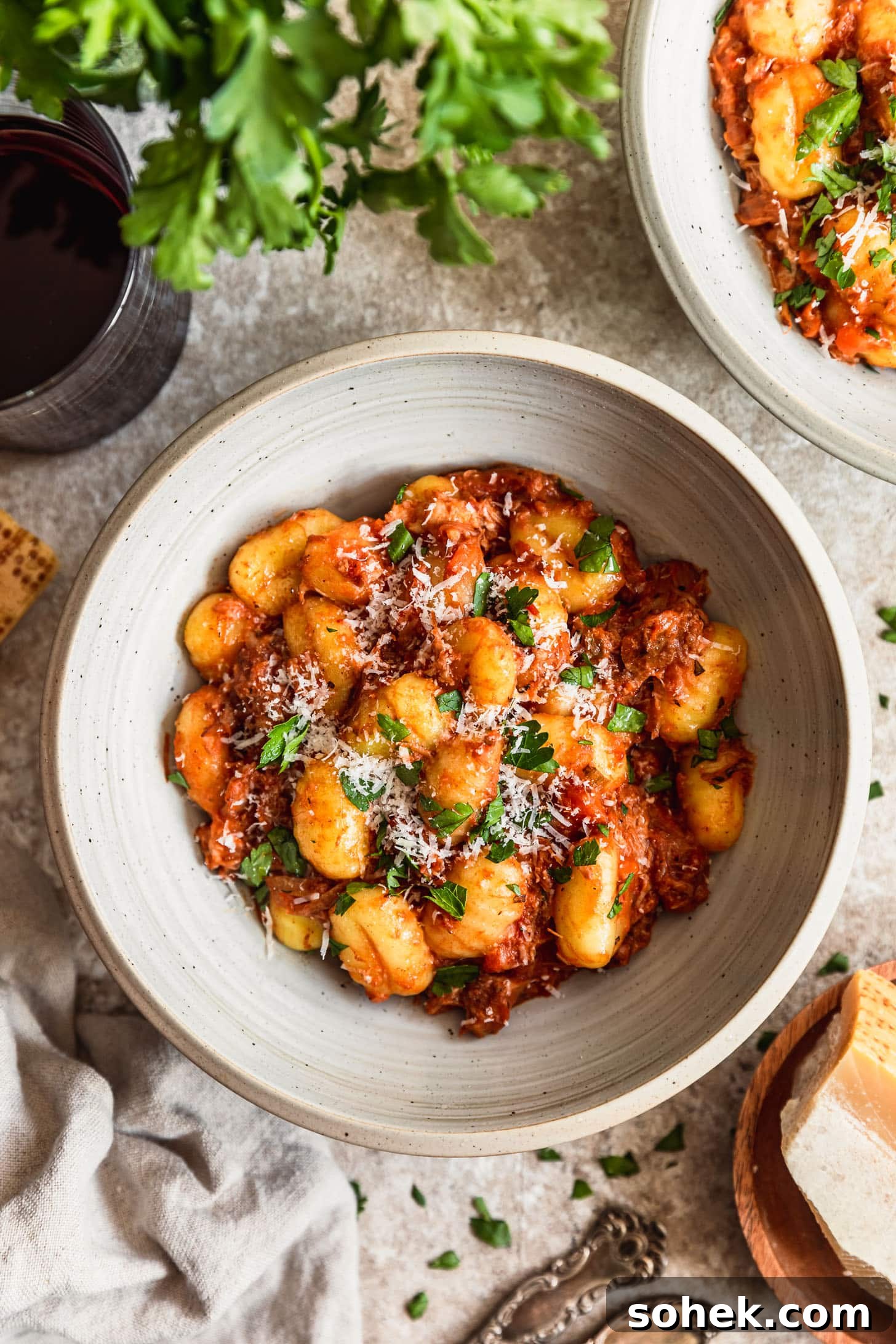
If you make this recipe, please leave a star rating and review. I read every comment and love hearing how these recipes turn out for you. Thank you for supporting Sunday Table!

Braised Pork Ragù with Gnocchi
Pin Recipe
Leave a Review
Ingredients
- 2 1/2 pounds boneless pork shoulder, fat trimmed
- Kosher salt and freshly-ground black pepper, to taste
- 2 Tablespoons neutral oil
- 1 large yellow onion, small dice
- 3 carrots, peeled and small dice
- 2 celery stalks, small dice
- 8 garlic cloves, finely minced
- 1 Tablespoon finely minced fresh rosemary
- 2 teaspoons finely minced fresh thyme
- 2 teaspoons finely minced fresh oregano
- 1/4 cup tomato paste
- 1 cup dry red wine
- 28 ounce can crushed tomatoes
- 1 cup low-sodium chicken broth
- 1/2 cup whole milk
- 1 bay leaf
- 2 1/2 pounds potato gnocchi
- Parmesan, for serving
- Fresh parsley or basil, minced, for garnish
Equipment
-
Large Dutch oven (oven safe)
Instructions
Oven Ragù
-
Preheat the oven to 325°F and position a rack in the middle.
-
Cut the pork into large 3–4 inch chunks and season generously with salt and pepper.
-
Heat oil in a large Dutch oven over medium-high heat. Sear the pork 2–3 minutes per side until golden-brown, working in batches if needed. Transfer seared pork to a plate.
-
Drain all but 2 tablespoons of fat from the pot. Return to medium-high heat and add the onion, carrots, and celery with a pinch of salt. Cook, stirring, until softened and starting to brown, 5–7 minutes.
-
Add garlic, rosemary, thyme, and oregano and cook 30 seconds until fragrant.
-
Stir in tomato paste and cook until it darkens, about 3 minutes. Deglaze with red wine and reduce by half, about 2–3 minutes. Add crushed tomatoes, chicken broth, and milk, stirring to combine.
-
Nestle the pork into the sauce, add the bay leaf, and bring to a boil.
-
Remove from heat, cover, and bake on the middle oven rack for 2½–3 hours until the sauce is thick and the pork is fork tender.
-
Carefully remove from the oven, discard the bay leaf, and shred the pork with two forks. Taste and adjust seasoning.
-
Meanwhile, bring a large pot of salted water to a boil and cook gnocchi according to package directions. Reserve about 1 cup of pasta water, then drain.
-
Add the gnocchi to the ragù with 1/4 cup reserved pasta water. Stir, adding more pasta water as needed, until the sauce is glossy and the gnocchi is coated. Divide into bowls and garnish with Parmesan and fresh herbs.
Slow Cooker Ragù
-
To use a slow cooker, follow the recipe through the step where crushed tomatoes, chicken broth, and milk are added. Transfer the sauce to the slow cooker.
-
Nestle the seared pork into the sauce, add a bay leaf, and cook on LOW 6–8 hours or HIGH 3–4 hours until very tender.
-
Remove and discard the bay leaf, shred the pork, and season to taste. Cook gnocchi in salted water, reserve pasta water, drain, and toss with the ragù in the slow cooker or in the pasta pot until glossy. Serve with Parmesan and herbs.
Notes
Ensure your Dutch oven and lid are oven-safe for the braise. If the sauce reduces too much while cooking, add a splash of water or low-sodium chicken broth.
Salt your pasta water generously—about 1½–2 tablespoons per pound of pasta—since it’s the only chance to season the gnocchi itself. Combine gnocchi and ragù in the pot you used for the pasta for best results and reserve extra sauce for future meals.