When shopping at Costco, most of us focus on the price to judge whether an item is a good deal. But those aisle price tags contain more information than just the dollar amount. Read the labels carefully and you can learn whether an item is on clearance, marked by management, or likely to disappear from the floor soon.
Below is a clear, practical guide to Costco price tags and the common codes you’ll see while browsing the warehouse. Understanding these simple signals can help you save money, find bargains, and avoid disappointment when a favorite product is being discontinued.
Table of Contents
Costco Price Tags
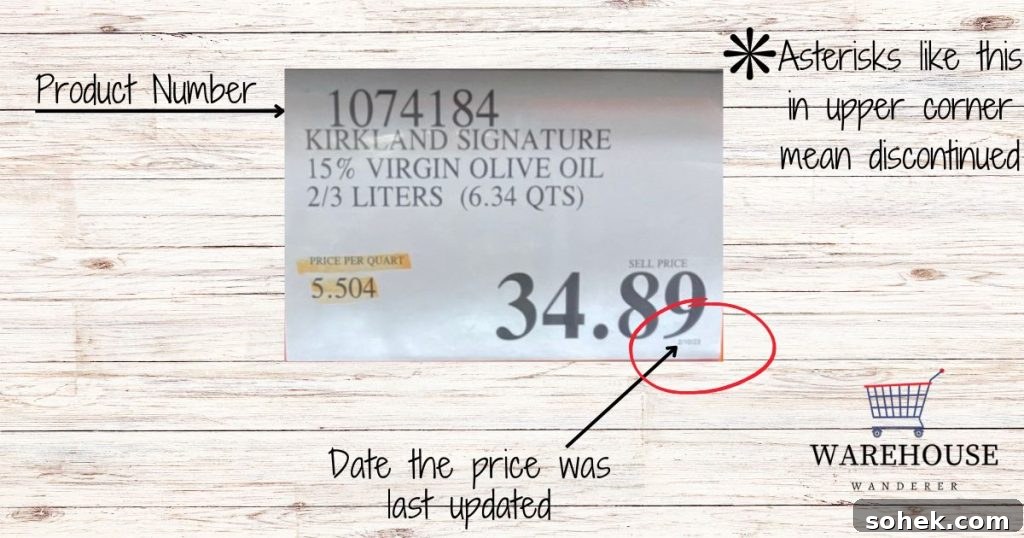
Costco price tags are compact but informative. Learning to read them takes only a few minutes and can give you an edge when deciding whether to buy now or wait. Here are the main items to check on every Costco price tag:
- The product number: This SKU helps you identify the exact item and can be useful if you want to call the warehouse to confirm availability or search for the item online.
- The asterisk in the upper right corner: Often nicknamed the “Death Star,” this small symbol signals that the product likely won’t be restocked at that warehouse when current inventory sells out.
- The date on the bottom right: This shows the last time the price was changed and can hint at how recently the item was repriced or marked down.
What Does The Death Star At Costco Mean?
The so-called “Death Star” is simply an asterisk placed in the upper-right corner of a Costco price tag. It does not indicate a defect or recall; instead, it means that Costco has chosen not to continue carrying the item at that location. When you spot this mark, expect dwindling stock and consider buying what you need now rather than waiting.
Why does Costco remove certain items?
Costco manages limited shelf space across large but finite warehouse footprints. Products that do not sell well get replaced to make room for newer or better-performing items. In other cases, suppliers may raise their wholesale prices or change terms in ways that make continued stocking uneconomical for Costco.
Costco also closely monitors competitors’ pricing. If another warehouse club or retailer consistently undercuts the price for the same product, Costco may stop carrying it rather than violate its pricing standards.
Costco Price Codes
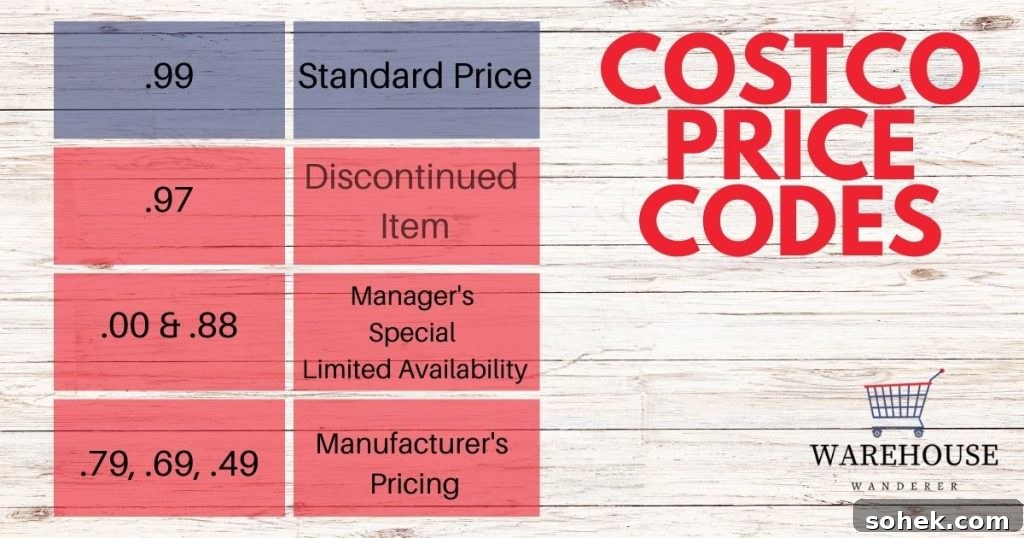
Below are common price endings and color cues you’ll encounter on Costco tags, and what they typically signify. While Costco does not publish an official key for every notation, these interpretations come from widely observed patterns across warehouses.
Costco Price Code .97
Items priced ending in .97 are commonly clearance items. These products are often reduced to clear remaining inventory and may not be restocked. If you see something you like with a .97 ending, it’s a good idea to purchase it then and there because quantities are usually limited.
Costco Price Ending In .00 and .88
Prices ending in .00 or .88 are frequently used for temporary promotional pricing or manager-marked specials at a specific warehouse. These discounts can reflect returns, display units, or manager-authorized markdowns that apply only at that location and for a limited time.
Because these are localized adjustments, it’s worth checking price tags at different warehouses or asking a staff member if you want to confirm whether the price is a one-off deal or a chain-wide change.
Costco Price Codes 99
A price ending in .99 is usually just a regular, non-sale price at Costco. Even when a price looks standard, Costco’s purchasing power and low markup policy often mean those “regular” prices are still better than what you’ll find elsewhere. Costco typically operates with modest markups, helping keep everyday prices competitive.
Costco Green Price Tag Meaning
Green price tags are used to highlight organic products. Unlike many supermarkets that group organics into a specific aisle, Costco mixes organic options with conventional items on the floor and uses green labels to make organic choices easier to spot.
As demand for organic goods grows, expect to see more green-labeled products across Costco warehouses. These tags are a visual cue to help shoppers quickly identify certified organic items among regular inventory.
Costco .79 Meaning
Price endings such as .79, .69, and .49 typically reflect manufacturer pricing rather than a store markdown. Manufacturers sometimes set special price points for certain items sold through Costco, and those endings simply pass that negotiated price along to shoppers.
In short, not every unusual-looking price signals a sale or clearance. Pay attention to the combination of symbols, color, and the final digits to interpret whether a tag represents a regular price, a manufacturer-set price, or a markdown you should act on.
Pin this for later.