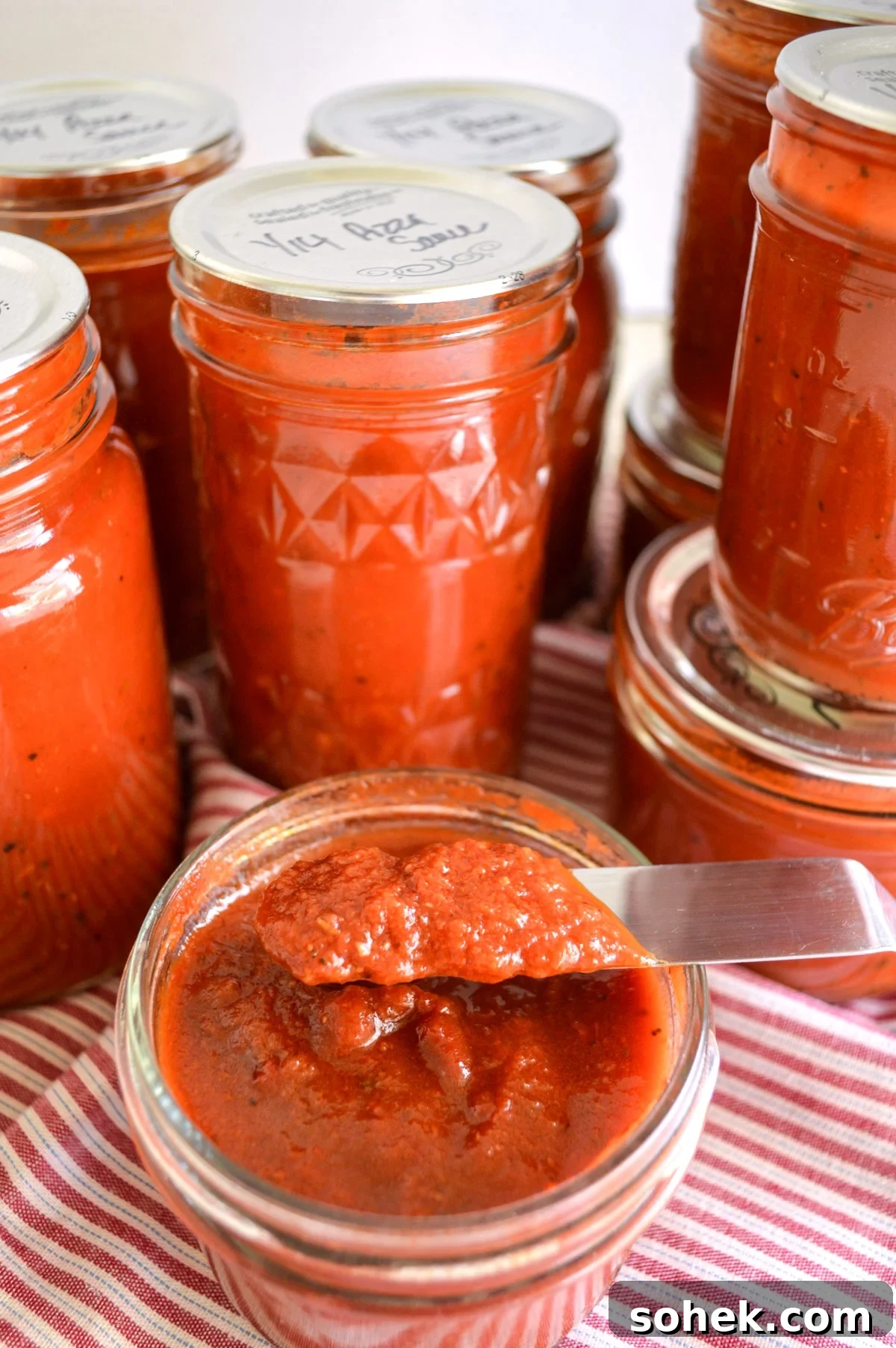
Ever wondered how to make delicious pizza sauce from scratch with fresh or frozen tomatoes? This easy, step-by-step canned pizza sauce recipe explains how to prepare a flavorful, shelf-stable pizza sauce (or freeze it) using either fresh or frozen tomatoes. The biggest tip: using frozen tomatoes shortens cooking time and lets you make sauce when it’s convenient. Say goodbye to store-bought cans and hello to a dependable homemade sauce for pizza night.
✩ What readers are saying…
“This is the best…..the method and the recipe!!! I am so excited to have my own pizza sauce…It is so thick and beautiful.” – Yvonne
Some links in this article are affiliate links and if you click on them I may receive a small commission at no cost to you.
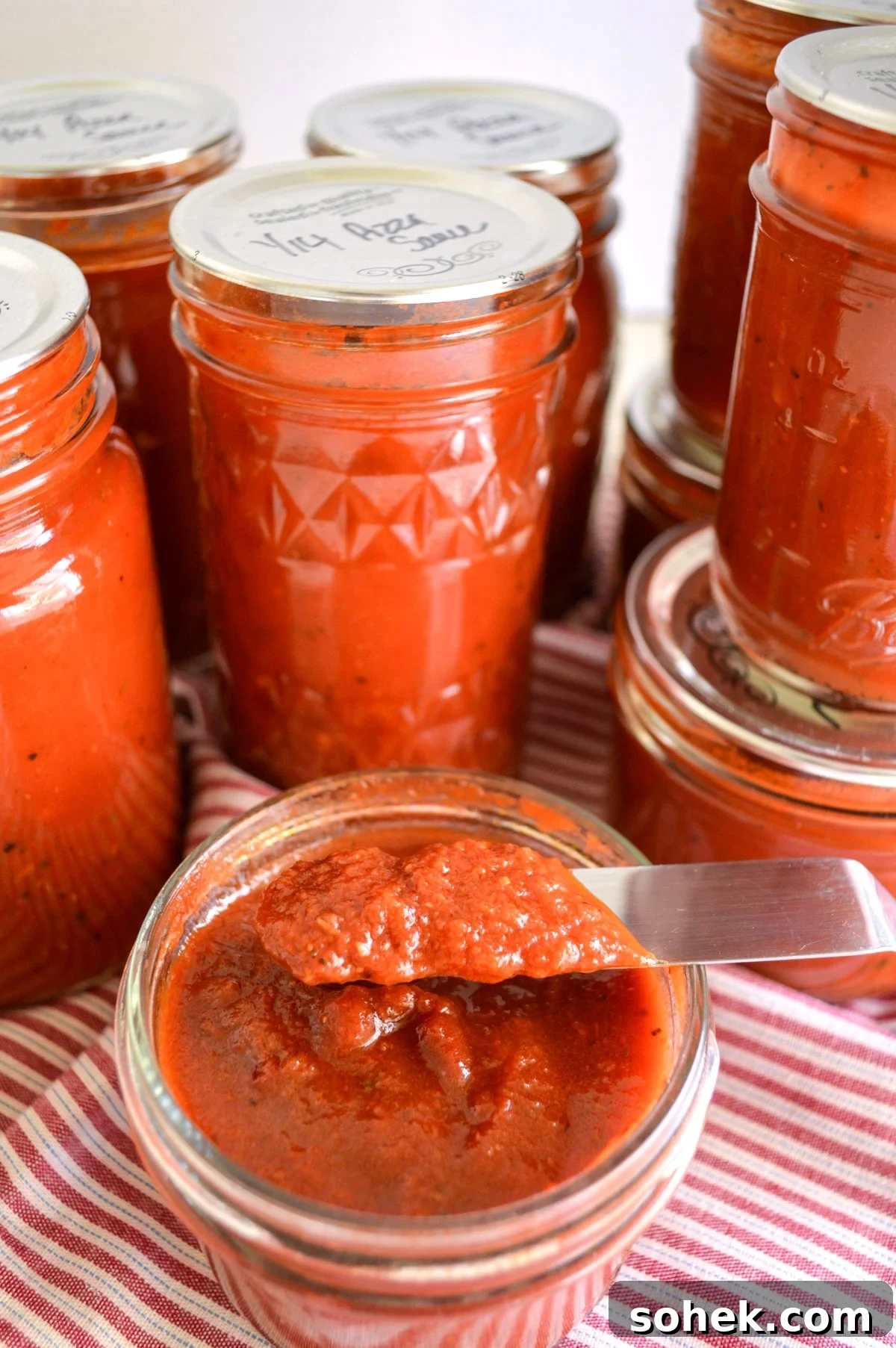
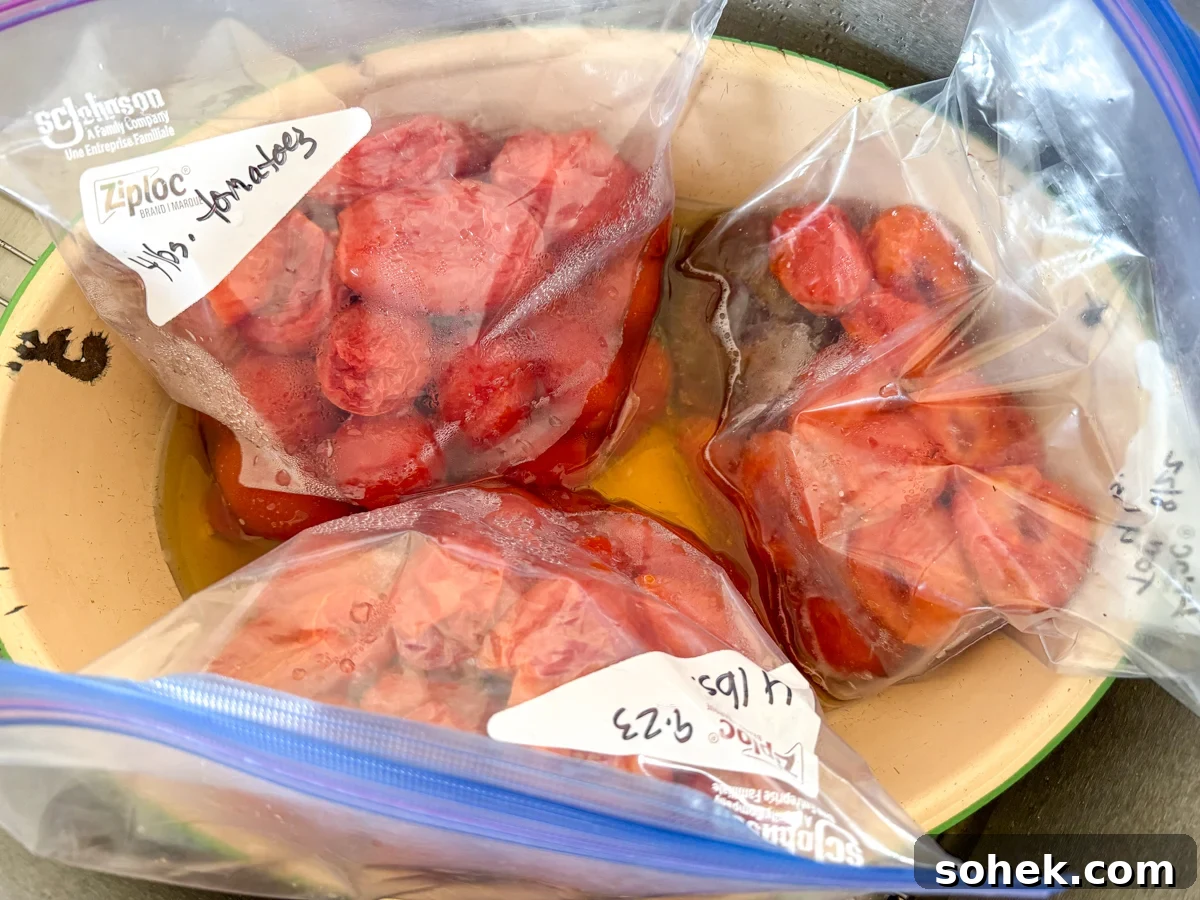
This seasoned canned pizza sauce is one of my go-to canning recipes alongside my favorite salsa, roasted tomato sauce, and tomato chutney. During tomato harvest I make enough of these staples to last through the year, only making other tomato items if there are leftover tomatoes. When a hectic season prevented me from canning everything, I froze bags of paste (and a few heirlooms for flavor) to make pizza sauce later. The result in January was the easiest, best pizza sauce, made in record time.
You can make this sauce from fresh tomatoes, but I now prefer starting with frozen tomatoes because they reduce cooking time. Directions for both fresh and frozen tomatoes are included below, plus tips and answers to common questions.
Recipe Ingredients
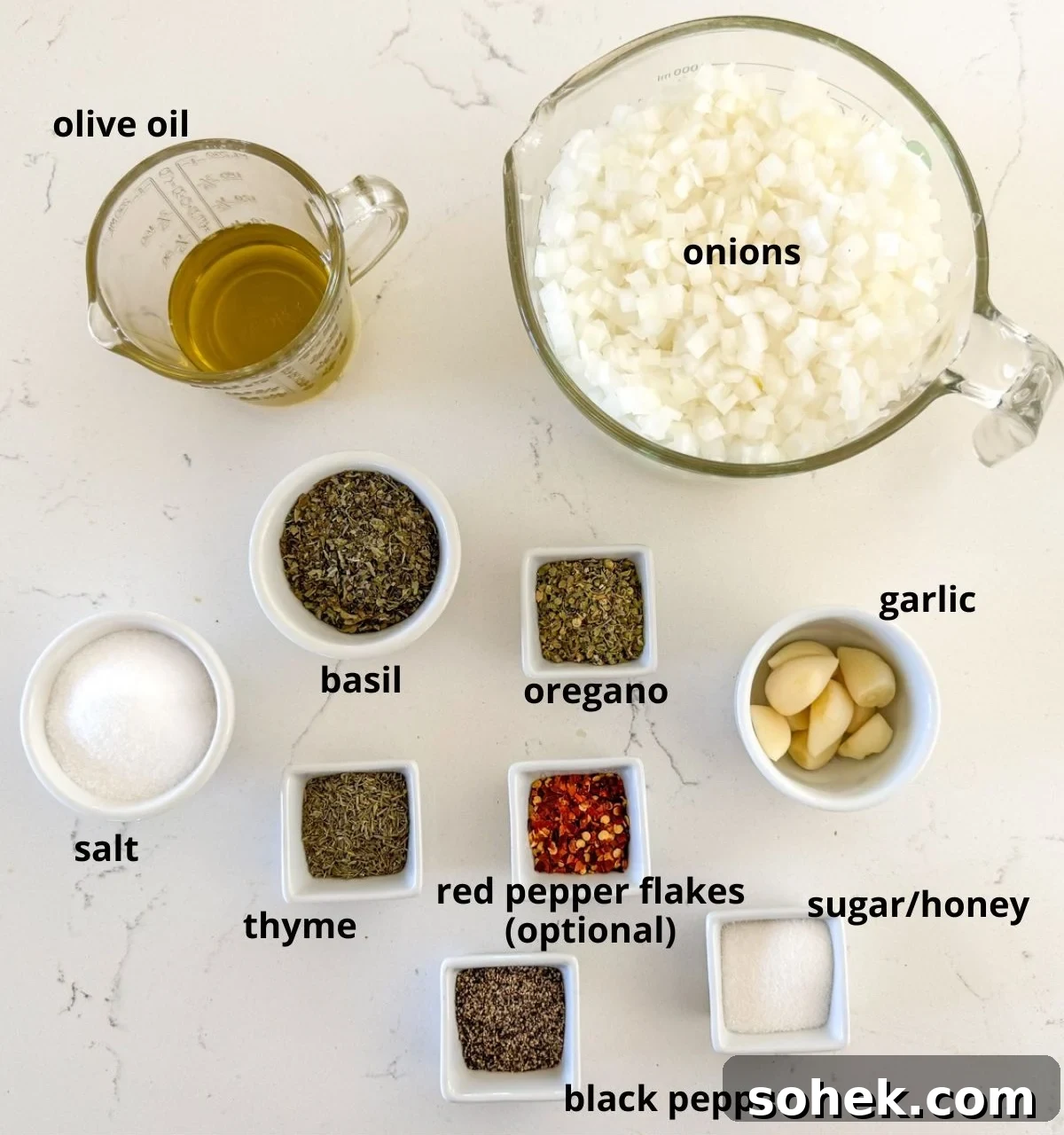
Besides tomatoes you’ll need the following ingredients (full quantities are listed in the recipe card below):
Ingredient Notes
- Oil: Olive oil is traditional and preferred, but avocado or another neutral oil works. The small amount used for sautéing is safe in this tested canning recipe.
- Onions and garlic: To keep the canned version safe, follow the exact amounts of fresh ingredients listed in the recipe card. Do not add extra garlic, onions, or fresh herbs when canning (you may add more if freezing instead of canning).
- Salt: Use canning salt or pure sea salt without additives; avoid table salt with anti-caking agents.
Origin and Safety
This recipe is adapted from the Ball Blue Book’s Seasoned Tomato Sauce, modified to suit a pizza flavor profile while keeping tested canning ratios intact. It safely includes the specified amounts of fresh onions, garlic, and a small amount of oil. Use less if you prefer, but do not increase those fresh low-acid ingredients for shelf-stable canning. If freezing, you can freely adjust fresh ingredients to taste.
Canned Pizza Sauce: Step-by-Step Overview
Quantities and complete instructions are given in the recipe box below. These tips will help each step go smoothly.
Step 1: Thaw (if needed), Puree and Strain Tomatoes
To use frozen tomatoes:
- Thaw tomatoes in the refrigerator overnight or in a clean sink of warm water if needed. Drain off any accumulated clear juices before straining.
- Run the tomatoes through a food mill, sieve, or electric sauce maker to remove seeds and skins and produce a smooth puree.
To use fresh tomatoes:
- Wash, core, and halve tomatoes. Bring them to a boil in a large pot, then remove from heat.
- While warm, strain through a food mill or sieve to separate seeds and skins and collect the puree.
Three Ways to Strain Tomatoes
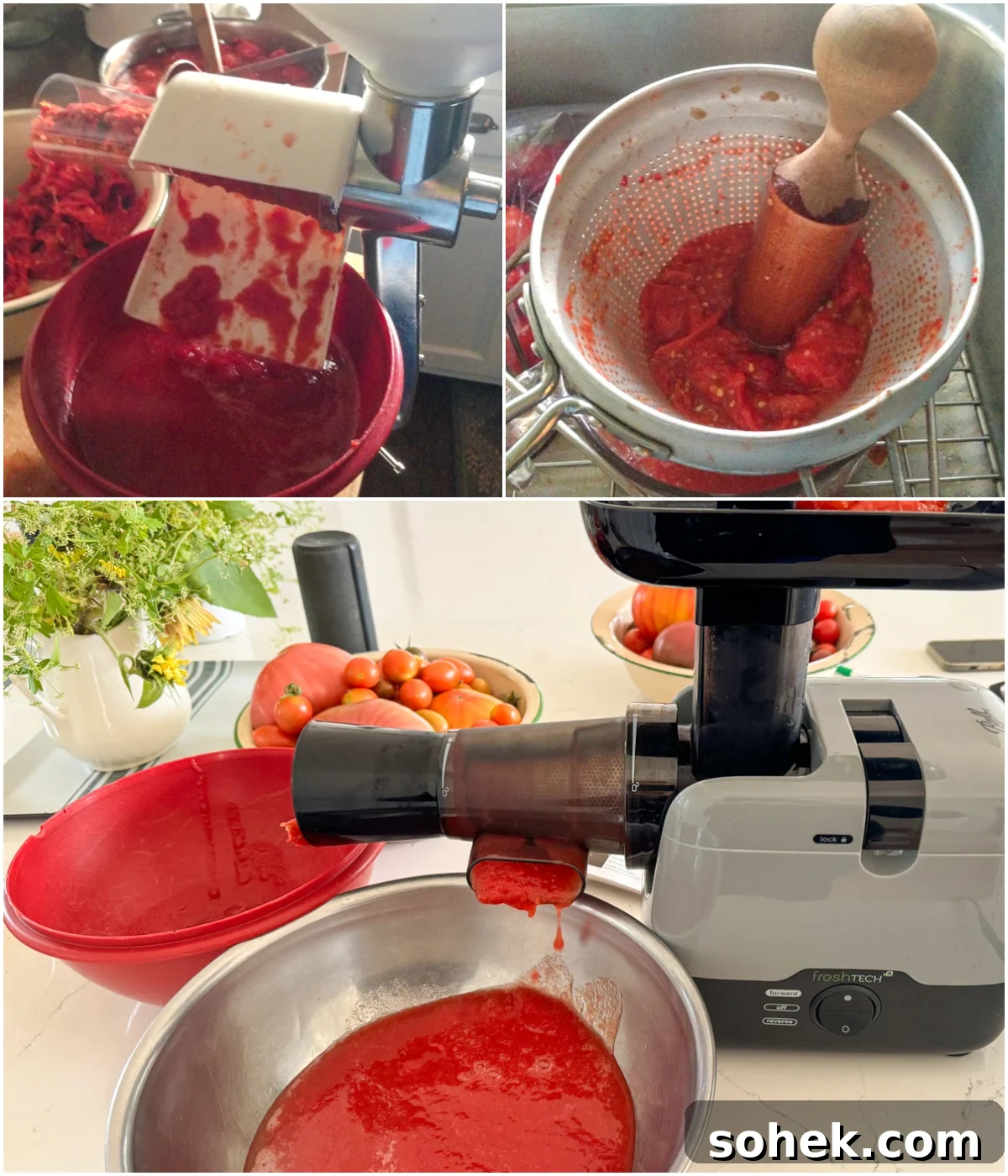
- Manual food strainer/sauce maker: These can be very effective but may work best if the pulp is slightly warmed.
- Tripod/cone food mill (Chinois): A sturdy vintage-style food mill works well but may require more effort and yield slightly less pulp.
- Electric sauce maker: Electric machines that strain and separate skins and seeds make quick work of both fresh and frozen tomatoes and save a lot of time and elbow grease.
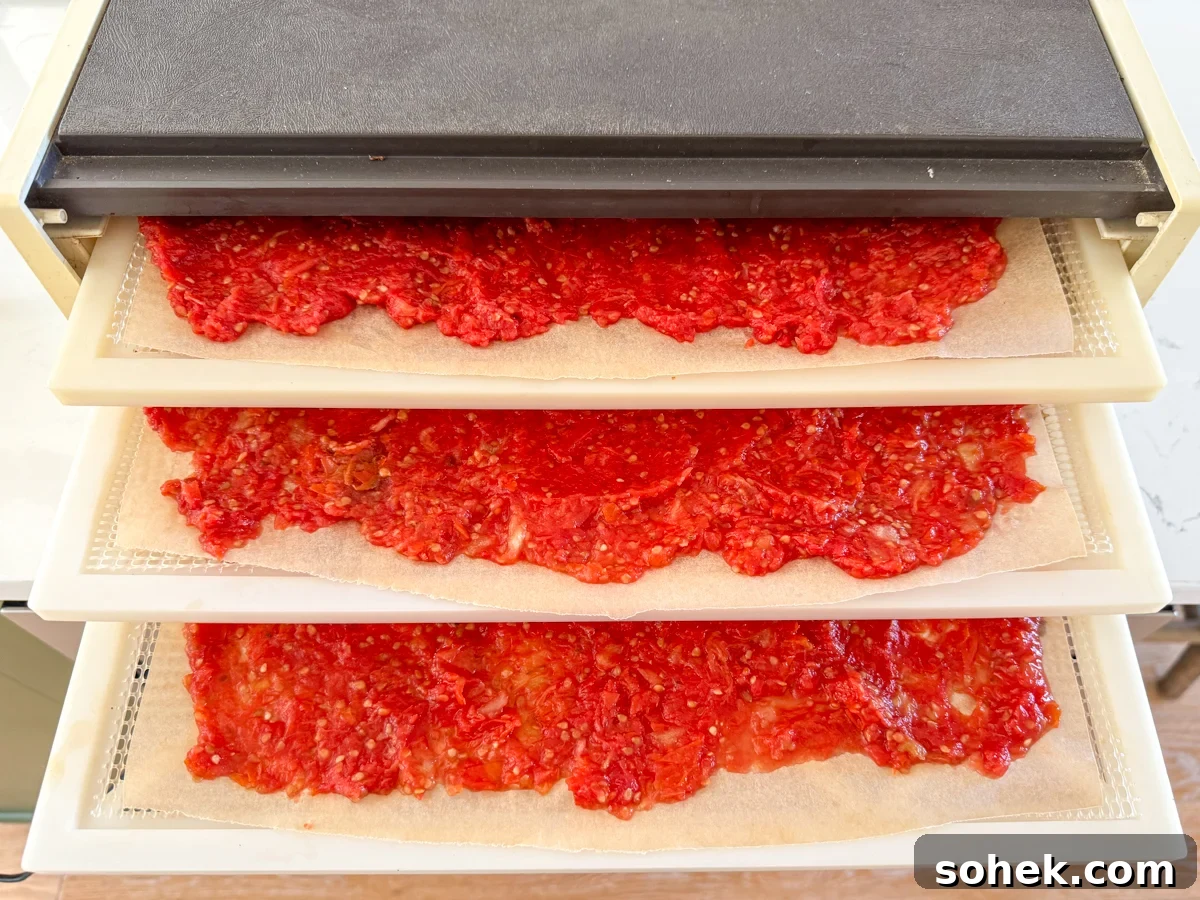
Tip for using leftover pulp: Spread the pulp thin on dehydrator trays and dry until crisp. Grind the dried pieces into flakes or powder and store in a jar to use as a tomato flavor booster or thickener for soups, chilis, and sauces.
Step 2: Make the Pizza Sauce
- Sauté chopped onion and minced garlic in olive oil over medium heat until the onion softens, about 5–10 minutes. Add the tomato puree and dried seasonings (basil, oregano, thyme, pepper flakes, salt, and a little sugar or honey to balance acidity).
- Bring the mixture to a boil, then reduce heat and simmer uncovered for about 30 minutes. Use an immersion blender or work in batches in a blender to create a smooth sauce.
- Return to a boil, reduce heat, and simmer gently until the sauce reduces by about one-quarter to one-third and reaches your preferred thickness. This can take 1–2 hours depending on whether you started with frozen or fresh tomatoes and on the juiciness of the tomatoes you used; paste tomatoes will take less time while slicing or heirloom tomatoes will take longer. Stir occasionally to prevent sticking.
Tip: If your sauce is slow to thicken, it’s likely due to extra juice from very ripe or slicing tomatoes. Keep simmering until it reaches the consistency you like. Starting with frozen tomatoes usually speeds this step up.
Step 3: Water-Bath Can the Sauce (or Freeze)
If you prefer, freeze the cooled sauce in freezer-safe containers for up to a year. For shelf-stable jars, follow these steps:
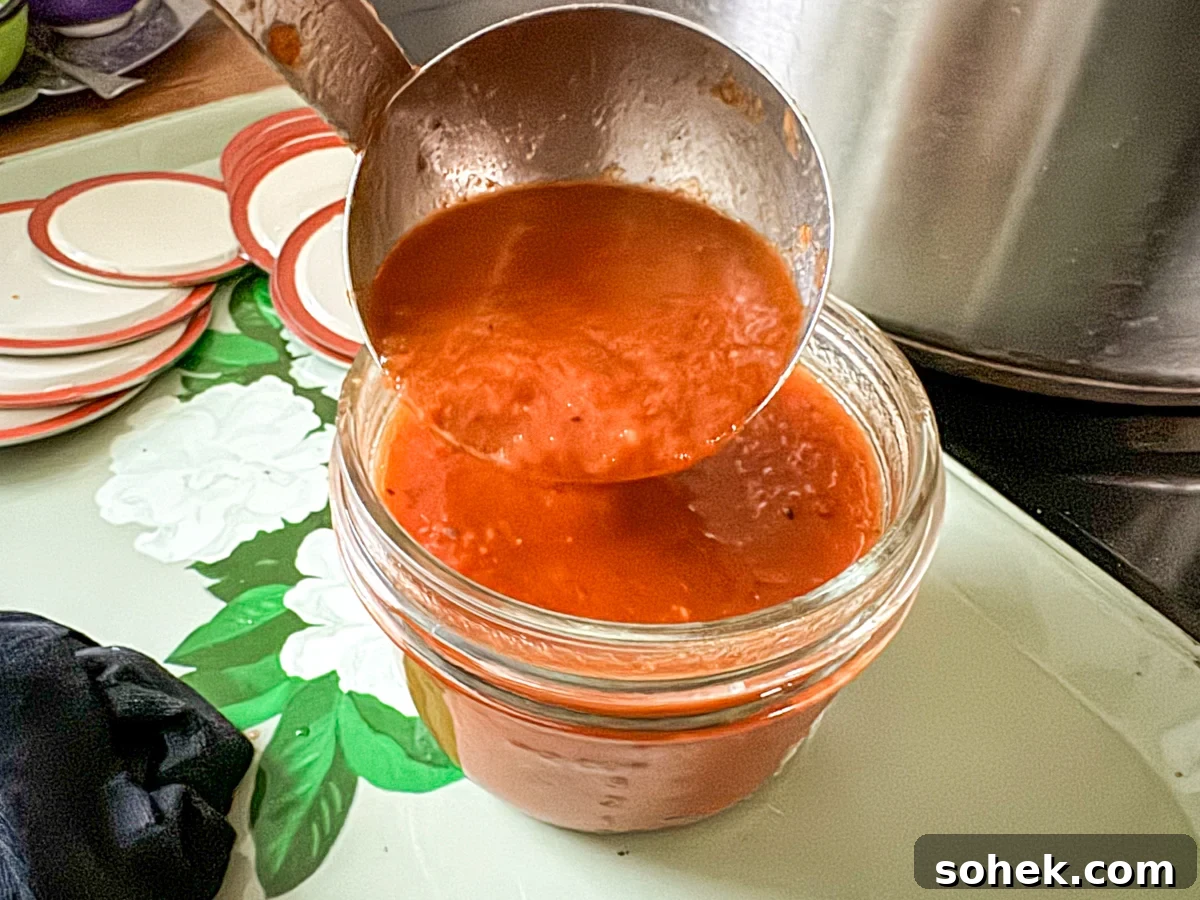
- Add bottled lemon juice or the measured amount of citric acid to each clean, warm jar. Fill each jar with sauce, leaving 1/2-inch headspace, wipe rims, and attach lids and rings fingertip-tight.
- Process both pints and half-pints for 35 minutes in a boiling-water canner.
- Remove jars to a towel-lined surface and let them sit undisturbed for 24 hours before checking seals and storing in a cool, dark place.
Tip: Half-pint (8-ounce) or 12-ounce jars are convenient sizes for making pizza. Pints are a larger volume and may be more than needed for a single pizza.
How Much to Make for a Year
I aim for around 20–24 jars in a mix of sizes to last a year, depending on how often we make tomato-based pizzas versus alternative toppings like pesto. This sauce also works well in many Italian dishes, so it gets used outside of pizza too.
Reader Raves
“I just used your recipe earlier this week & I must say kudos and thanks to you! It used up all the tomatoes from my garden perfectly and your freezer method was fabulous… We cannot wait to dig into this!” – Nicole
“This is an incredible recipe. We have our jars processing in the water bath now. There was a little bit of sauce left in the pot that we ate up with bread. This recipe will be used for the years to come. Yummy!!!” – Roberta
“Thank you for the great recipe! Mine is simmering down now and smells awesome… I’m new to this canning thing so I get a little nervous but your post really was great in explaining everything.” – Susan
“This was freakin fantastic. I started with a half batch and once I tasted I knew I’d have to do more.” – Kat
I hope you love this canned pizza sauce recipe. If you try it, leave a rating or note so others know how it turned out for you.

Easy Canned Pizza Sauce With Frozen or Fresh Tomatoes
1 hr
1 hr 15 mins
2 hrs
4 hrs 15 mins
Equipment
- Sauce maker or food sieve
- 12-quart or large stock pot
- Water bath canner and supplies (if canning)
- Canning jars and lids (or freezer containers if freezing)
Ingredients
- 22 pounds tomatoes (fresh or whole frozen)
- 3 cups chopped onions
- 6 cloves garlic, minced
- 1/4 cup olive oil
- 2 tablespoons dried basil
- 1 tablespoon dried oregano
- 1 tablespoon dried thyme
- 1/2–1 tablespoon black pepper (to taste)
- 1 tablespoon sugar or honey (optional)
- 2 tablespoons salt (canning salt or pure sea salt)
- 1–2 teaspoons crushed red pepper flakes (optional)
- Bottled lemon juice or citric acid: 1 tablespoon lemon juice OR 1/4 teaspoon citric acid for EACH pint and 12-oz jar; 1/2 tablespoon lemon juice OR 1/8 teaspoon citric acid for EACH half-pint jar.
Instructions
Prepare tomato puree from frozen tomatoes
- Thaw 24 hours (if previously cleaned and cored). Drain off accumulated juices.
- Run thawed tomatoes through a strainer or food mill to remove seeds and peels.
Prepare tomato puree from fresh tomatoes
- Wash, core, and halve tomatoes. Heat to boiling, then remove from heat.
- Strain while warm through a food mill or sieve to separate seeds and skins.
Make the pizza sauce
- In a 12-quart or larger stockpot, cook onions and garlic in olive oil over medium heat until softened, 5–10 minutes. Add tomato puree and seasonings (basil through pepper flakes). Bring to a boil, reduce heat, and simmer about 30 minutes. Use an immersion blender or carefully blend in batches to smooth the sauce.
- Return to a boil, reduce heat, and simmer uncovered until the sauce reduces by about 1/4–1/3 and reaches desired consistency, usually 1–2 hours depending on tomatoes. Stir occasionally to prevent sticking.
Water-bath can
- Add lemon juice or citric acid to each clean, warm jar. Fill jar with sauce leaving 1/2-inch headspace, wipe rims, and attach lids and rings fingertip-tight. Place jars in the canner rack and repeat until the canner is full.
- Process pints and half-pints for 35 minutes in a boiling-water canner.
- Remove jars to a towel-lined surface and let sit undisturbed for 24 hours. Check seals, label, and store in a cool, dark place.
Notes
Storage: Properly processed jars will keep safely for up to one and a half years. If you prefer to freeze instead of can, cooled sauce stores well in freezer-safe containers for up to a year.
Adaptation: This recipe is adapted from the Ball Blue Book’s Seasoned Tomato Sauce with adjustments to spices and straining methods while preserving the tested ratios for safe canning.
High altitude: If processing above 1,000 feet, adjust processing time according to reliable canning guidelines for high altitudes.
Nutrition
Your Questions Answered
Yes. Halve all measurements exactly and follow the same instructions.
No. Fresh herbs are low acid and can affect safe canning ratios. This tested recipe uses dried herbs; fresh herbs can be used if you freeze the sauce instead of canning.
Not for shelf-stable canning. Fresh basil and extra garlic are low-acid additions that change safety ratios; use them only if freezing the sauce.
The 22 pounds refers to the total weight of tomatoes fresh or frozen before draining or removing anything.
Many experienced canners drain some clear juice to speed cooking and still add citric acid or lemon juice to each jar. If you are concerned, omit draining and reduce the whole mixture instead. Follow the method you are comfortable with and always add the recommended acid to jars before processing.
No. Adding concentrate or thickeners before processing changes the tested density and canning safety. Instead, simmer the sauce longer to thicken before canning.
Yes. This recipe is based on a tested Ball Blue Book recipe that includes a small amount of oil for sautéing.
Yes, provided the canned tomatoes contain only tomatoes. A 14.5-ounce can equals about 1 pound, so you would need roughly 22 cans to equal 22 pounds.
Either reprocess the jars by opening, adding acid, reheating and processing again, or store the jars in the refrigerator and use them within a short period.
Yes. You can refrigerate the puree overnight and complete the sauce and canning the next day.
Yields vary by equipment and tomato type, but expect roughly 17–18 cups of puree that will reduce to around 14–15 cups for the recipe yield of 7–8 pints.
More Easy Canned Tomato Recipes
- Water-Bath Safe Canned Roasted Tomato Sauce
- Addictive Tomato Chutney
- Nice and Thick Salsa for Canning
This recipe was originally published in 2014 and has been updated.
Disclosure: affiliate links in this article may earn commission based on sales, but they do not change your price.