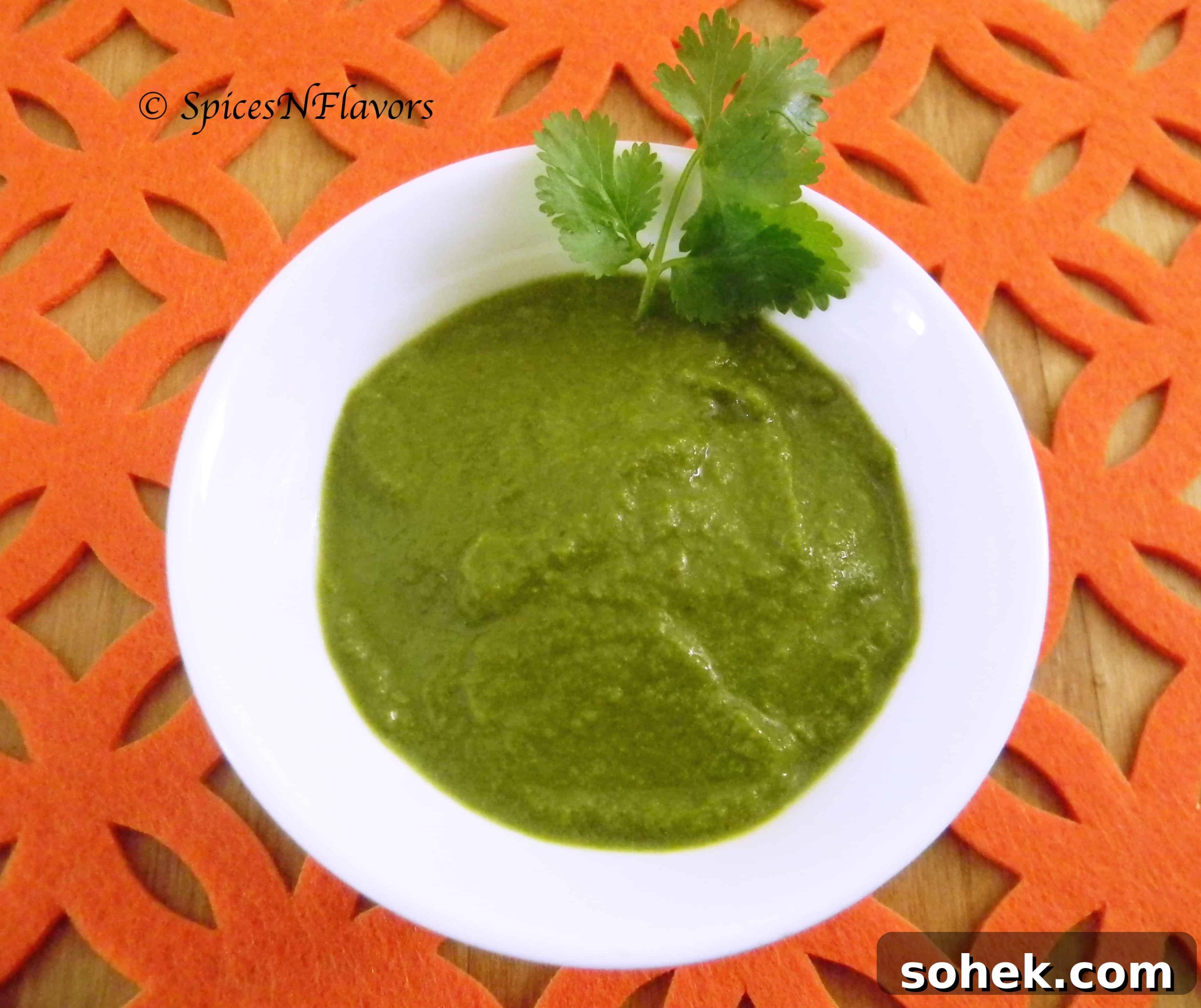

Chutneys and dips bring bright, fresh flavor to snacks and meals, and one of the most popular and versatile varieties from Indian cuisine is coriander and mint chutney. Known for its vivid green color and lively taste, this chutney pairs beautifully with samosas, chaats, sandwiches, kebabs, grilled vegetables and many other dishes. It is frequently served alongside a sweet tamarind (imli) chutney to balance the heat with sweetness, creating a classic contrast cherished across many regions.
This coriander and mint chutney is quick to prepare, naturally vegan, and packed with herbs and spices that enhance the flavor of any meal. Below is a clear, SEO-friendly recipe with practical tips for making, storing and customizing the chutney to your taste.
Ingredients:

- 1 cup cilantro (coriander/dhaniya) leaves, including tender stems
- 1/2 cup fresh mint (pudina) leaves
- 5–6 green chilies (adjust by heat preference)
- 1 small piece fresh ginger (about the size shown in the photo)
- 1 tbsp roasted Bengal gram (bunna channa/pottu kadalai) — helps with texture and binding
- 1 tsp cumin seeds
- 1 tsp jaggery (substitute sugar if needed)
- 1 tbsp fresh lemon juice
- 1 tsp salt, or to taste
Method:
- Prepare the herbs by rinsing cilantro and mint well and patting them dry to remove excess water. Trim any tough stems if necessary.
- In a food processor or blender, add the cilantro, mint, green chilies, ginger, roasted Bengal gram and cumin seeds. Do not add lemon juice or water initially.
- Pulse the mixture several times until coarse. Scrape the sides and continue to pulse to combine the ingredients evenly. This stage extracts the fresh herb flavors without watering down the chutney.
- Add the jaggery and salt and pulse briefly to incorporate.
- Pour in the lemon juice and blend. Add 2–3 tablespoons of water only if required to help the mixture reach a smooth, spreadable consistency. Blend until you achieve a fine paste.
- Taste and adjust seasoning: add more jaggery for sweetness, extra lemon juice for tang, or additional chilies for heat. Blend again for a few seconds after adjusting.
Storage and Make-Ahead Tips:
- Make a larger batch and freeze individual portions in ice cube trays for quick use. Once frozen solid, pop the chutney cubes into an airtight zip-top bag. Properly stored in the freezer, portions will retain flavor for up to 4–5 months.
- Defrost frozen chutney cubes in the refrigerator overnight or microwave for a short time until soft. Stir before serving.
- In the refrigerator, fresh chutney keeps well for 3–4 days when stored in an airtight container. A thin layer of oil on the surface can help slow oxidation and preserve color.
Variations and Serving Suggestions:
- Adjust the herbs: increase mint for a cooler flavor or increase cilantro for a deeper herbal profile.
- Spice control: reduce the number of green chilies for a milder chutney, or remove seeds from the chilies to lower heat without losing flavor.
- Use this chutney as a spread on sandwiches and wraps, a dip for fried snacks, a marinade base for paneer or tofu, or a finishing sauce for grilled meats and vegetables.
- Serve alongside a sweet tamarind (imli) chutney to create the classic tangy-sweet-spicy combination frequently found in Indian street food.
Notes:
- Jaggery contributes depth and balances heat; substitute an equal amount of sugar if jaggery is not available.
- Roasted Bengal gram improves texture and helps the chutney bind without adding oil.
- This recipe can be doubled easily to make larger batches for entertaining or meal prep.
Enjoy this fresh coriander and mint chutney with your favorite snacks and meals. Its bright flavor and easy preparation make it a reliable condiment to keep on hand in the kitchen. Happy cooking!