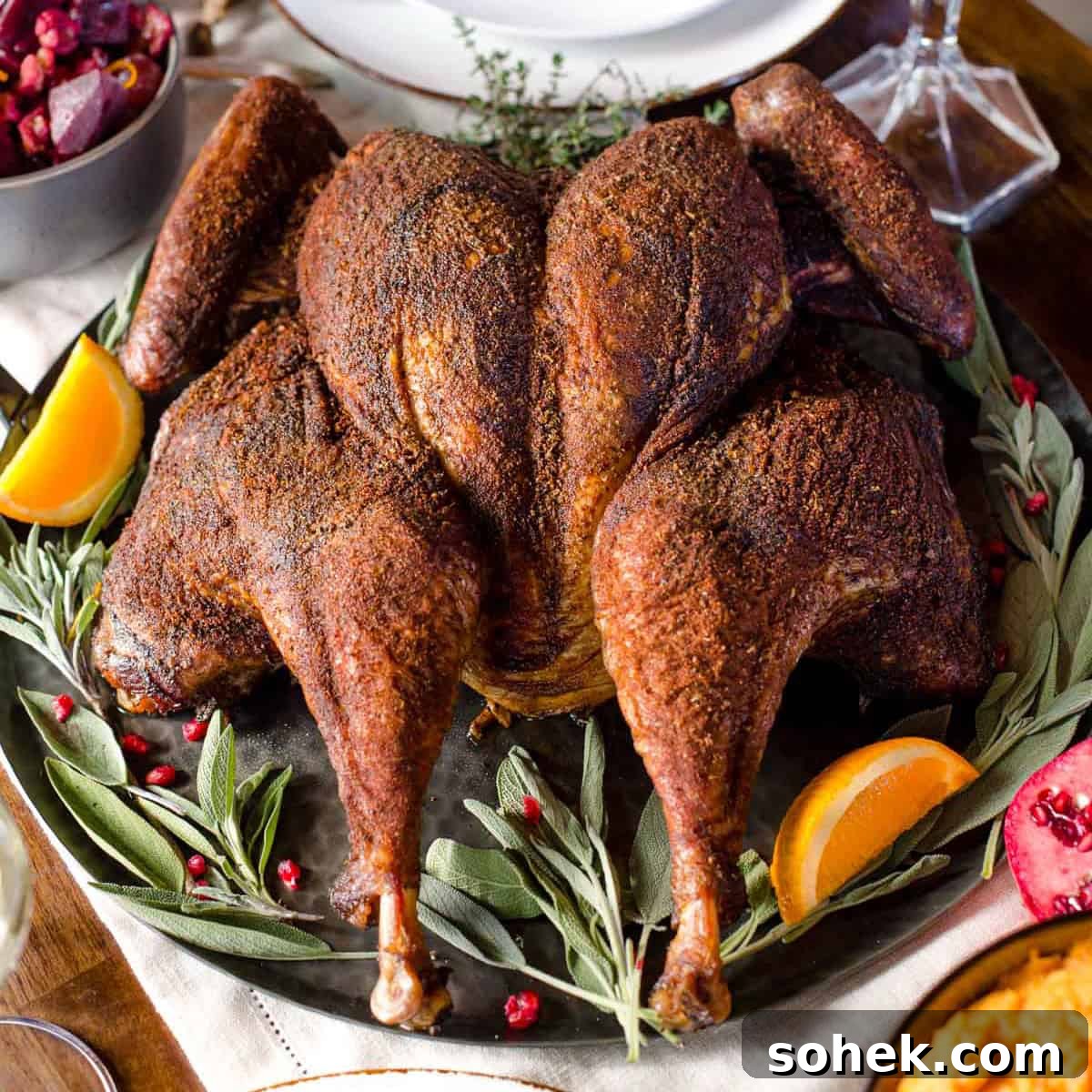
Using a pellet grill is an excellent way to infuse deep smoked flavor while still achieving crisp, golden skin for the best smoked turkey. Follow these clear steps to smoke a turkey on a pellet grill with consistently great results.
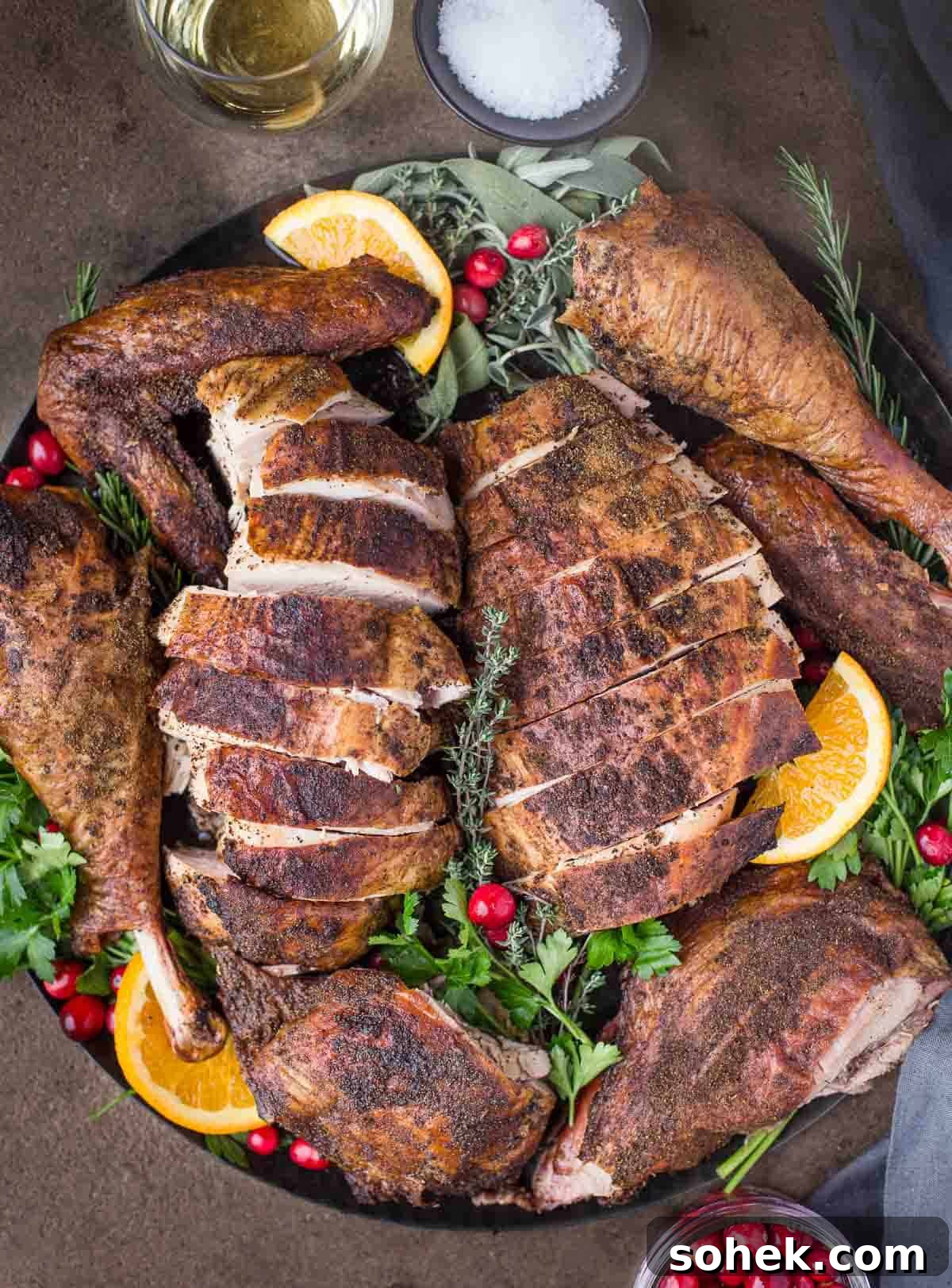
If you own a pellet grill and want a turkey that beats any oven-roasted version, this method delivers. The combination of brining, spatchcocking, seasoning, and a two-stage smoke-and-roast approach yields juicy meat and crisp skin.
This guide is organized into four main steps: wet brine, spatchcock, dry brine (seasoning), and smoking/roasting on the pellet grill.
Table of Contents
- Ingredients for Pellet Grill Smoked Turkey
- Tools Used
- Wet Brine
- Spatchcock Turkey
- Dry Brine
- Smoking a Turkey on a Pellet Grill
- Rest
- Carve + Serve Smoked Turkey
- Frequently Asked Questions
- Best Sides
Ingredients for Pellet Grill Smoked Turkey
- Whole turkey – A fresh or fully thawed turkey works best. If the bird is sold pre-brined, choose an unbrined turkey if you plan to make your own brine.
- Seasoning – This method uses both a wet brine and a dry seasoning. The dry seasoning should include kosher salt and aromatic herbs such as sage and thyme. You may add a touch of sweetness with a dry rub if desired.
Thawing and Planning
Plan one day in the refrigerator for every 5 pounds of turkey. For example, a 15-pound turkey needs about three days to thaw. Allow an additional day for brining. If you need to thaw faster, submerge the sealed bird in cold water, changing the water every 30 minutes; estimate roughly 30 minutes per pound for this method.
Turkey Buying Tips
Smaller turkeys handle low-and-slow smoking better than very large birds. If you need more than a 15-pound turkey, consider cooking two smaller birds to avoid dryness and to increase the amount of dark meat. Portion about 1½ pounds per person.
Tools Used
Gather these tools before you begin to make the process smooth and efficient.
- Large cutting board – Use an oversized board or place a smaller board inside a sheet tray to catch juices.
- Paper towels – For thoroughly drying the bird.
- Brine container – A large stockpot, cooler, or a heavy-duty brining bag will work.
- Sharp knife or kitchen shears – Helpful for spatchcocking and carving.
- Meat thermometer – A reliable leave-in or Bluetooth probe thermometer plus an instant-read thermometer to verify doneness in multiple spots.
Wet Brine
Remove giblets and place the turkey in a brining container. Combine cold water, kosher salt, and sugar until dissolved, then add aromatics such as citrus, onion, whole peppercorns, bay leaves, or cloves. Submerge the turkey and refrigerate for 24 hours. Brining seasons the meat and helps retain moisture during cooking.
Spatchcock Turkey
After brining, remove the turkey and discard the brine. Lay the bird breast-side down and cut along each side of the backbone with a sharp knife or kitchen shears. Remove the backbone (reserve for stock if you like). Flip the bird and press to flatten by cracking the breastbone so the turkey lies evenly on the grill. Spatchcocking shortens cook time and promotes even browning.
Dry Brine (Seasoning)
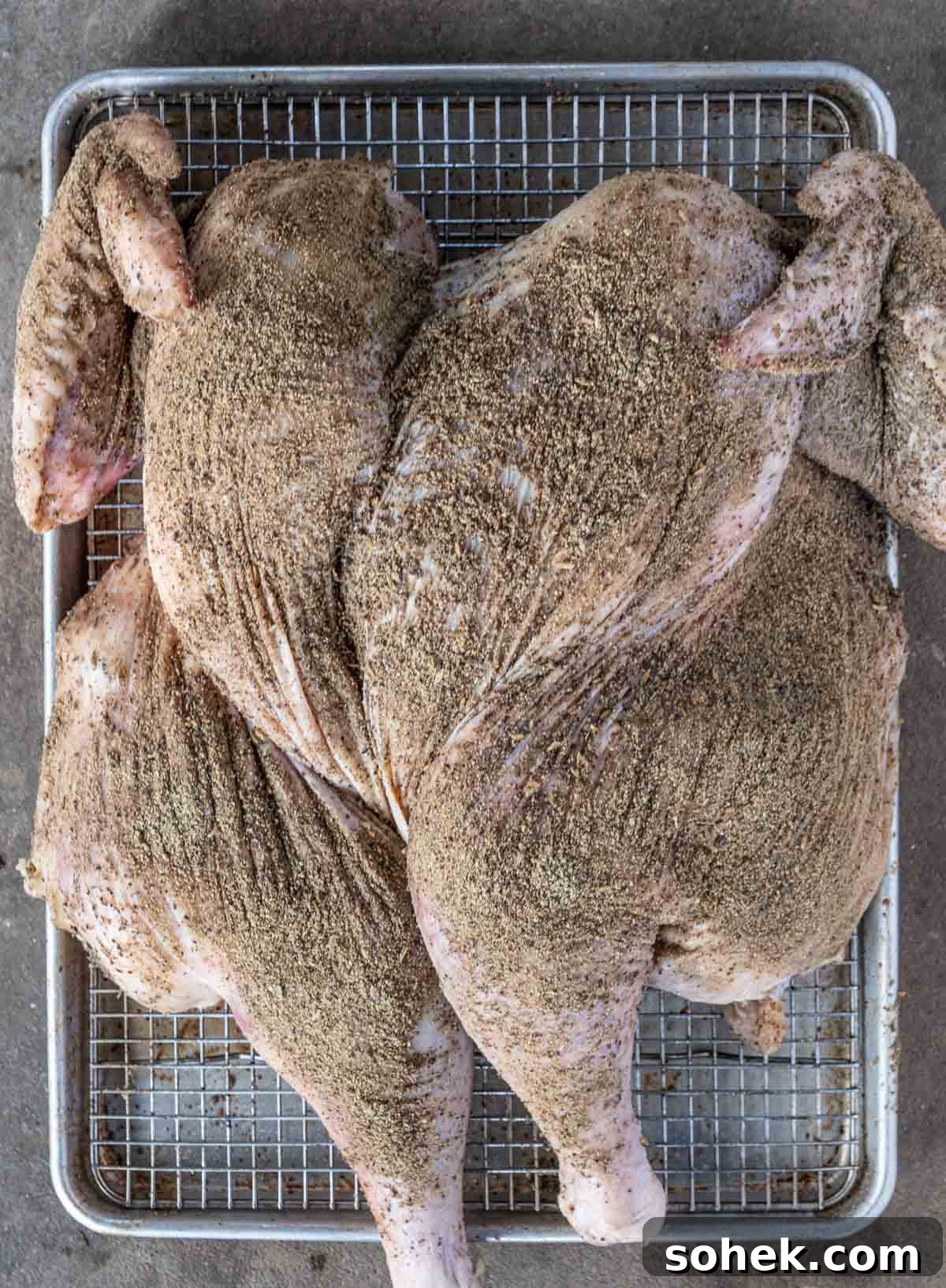
Thoroughly pat the turkey dry with paper towels. A dry surface is essential for crisp skin. Generously rub the turkey with your seasoning mixture, then place it on a sheet tray with a wire rack and refrigerate uncovered for at least three hours, ideally up to 12 hours. The salt in the dry rub draws moisture from the skin and helps it crisp during cooking. Do not apply oil; keep the skin dry.
Smoking a Turkey on a Pellet Grill
With the bird brined, spatchcocked, and seasoned, it’s time to use the pellet grill. The advantage of a pellet grill is the ease of starting at a lower temperature to build smoke flavor, then increasing heat to finish and crisp the skin. There is no need to let the turkey sit at room temperature before cooking.
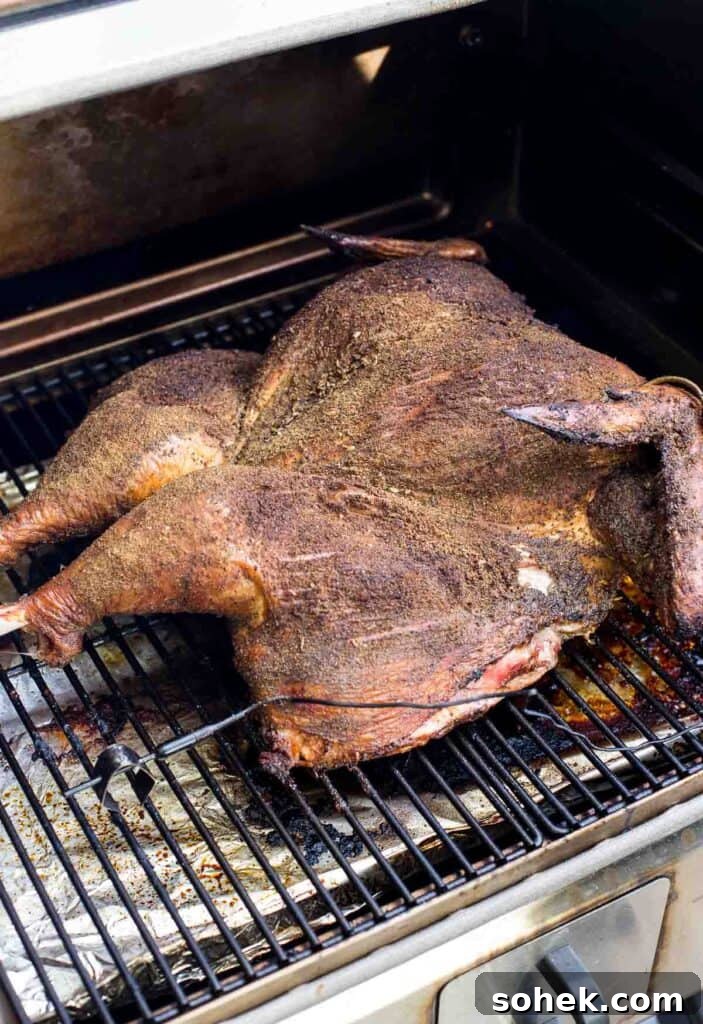
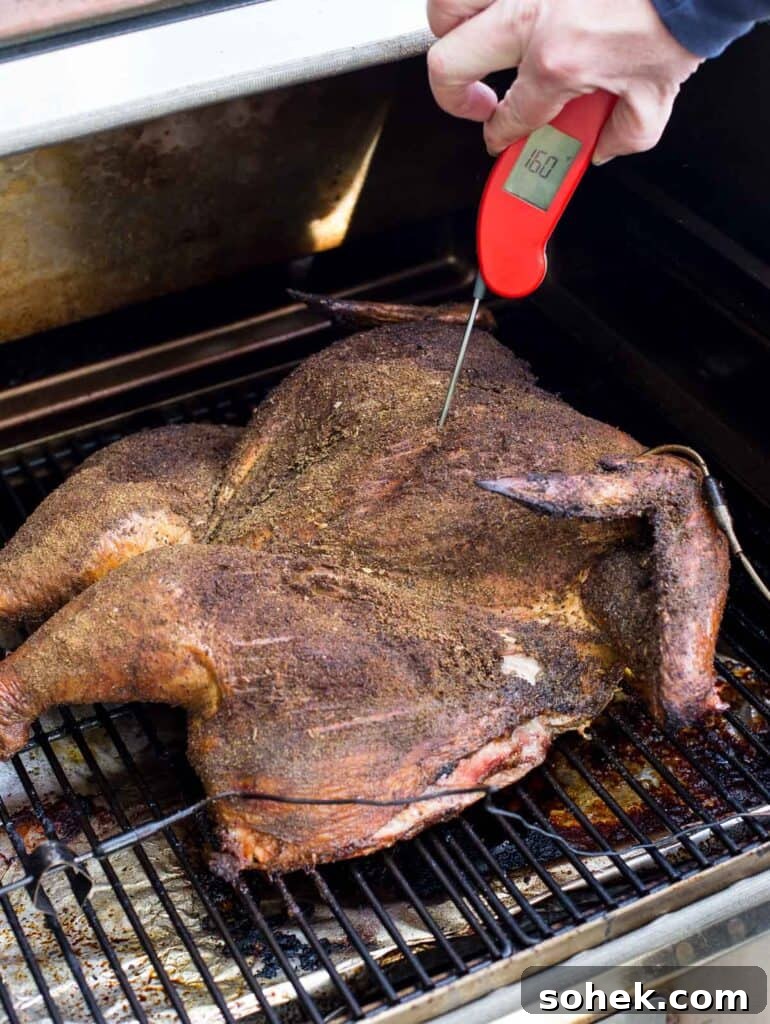
- Preheat smoker: Set the pellet grill to 250°F and use a fruitwood pellet, such as apple or cherry, for a mild, sweet smoke.
- Smoke turkey: Place the seasoned, spatchcocked turkey on the grill, breast side up. Insert a leave-in probe into the thickest part of the breast and smoke for two hours to build smoke flavor.
- Increase heat: After two hours the internal temperature should be roughly 100–120°F. Increase the grill temperature to 350–375°F and continue cooking until the thickest part of the breast reaches 160°F. Check several locations on the breast with an instant-read thermometer. The thighs and legs should be closer to 180°F.
- Remove and rest: When the target temperatures are reached, remove the bird and let it rest for 20 minutes before carving.
This two-stage method—low smoke followed by higher heat—works well on any pellet grill and yields smoky flavor with a crisp finish.
Rest
Rest the turkey on a cutting board for about 20 minutes, loosely tented with foil. Avoid wrapping tightly, which traps steam and softens the skin. Carryover cooking will raise the internal temperature by a few degrees, bringing the meat to a safe and juicy finish.
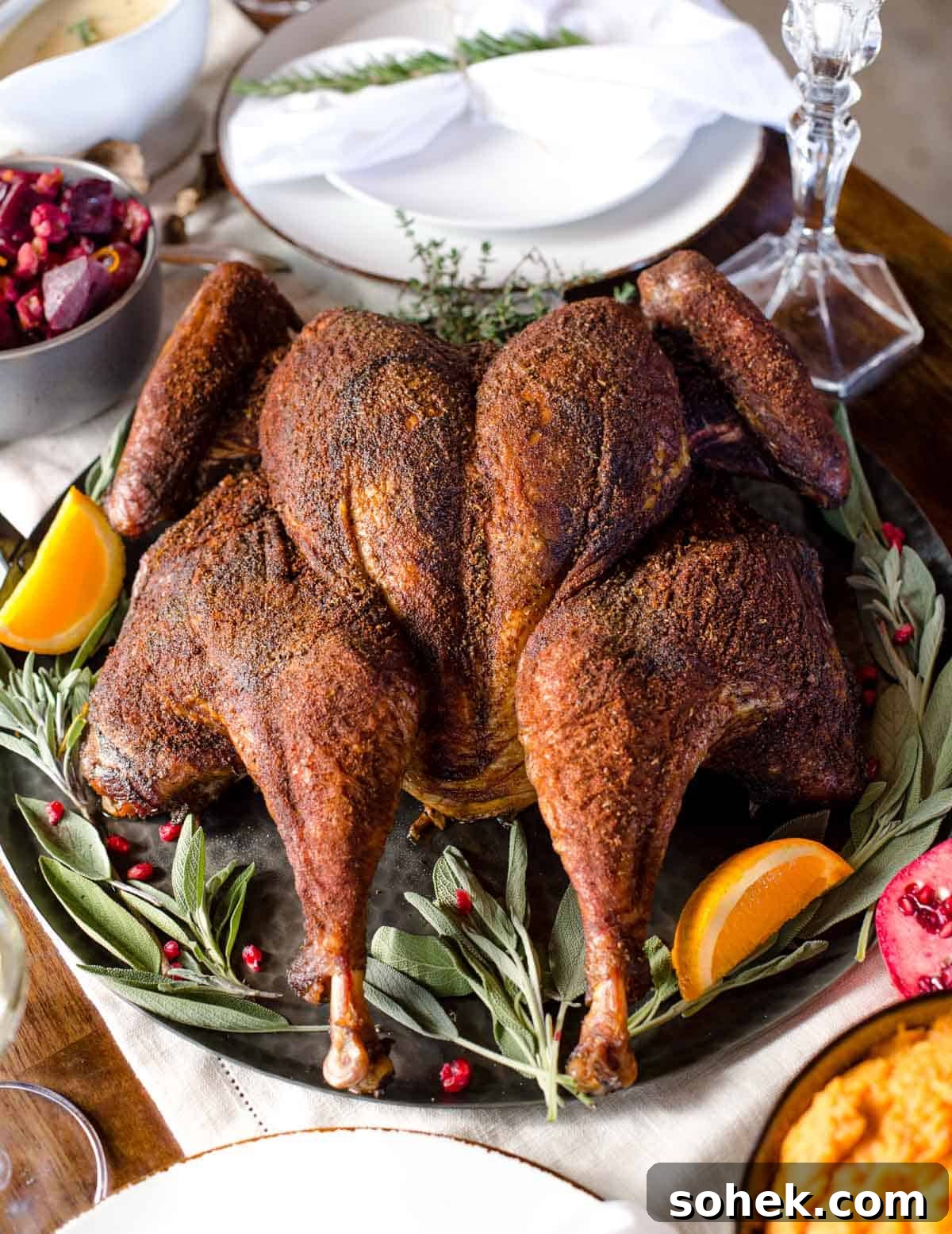
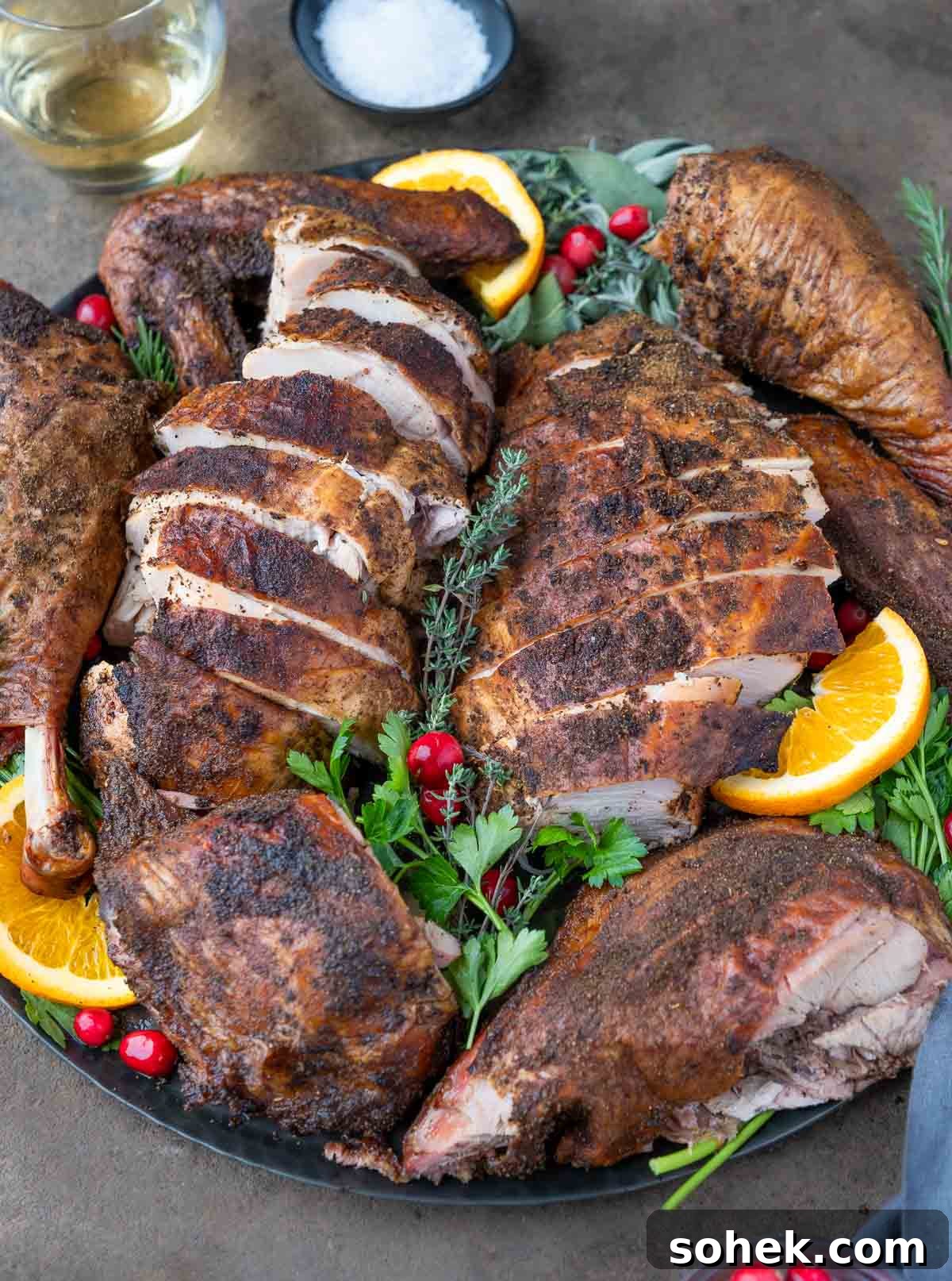
Carve + Serve Smoked Turkey
Carve with a sharp knife. Remove wings first, then thighs and legs, then slice the breast meat into thick slices so guests get juicy slices with some crisp skin attached. Arrange on a platter and serve warm.
Frequently Asked Questions about Pellet Grill Smoked Turkey
Fruit woods like apple or cherry are excellent choices; they deliver a bright, slightly sweet smoke that complements turkey well.
Times vary with weather and bird size. Expect about 15 minutes per pound for a spatchcocked turkey using this smoke-then-roast method. Total cook time is roughly 3 to 4 hours for a typical bird, plus resting time.
No—wrapping during smoking can prevent the skin from crisping. The dry skin and dry brine approach promotes the best crispy exterior.
It’s not recommended when your goal is crispy skin. A water pan increases humidity and can inhibit skin crisping.
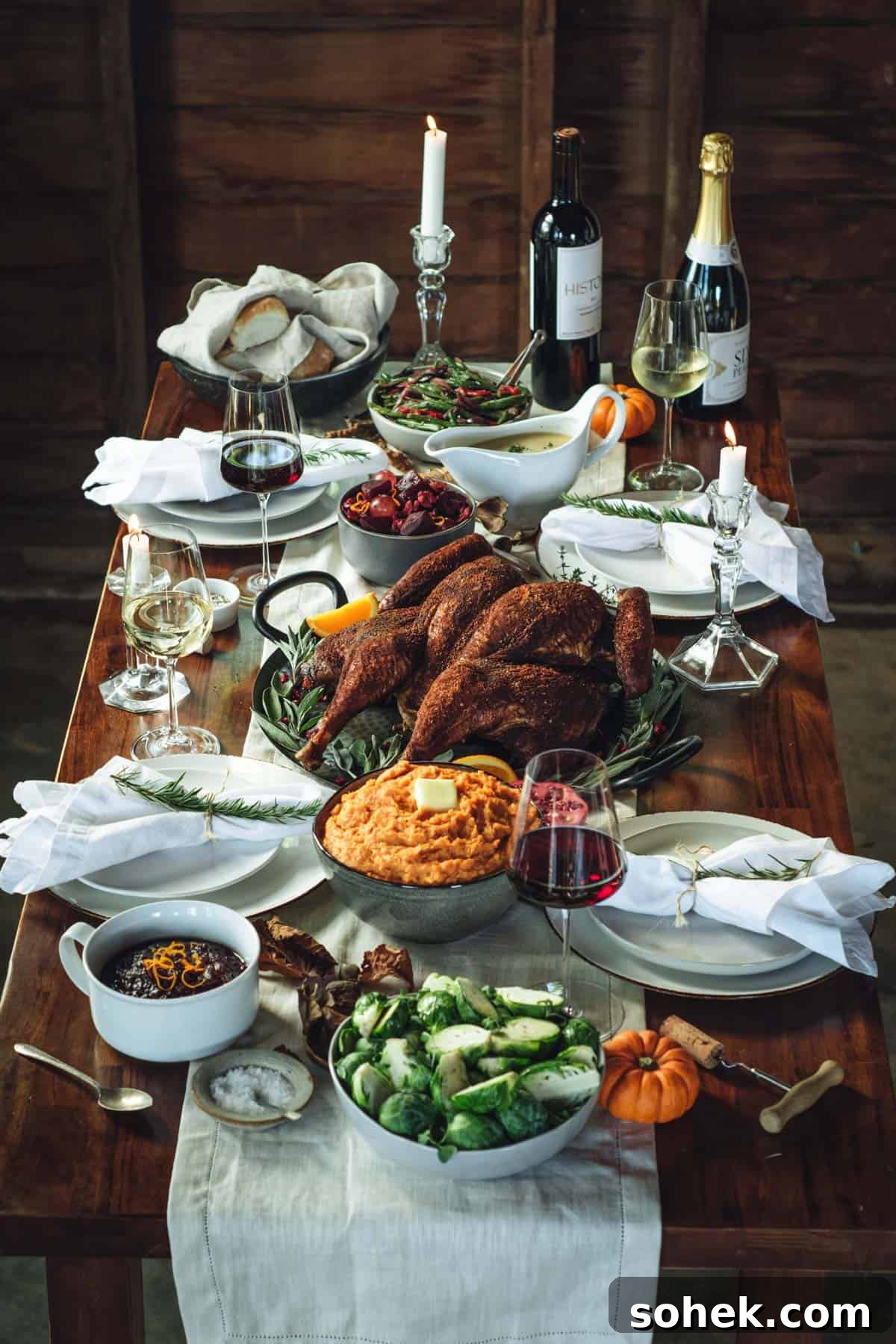
Best Sides for Pellet Grill Smoked Turkey
- Smoked turkey gravy made with extra smoked turkey leg for depth and richness.
- Southern-style collard greens simmered with smoked turkey thigh for savory flavor.
- Smoked sausage and cornbread dressing, using skillet cornbread, smoked sausage, and caramelized onions for a hearty side.
Notes: Resting is essential—loose foil tenting preserves crisp skin while allowing carryover cooking to finish the breast to the safe target temperature. For carving, remove wings and legs first, then slice the breast against the grain into thick pieces so each serving includes juicy meat and crispy skin.