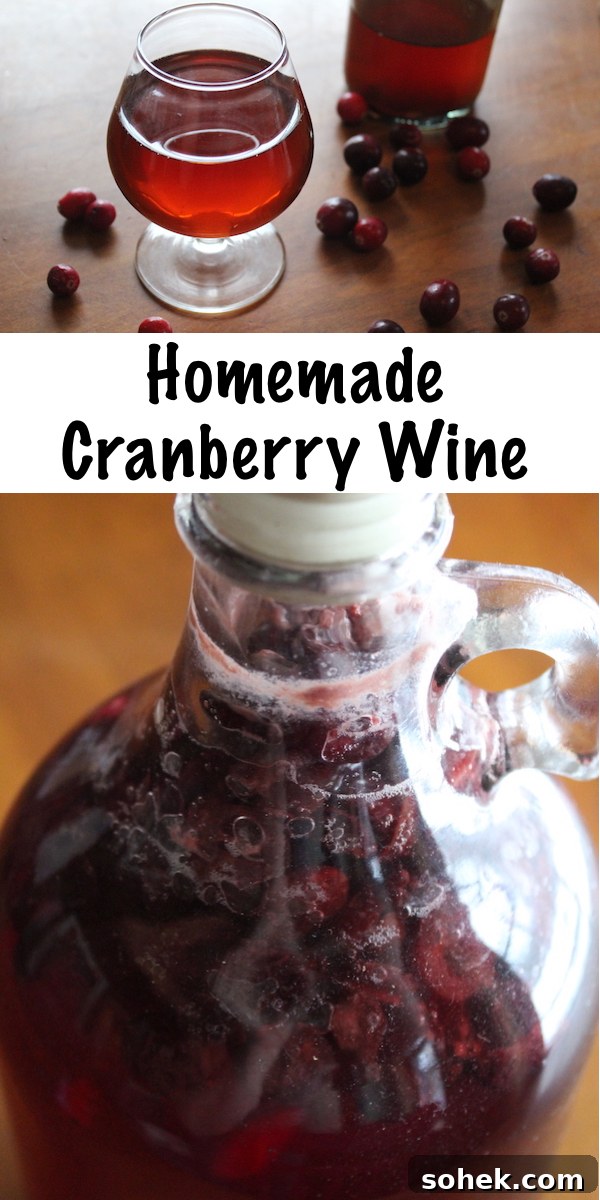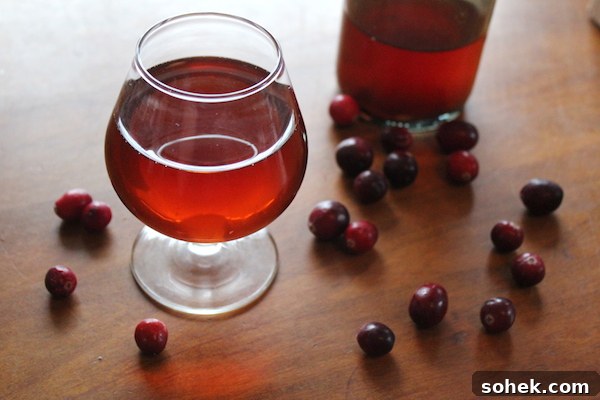
Cranberry wine is a winter favorite: fruity and warming, with enough sweetness to balance the cranberries’ natural tartness.
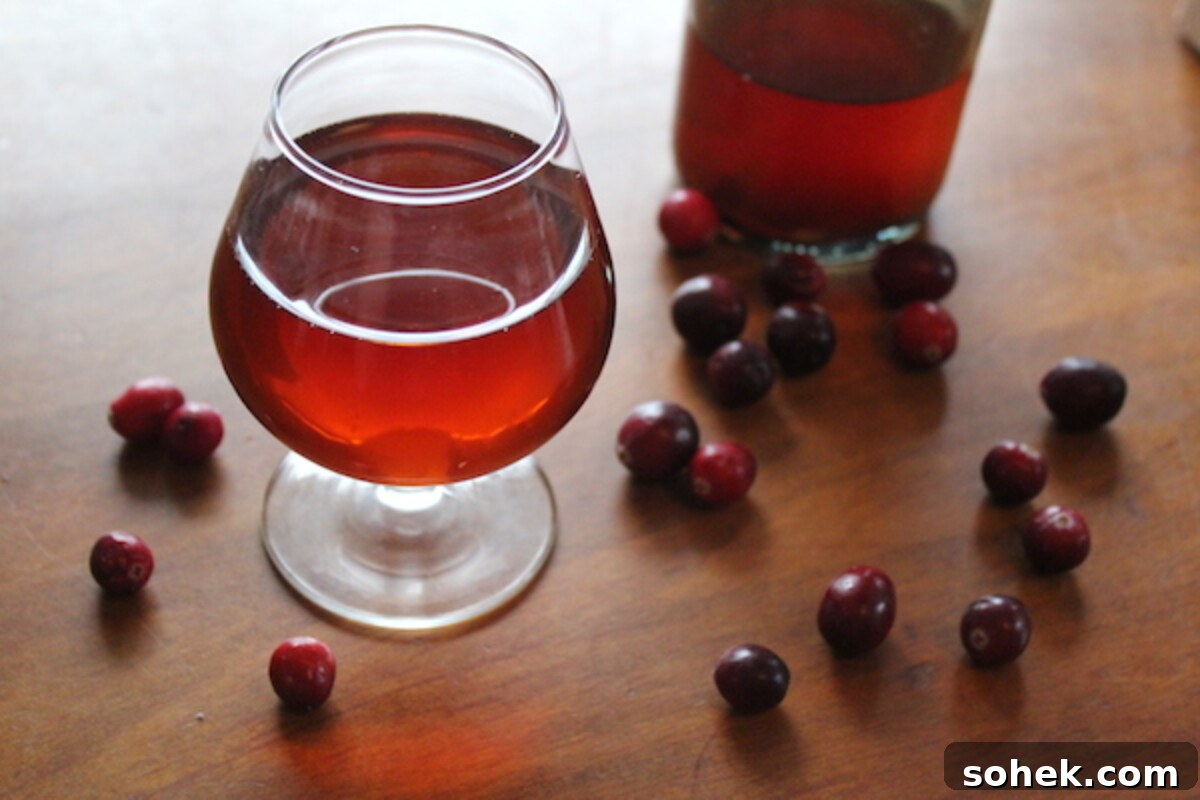
After tasting cranberry wine at a local vineyard, I decided to make my own. The result is warm, fruity, and well balanced, with a pleasant tart astringency that gives the wine character. Instead of serving cranberry sauce with a meal, this wine lets you enjoy cranberries as a seasonal drink once it has aged.
I originally intended to use fresh cranberries from our backyard patch, but wildlife took much of the harvest. That turned out to be fine — cranberries ripen late, and using store-bought juice let me start earlier in the season.
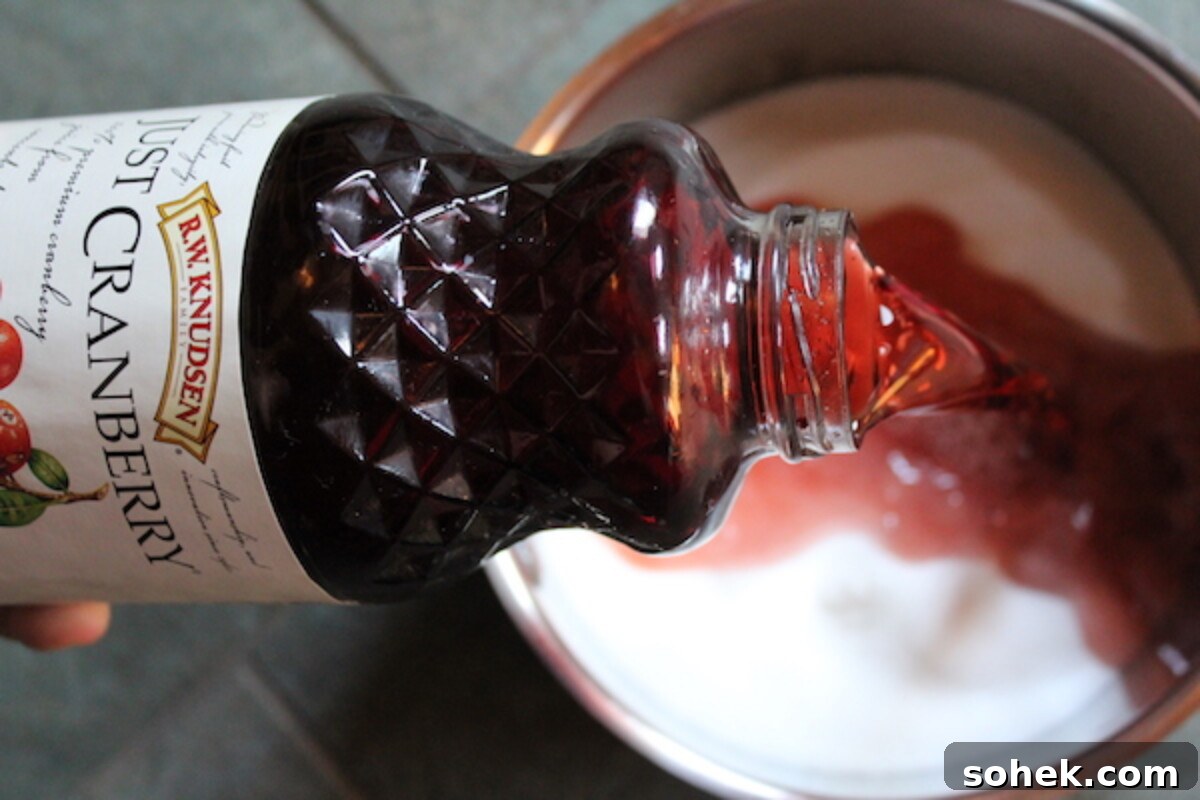
Many commercial cranberry juices contain lots of added sugar or corn syrup. While this wine still requires a fair amount of sugar to ferment properly, corn syrup can encourage overly vigorous fermentation and can wash out cranberry flavor. I prefer unsweetened pure cranberry juice for better control of sweetness and flavor. If you use sweetened juice, reduce the added sugar accordingly and check that the juice contains no preservatives that would prevent fermentation.
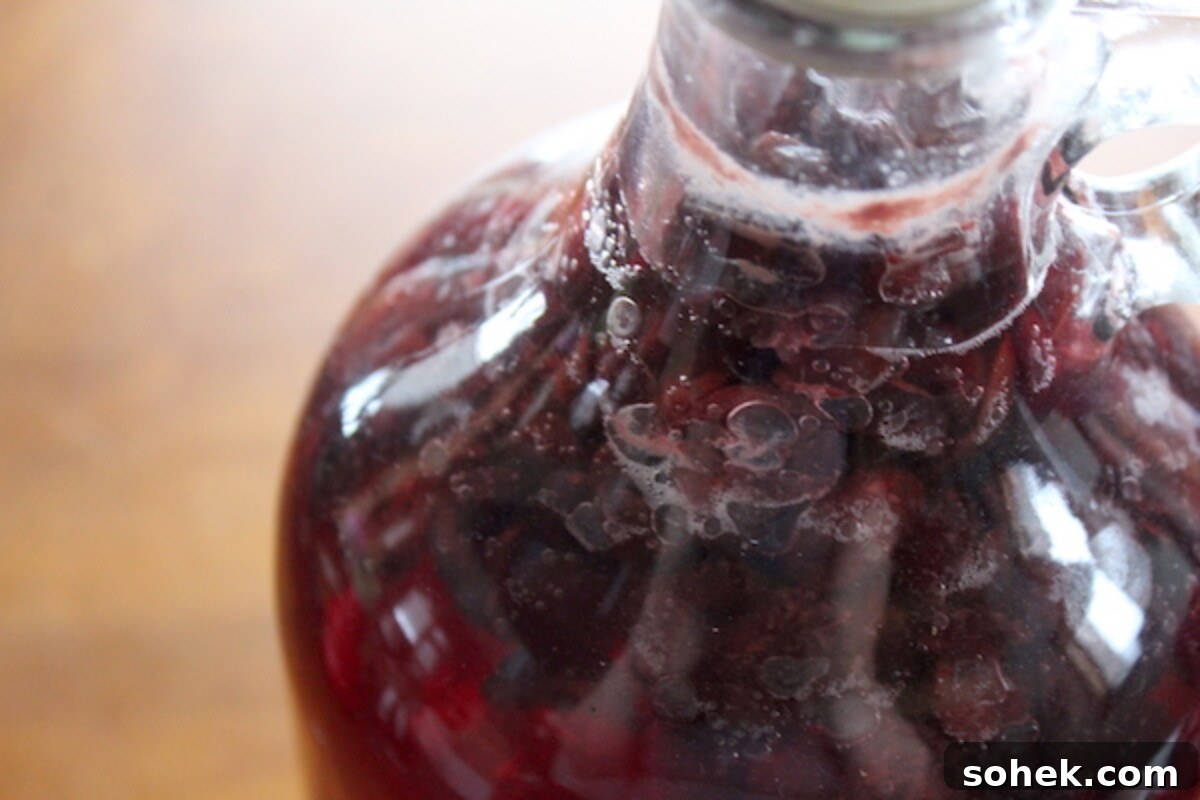
To start, dissolve some of the sugar in cranberry juice in a small saucepan. Warm it gently just until the sugar dissolves, then remove from heat and let it cool to room temperature.
If you prefer to use fresh cranberries, chop 3–4 pounds and add them directly to the primary fermenter. The fruit is removed after primary fermentation so the wine can clear, similar to how raisins are filtered out in this recipe.
I generally like dry wines and have sometimes used less sugar than many cranberry wine recipes call for. After tasting, though, I recommend using the full amount to balance the cranberries’ acidity — the extra sugar helps round the flavor.
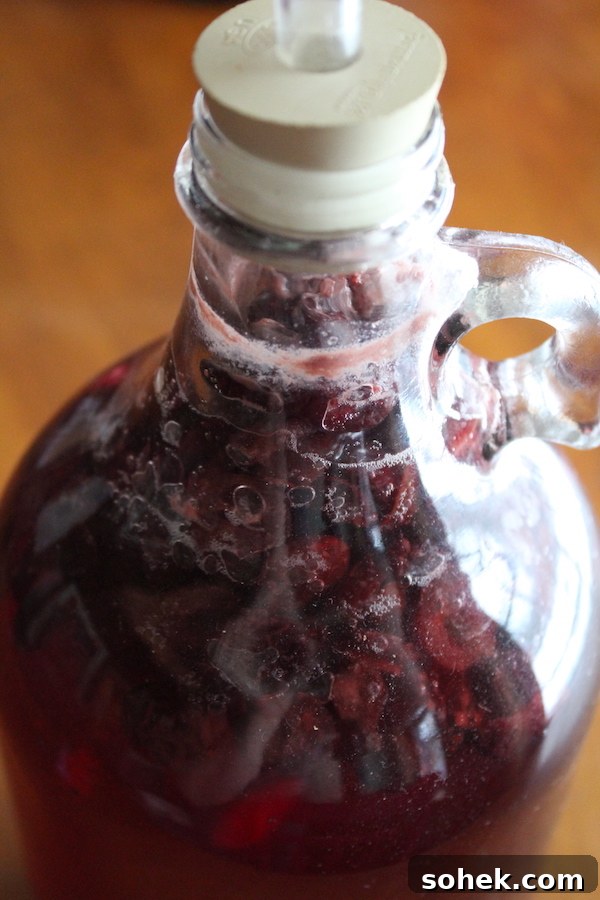
For additives, yeast nutrient is helpful because cranberries lack some micronutrients that grapes provide. If you don’t have yeast nutrient, about 1/4 cup of raisins will help feed the yeast. Pectic enzyme is also useful to improve clarity; add about 1 teaspoon at the start of fermentation if you have it.
Cranberries are quite acidic, so I skip additional acid in this batch. I also don’t stabilize my wine since a bit of sediment from residual bottle fermentation is acceptable to me. If you want a crystal-clear, fully still wine, consider using potassium sorbate and potassium metabisulfite to halt and stabilize fermentation before bottling.
Homemade Cranberry Wine
Equipment
- One gallon carboy
- Sanitizer
- Auto-siphon
- Wine bottles
- Bottle corker and corks
Ingredients
- 96 oz unsweetened cranberry juice, or 3–4 lbs fresh cranberries
- 3 lb sugar
- 1 lb golden raisins (optional, for body and yeast food)
- 1 tsp yeast nutrient
- 1 packet wine yeast, dissolved in water
- Water to fill
Instructions
- Add sugar to cranberry juice in a small saucepan and heat just until the sugar dissolves. If using fresh cranberries, use water to dissolve the sugar and include the chopped fruit in the primary fermenter.
- Let the juice and sugar mixture cool to room temperature. While it cools, dissolve the yeast packet in lukewarm water and let it bloom for at least 5 minutes.
- Add yeast nutrient and raisins to the juice/sugar mixture, then pour everything into a primary fermentation vessel and add the dissolved yeast.
- Cap with an airlock and ferment in primary for 2–3 weeks. Alternatively, ferment without an airlock for about 5 days, then rack into secondary and fit an airlock.
- Once in secondary with an airlock, ferment for 6–8 weeks before bottling. For a drier wine, rack a second time and ferment another 6–8 weeks.
- Bottle in wine bottles and age for at least 3 months, ideally up to a year for best flavor.
Notes
Nutrition
Nutrition information is an approximation.
Other Cranberry Wine Recipes
Another popular recipe for a 5-gallon batch includes:
- 15 lbs cranberries
- 5 lbs raisins
- 15 lbs sugar
- 5 tsp yeast nutrient
- 10 drops pectic enzyme
- 1 package sweet mead or wine yeast
That method typically has you ferment everything in primary for 5–7 days, then rack to secondary for about three months before bottling, with an additional few months of bottle aging recommended.
More Country Wine Recipes
If you’re new to winemaking, look for a guide to small-batch wines to learn more about sanitation, yeast choices, and scaling recipes. Other simple fruit wines to try include pomegranate, peach, rhubarb, and dandelion wines.