Kothamalli Sadam (Coriander Rice) – No Onion, No Garlic
Kothamalli Sadam (Coriander Rice) – No Onion, No Garlic South Indian Delight
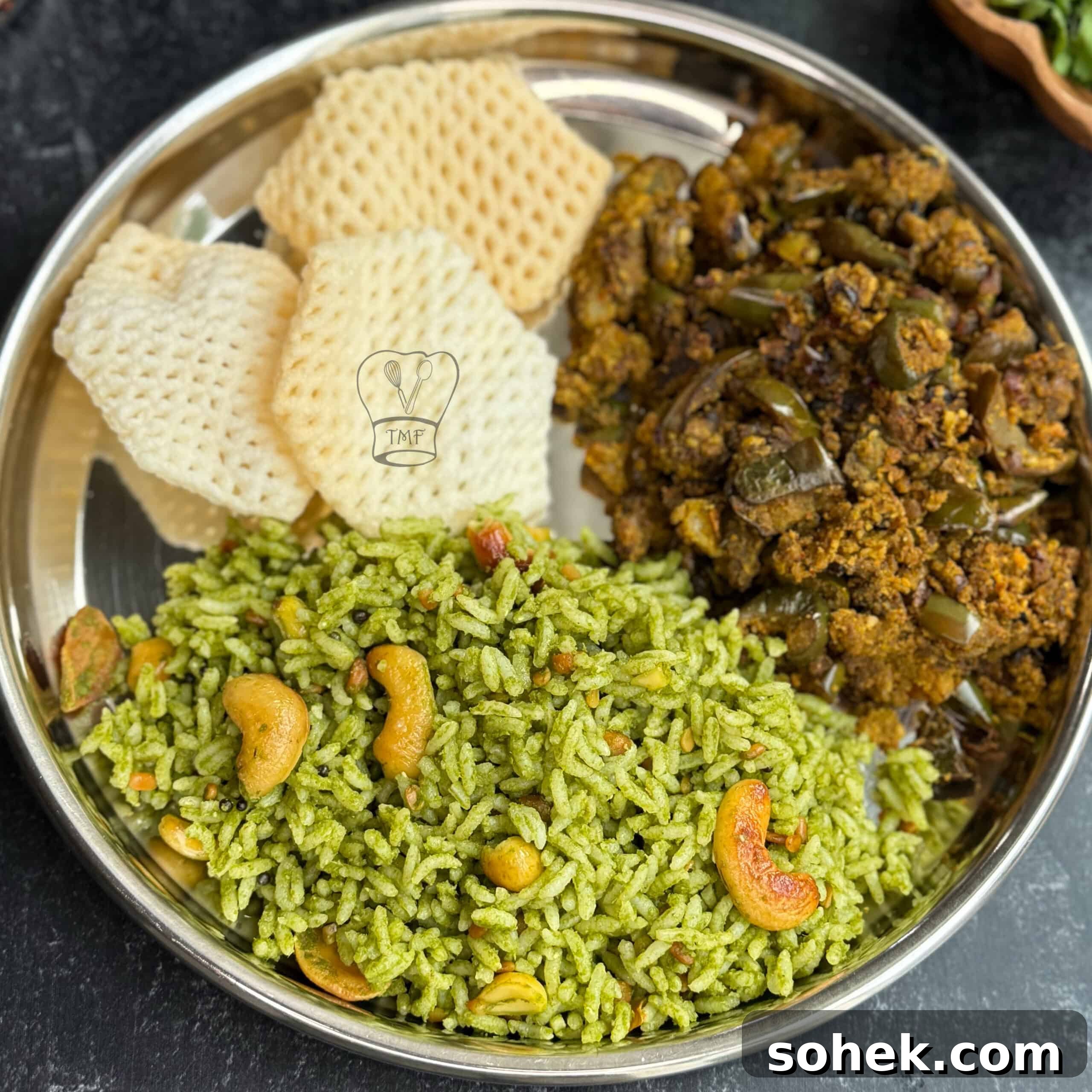
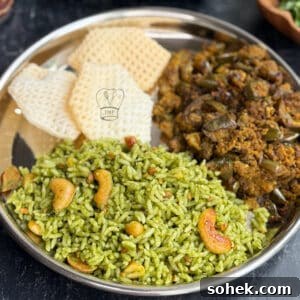
Kothamalli Sadam, or coriander rice, is a fragrant South Indian dish made without onion or garlic, ideal for sattvic or Jain meals, festive occasions, and temple offerings. Fresh coriander leaves provide a bright herbal aroma and refreshing flavor that blends perfectly with steamed rice. This vegan recipe is quick to prepare, nutritious, and works well for lunchboxes, weeknight dinners, or as part of a traditional thali.
Great for Festive Days, Temple Offerings, and Everyday Meals
This no-onion, no-garlic coriander rice is commonly prepared for religious fasting and special events when alliums are avoided. A green paste of coriander, green chilies, ginger, coconut, and a hint of tamarind or lemon juice gives the rice its vibrant color and tangy-savoury balance. Serve with yogurt, papad, or a simple vegetable side for a complete meal.
Using Leftover Rice
Leftover or cold rice works very well for this recipe. If using refrigerated rice, bring it to room temperature or warm it slightly, then spread it on a plate to let steam escape before mixing. This helps the grains separate and prevents clumping.
Tips for Fluffy Rice
For freshly cooked rice, spread it on a plate to release steam and add a few drops of oil while cooking to keep grains separate. A touch of sesame oil while cooling also helps keep the rice fluffy and prevents sticking.
Storing Leftover Coriander Rice
Store leftover Kothamalli Sadam in an airtight container in the refrigerator for up to 2 days. Reheat gently in a pan or microwave with a few drops of water to retain moisture and restore the texture.
Which Rice to Use?
Sona masoori is my preferred choice for this recipe, but basmati, raw rice, brown rice, hand-pounded rice, or millets can also be used. Cook the rice thoroughly but avoid overcooking to prevent a mushy texture.
What Goes Well with Kothamalli Sadam?
This coriander rice pairs beautifully with curd-based dishes, vegetable kootu, dry vegetable varuval, pickles, papad or vadam, and simple fritters like masala vadai or pakoda. It also complements sambhar or dal for a heartier meal.
Coriander Leaves — Notes and Tips
- Always use fresh coriander leaves for the best aroma and color.
- Thin stems are fine; avoid using thick, woody stems.
- Wash leaves thoroughly and drain well—they can retain some moisture but should not be dripping wet.
Can I Skip Tamarind?
Tamarind adds a subtle tang that enhances the coriander paste, but you can substitute fresh lemon juice if preferred. Both work well; adjust to taste.
Ingredients
To Grind
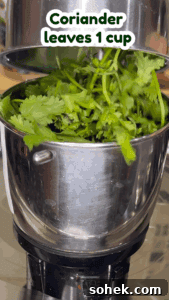
- 1 heaped cup coriander leaves (washed & roughly chopped)
- 1 small piece ginger
- Salt, to taste
- Small piece tamarind (or 1–2 tsp lemon juice)
- ¼ cup tightly packed grated coconut
- ½ tsp cumin seeds
- 3 peppercorns
- A pinch turmeric powder
- 2 green chillies (adjust to taste)
- 2–3 tbsp water (to grind)
To Temper
- 1 tbsp sesame oil
- ¼ tsp mustard seeds
- ½ tbsp urad dal
- 1 tbsp chana dal
- 3 tbsp peanuts
- 8 cashews
- 2 dry red chillies
- A pinch of asafoetida (hing)
- A few curry leaves
For Rice
- ½ cup sona masoori rice
- 1½ cups water
- 1 tsp ghee
Method
- Rinse and cook ½ cup sona masoori rice with 1½ cups water until the grains are soft yet separate. Avoid overcooking.
- Spread the cooked rice on a wide plate, drizzle a little sesame oil, and fluff gently. Allow it to cool slightly.
- Grind all ingredients listed under “To Grind” into a smooth paste using minimal water.
- Heat 1 tbsp sesame oil in a wide pan. Add mustard seeds, urad dal, chana dal, peanuts, cashews, dry red chillies, asafoetida, and curry leaves.
- Sauté until the dals and nuts turn golden and release a nutty aroma.
- Add the ground coriander paste and a splash of water to the tempered mixture. Bring it to a gentle boil and cook for a minute so flavors meld.
- Add the cooled rice to the pan and gently mix until every grain is evenly coated with the coriander masala.
- Drizzle 1 tsp ghee over the rice, toss once, and turn off the heat. Adjust salt and lemon/tamarind if needed.
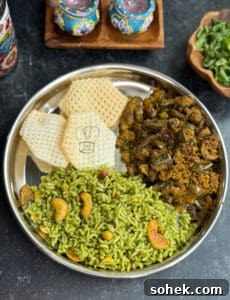
Serve and Enjoy
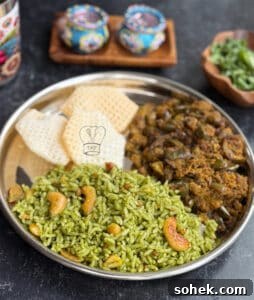
Serve Kothamalli Sadam warm with plain yogurt, papad, pickle, or any dry vegetable curry. This aromatic rice is refreshing, light, and satisfying—perfect for festivals, fasts, or everyday meals.