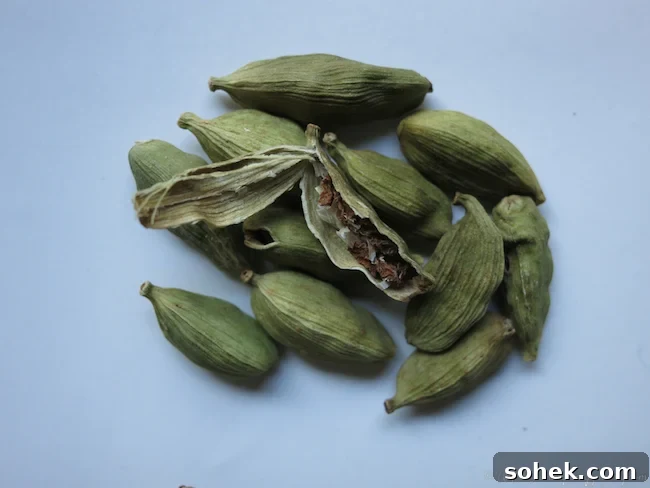
Cardamom Flavor Profile
Cardamom appears in thirteen recipes in Jerusalem: A Cookbook, from salads and mains to desserts and condiments. Its versatility makes it a valuable spice: floral and citrusy top notes, with hints of nutmeg and ginger, and a warm, slightly pungent base similar to cinnamon or allspice. Use it sparingly, as its intensity can dominate a dish.
Types of Cardamom
When buying cardamom you’ll encounter green pods, pre-ground cardamom, and loose seeds. Green cardamom is common across India and Western Asia in sweets and tea, and it appears in some savory dishes. In Arab countries it flavors coffee; in Scandinavia and Germany it is often used in baked goods. Many people chew green pods as a natural breath freshener and digestive aid.
Black cardamom has much larger pods and a smoky, camphor-like aroma. It’s best suited for hearty savory dishes—stews, pilafs, roasted vegetables, and pickles—rather than desserts. Both green and black varieties can appear in spice blends such as garam masala.
Garam masala and various regional spice mixes sometimes include either or both types of cardamom, lending distinct aromatic layers depending on which is used.
Origin of Cardamom
Cardamom originally comes from southern India and is now cultivated widely in Sri Lanka and Guatemala. In Guatemala, cardamom has become a major export crop. Pods are hand-harvested before full ripeness to preserve their volatile oils, a labor-intensive step that contributes to the spice’s price. Still, in modest quantities cardamom is an affordable, rewarding addition to a home spice collection.
March Cardamom Recipes from the Cookbook Include:
Spiced chickpeas and fresh vegetable salad, page 56: Chickpeas are coated in a spice mix where cardamom contributes a warm, aromatic element. The sherry-vinegar vinaigrette brightens the salad and balances the spices.
Falafel, page 99: Cardamom appears in the falafel spice blend, which pairs well with zhoug and other condiments. Some cooks add fava beans alongside chickpeas for texture and flavor variation.
Basmati rice and orzo, page 103: The base recipe does not call for cardamom, but regional pilafs—such as those made by Bukharan Jews—often include it along with other warm spices.
Cannellini bean and lamb soup, page 135: Whole pods are crushed and added during cooking. Pods can be left in while serving or removed afterward; they are edible but have a fibrous texture some prefer to avoid.
Lamb-stuffed quince with pomegranate and cilantro, page 155: Cardamom pods are used in the stuffing and cooking liquid. If quince are unavailable, sturdy apples or pears work as alternatives; you can also sauté the fruit separately instead of stuffing to save time.
Ruth’s stuffed Romano peppers, page 165: Ground cardamom is mixed into the pepper stuffing. The baharat spice blend used in the book also includes whole pods that are ground with the other spices.
Chicken with caramelized onion and cardamom rice, page 184: This popular recipe generated a detailed discussion around rice-to-liquid ratio, matching rice and chicken cooking times, and whether to leave whole pods in for serving. Overall, it’s consistently praised and worth trying.
Lamb shawarma, page 211: Cardamom pods are pan-roasted with other whole spices and ground to create a rub for the lamb, adding deep, aromatic notes to the meat.
Grilled fish skewers, page 226: Cardamom features in hawayej, a Yemeni spice blend used to coat the fish, contributing warmth alongside other spices.
Graybeh, page 260: Although cardamom isn’t in the base recipe, many regional variations—especially those of Yemeni or Persian origin—do include it, as in koloocheh and other shortbread-style cookies.
Poached pears in white wine and cardamom: A simple, elegant dessert that uses about 15 cardamom pods to perfume the poaching liquid for a fragrant finish.
Cardamom rice pudding with pistachios and rose water, page 270: A comforting, aromatic dessert that pairs cardamom with pistachios and rose water for a classic Middle Eastern flavor profile.
Walnut and fruit crumble cream, page 276: This layered dessert blends fruit compote with a nutty crumble and a cardamom-scented cream. Star anise joins cardamom in the cream, adding a subtle Asian dimension.
Helbeh (fenugreek cake), page 290: The cake does not include cardamom, but the authors note that fans of cardamom often enjoy fenugreek’s complementary bitterness and aroma.
Baharat, page 299: The book’s baharat blend contains eight spices, including cardamom pods, giving the mix its warm, complex character.
Zhoug, page 301: This fresh condiment uses a restrained amount of cardamom along with cumin and cloves, adding an unexpected aromatic lift without overpowering the herb-driven sauce.
Welcome to Tasting Jerusalem
If you’re new to the group: our only real rule is to cook and share your experience. The group meets virtually and explores recipes from Jerusalem: A Cookbook together.
Group Guidelines:
- How often we cook: We choose a set of recipes each month so members can fit cooking into their schedules and source special ingredients.
- Do I need to cook all recipes?: No. Cook as many or as few as you like. The selections are offered to suit different tastes and time constraints.
- What you need to participate: A copy of Jerusalem: A Cookbook, curiosity about new flavors, and an internet-connected device to share your results. Monthly posts are published on the group blog.
- How to share your cooking: Anyone can participate. Photos on Twitter, Instagram, or Facebook with the hashtag #TastingJrslm are encouraged. If you need help using social media, contact the group organizer for assistance.
- What to publish: To respect copyright, do not post full recipes from the book unless permitted by the publisher. You may write about your experience, adaptations, and link to the cookbook when crediting the source.
- Questions: Organizers monitor the Facebook page and Twitter hashtag and encourage members to answer each other’s questions and share tips.
- What to include in a blog post: If you blog your results, notify the group so they can link to your post. Include a brief attribution to the group and the cookbook when appropriate.
“Tasting Jerusalem is a virtual cooking community exploring the vibrant flavors and cuisine of the Middle East through the lens of Jerusalem: A Cookbook by Ottolenghi and Tamimi published by Ten Speed Press.”