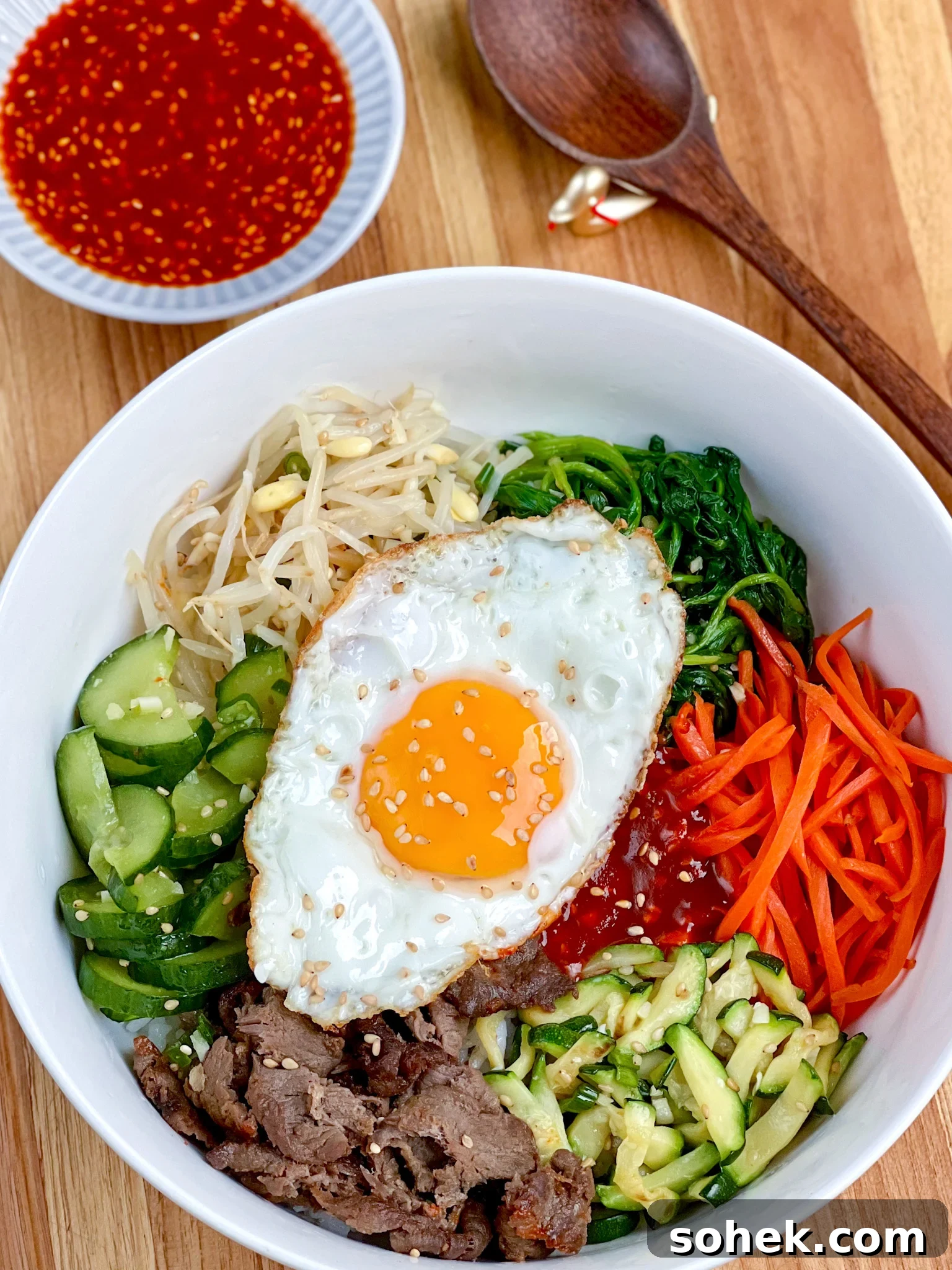
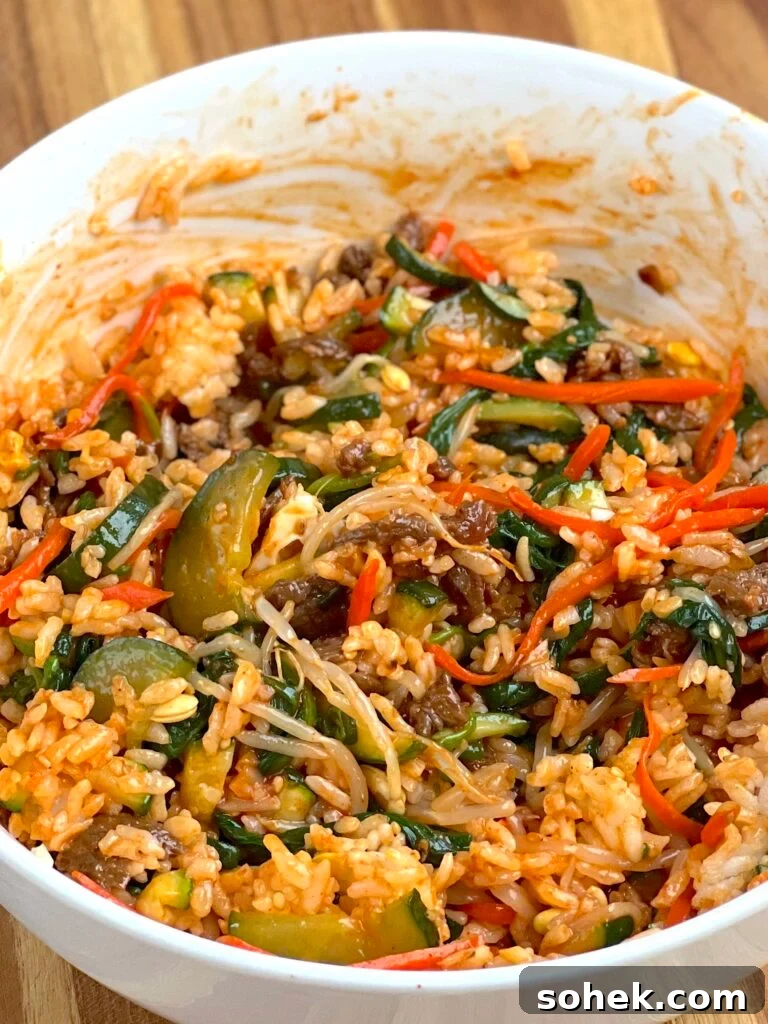
Bibimbap is one of my favorite Korean comfort dishes: a bowl of rice topped with separately prepared vegetables, optionally meat, a spicy gochujang-based sauce, and a fried egg.
“Bibim” means mixed and “bap” means rice. Traditionally served with vegetables, raw beef, and a raw egg yolk, bibimbap has many variations. This recipe uses cooked beef and a fried egg—common at restaurants and easy to replicate at home.
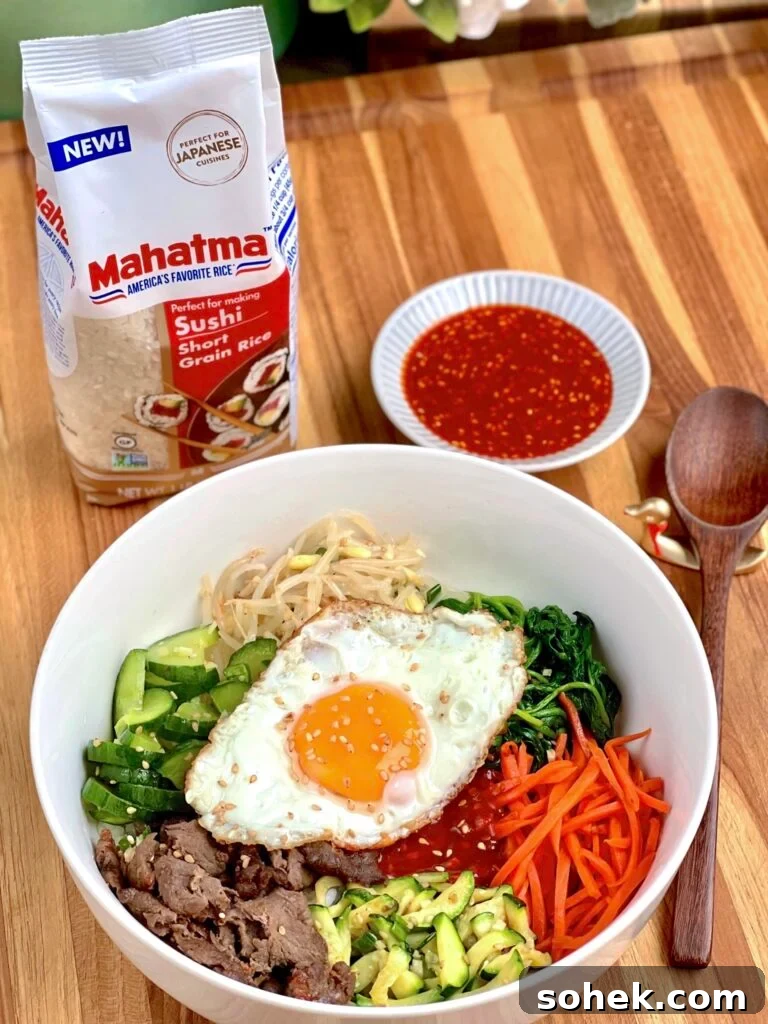
Since each vegetable is prepared separately, bibimbap can feel like a lot of steps. In practice, the prep becomes straightforward once you organize your tasks and work efficiently. Many Korean households also assemble bibimbap using leftover banchan (side dishes), so it’s a great way to use up items in the fridge.
If you prefer less prep, simply choose 2–3 vegetables instead of the five used here—bibimbap will still be delicious.
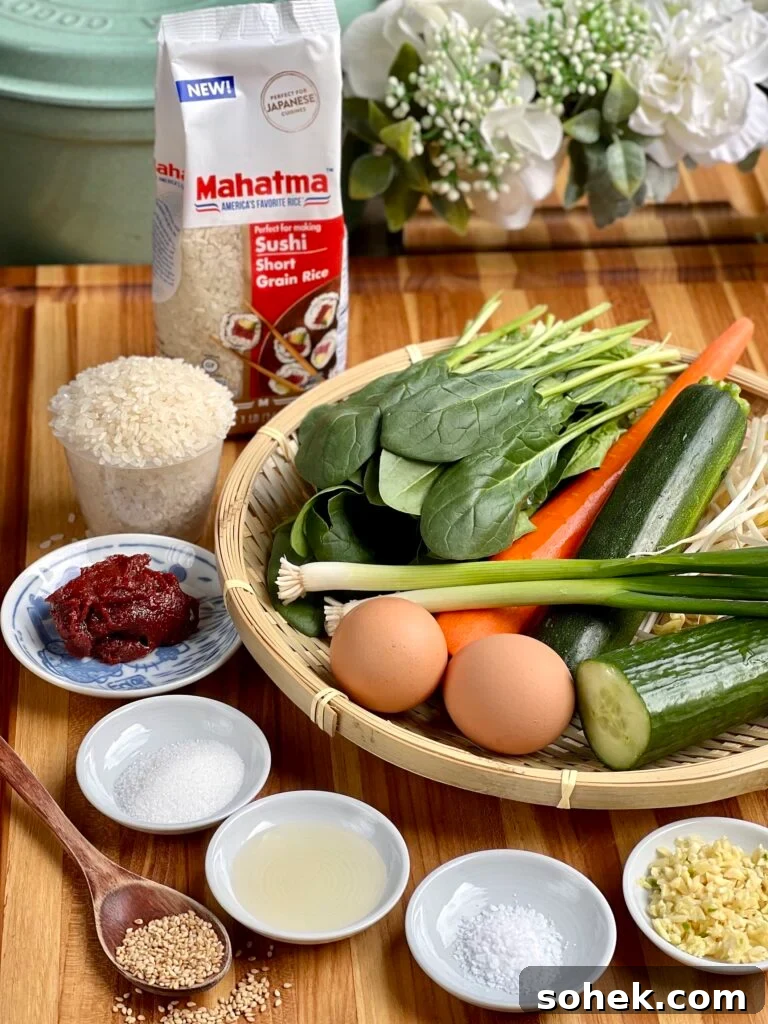
Ingredients:
- Rice – Freshly cooked short-grain rice works best for authentic texture and stickiness.
- Bibimbap sauce – While traditional bibimbap uses straight gochujang, I like a sweet-tangy gochujang sauce. Use gochujang, sugar, sesame oil, minced garlic, rice vinegar, water, and sesame seeds.
- Vegetables – No strict rules here. Common choices are spinach, bean sprouts, zucchini, cucumber, and carrots.
- Beef – This version uses a cooked, sweet soy-bulgogi style marinade. For a vegetarian option, substitute mushrooms with the same marinade.
- Fried egg – Bibimbap is traditionally finished with an egg, either raw yolk or fried. Omit the egg (and the beef) to make this dish vegan while maintaining plenty of flavor.
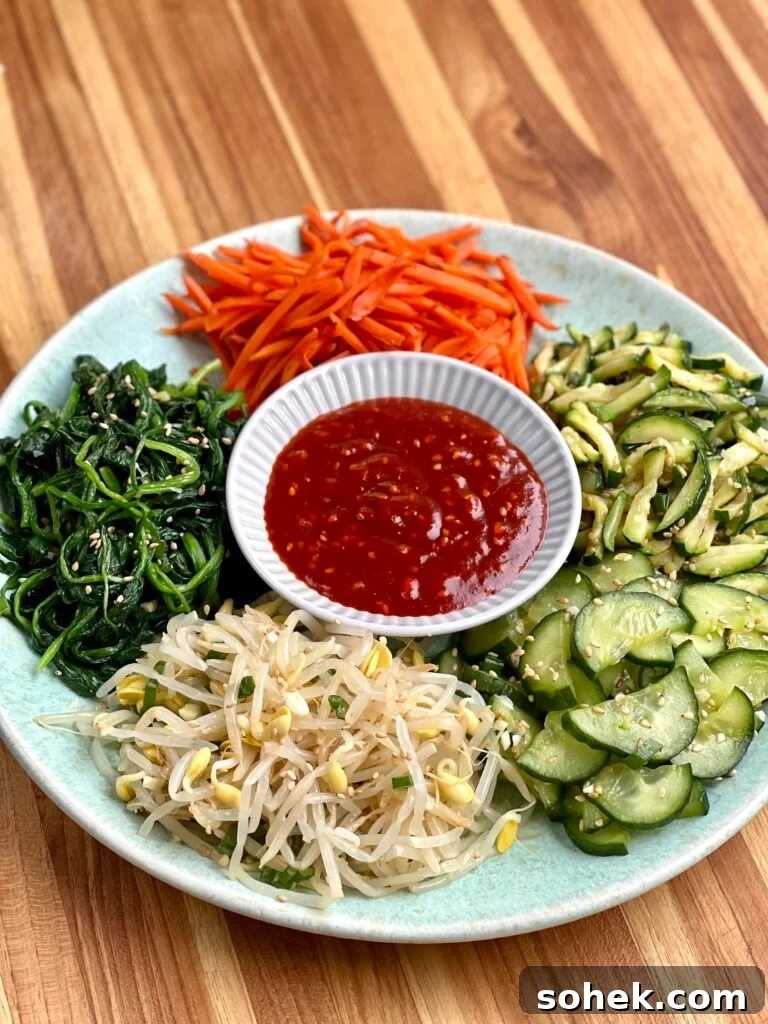
Prepping the veggies
Preparing each vegetable separately gives bibimbap its layered, balanced taste. You can prep these components a few days ahead and refrigerate them, which makes assembly quick on the day you serve.
- Blanch:
- Bean sprouts
- Spinach
- Salt to draw out moisture (then squeeze dry):
- Carrots
- Zucchini
- Cucumber
- Pan-fry:
- Carrots
- Zucchini
Each vegetable is seasoned simply—usually minced garlic, sesame oil, green onion, sesame seeds, and a pinch of salt—so the flavor profile stays cohesive.
Prepping the beef:
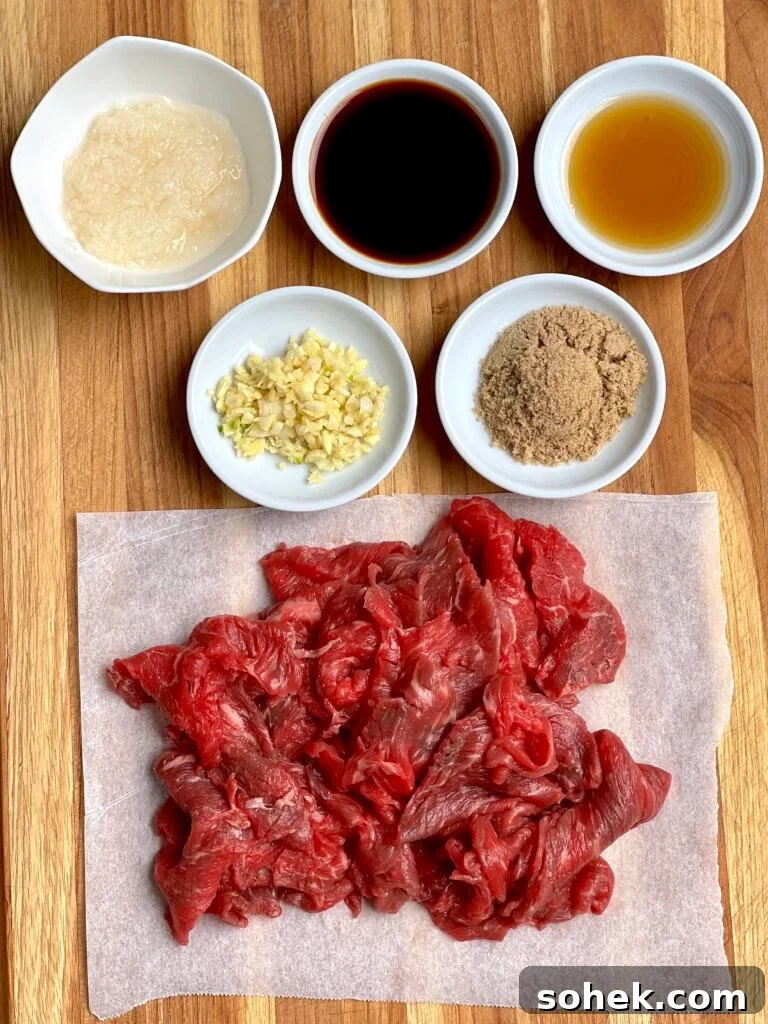
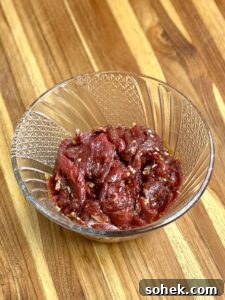
This recipe uses a simple bulgogi-style marinade: soy sauce, brown sugar, minced garlic, sesame oil, and grated Asian pear. Marinate the thinly sliced beef at least 30 minutes for tenderness and flavor. If you prefer leaner meat, choose a lean cut, but a touch of fat gives the best texture.
For a vegetarian version, use the same marinade on mushrooms and pan-fry them in place of beef.
Meal Prepping:
Bibimbap is ideal for meal prep. Multiply the vegetable portions and store the seasoned veggies separately in the refrigerator for up to four days. When ready to eat, reheat rice, assemble the bowl, add sauce and an egg if desired.
This recipe is kindly sponsored by Mahatma® Rice. I keep their rice in my kitchen at all times.

Bibimbap (Korean Mixed Rice & Veggie Bowl)
Pin Recipe
Rate Recipe
Print Recipe
Ingredients
- 1 cup short grain rice, makes about 3 cups cooked
- 2 fried eggs
Bibimbap Sauce:
- 2 tbsp gochujang
- 1 tbsp sugar
- 1 tbsp sesame oil
- 1 tbsp water
- 1 tsp rice vinegar
- 1 tsp sesame seeds
- 1 tsp minced garlic
Vegetables
- 4 oz spinach
- 4 oz soybean sprouts
- 4 oz carrot, julienned
- 4 oz Persian or English cucumber, thinly sliced and halved
- 4 oz zucchini, cut into matchsticks
- 2 tsp minced garlic
- 2 green onions, chopped
- 2 tsp sesame oil
- 1 tsp sesame seeds
- salt
Beef
- 1/2 lb thinly sliced ribeye, or mushrooms for vegetarian
- 2 tbsp soy sauce
- 2 tbsp brown sugar
- 2 tsp sesame oil
- 1 tsp minced garlic
- 1 tbsp grated Asian pear
Instructions
Make the rice:
-
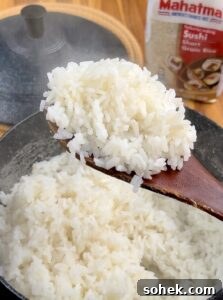
Wash 1 cup short-grain rice until the water runs clear. Add water so your knuckles are just submerged when you lay your hand flat on the rice. Let sit 30 minutes.

-
Cover and cook over medium-low heat for 18 minutes. Turn off the heat, fluff the rice to release steam, and keep covered until needed.
-
Mix the beef marinade ingredients and refrigerate for at least 30 minutes.
-
Combine the bibimbap sauce ingredients and set aside.
-
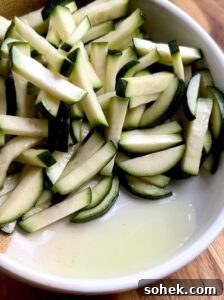
Salt the zucchini (1/4 tsp), cucumber (1/4 tsp), and carrots (1/8 tsp). Toss and let sit 10 minutes to draw out moisture while you prep other vegetables.



Spinach
-
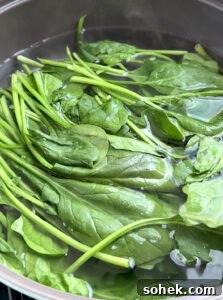
Wash and blanch spinach for 20 seconds in boiling water. Immediately shock in cold water, squeeze out excess moisture, and halve the spinach bundle.
-
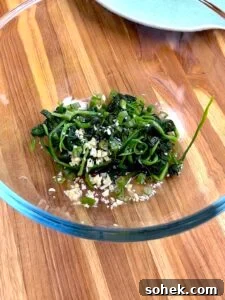
Season with 1/2 tsp minced garlic, 1/2 tsp sesame oil, a pinch of salt, and 1 tsp chopped green onion. Mix and set aside.
Bean sprouts
-
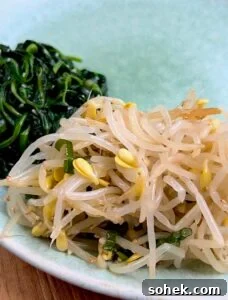
Wash and discard any browned pieces. Blanch covered on medium heat for 3–4 minutes, then shock in cold water.
-
Season with 1/2 tsp minced garlic, 1/2 tsp sesame oil, a pinch of salt, 1 tsp chopped green onion, and 1/2 tsp sesame seeds. Set aside.

Cucumber
-
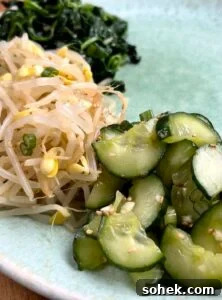
Drain the cucumbers and gently press out moisture with paper towels.
-
Season with 1/2 tsp minced garlic, 1/2 tsp sesame oil, 1 tsp chopped green onion, and 1/2 tsp sesame seeds. Set aside.

Zucchini
-
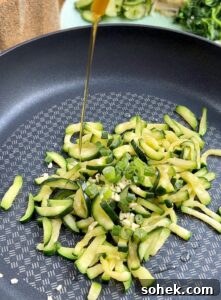
Drain the zucchini and press out moisture. Pan-fry in a little vegetable oil over medium-low heat.
-
Add 1/2 tsp minced garlic, 1/2 tsp sesame oil, 1 tsp chopped green onion, and 1/2 tsp sesame seeds. Stir-fry 2–3 minutes and set aside. Keep the pan for carrots and beef.
Carrot
-
Drain and press out moisture from carrots.
-
Stir-fry in a little vegetable oil for 2–3 minutes and set aside.


Beef (or mushrooms)
-
Pan-fry the marinated beef in a little vegetable oil over medium heat until cooked to your liking. Set aside.

Assemble rice bowl
-
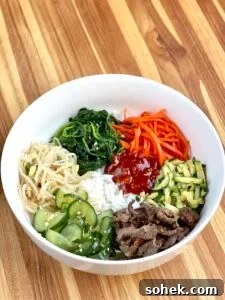
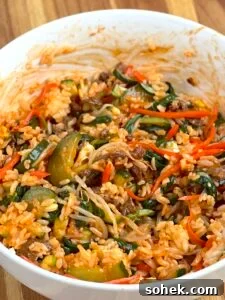
Place rice in a bowl, arrange vegetables and beef on top, and spoon 2–3 tbsp of sauce over the ingredients.
-
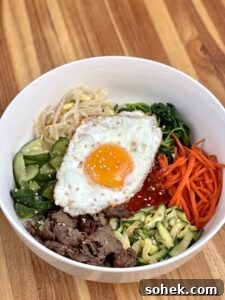
Fry an egg and place it in the center of the bowl.
-
Mix everything together and enjoy.
Nutrition information is automatically calculated and should be used as an approximation.
Additional Info
Like this recipe? Leave a comment below!