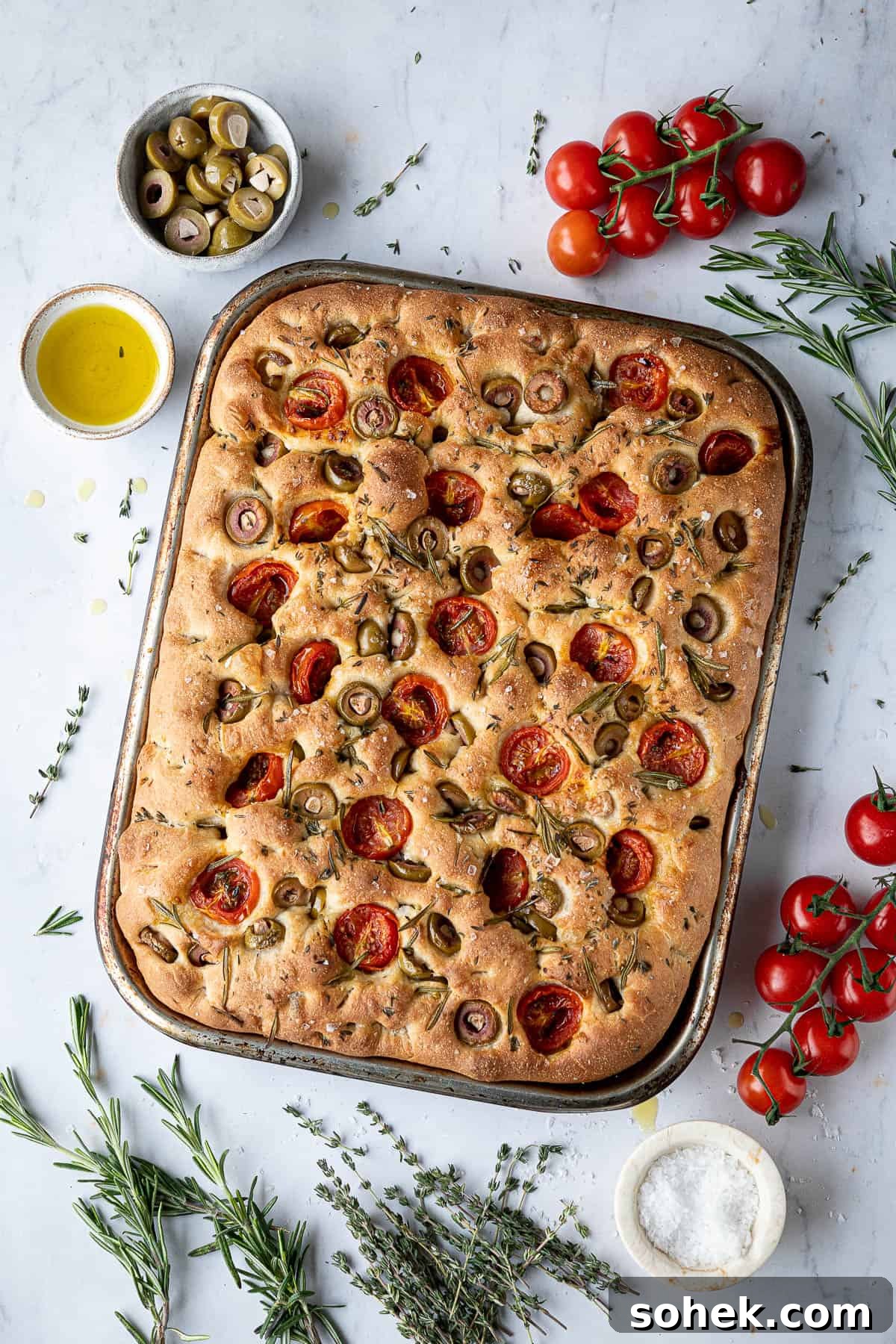
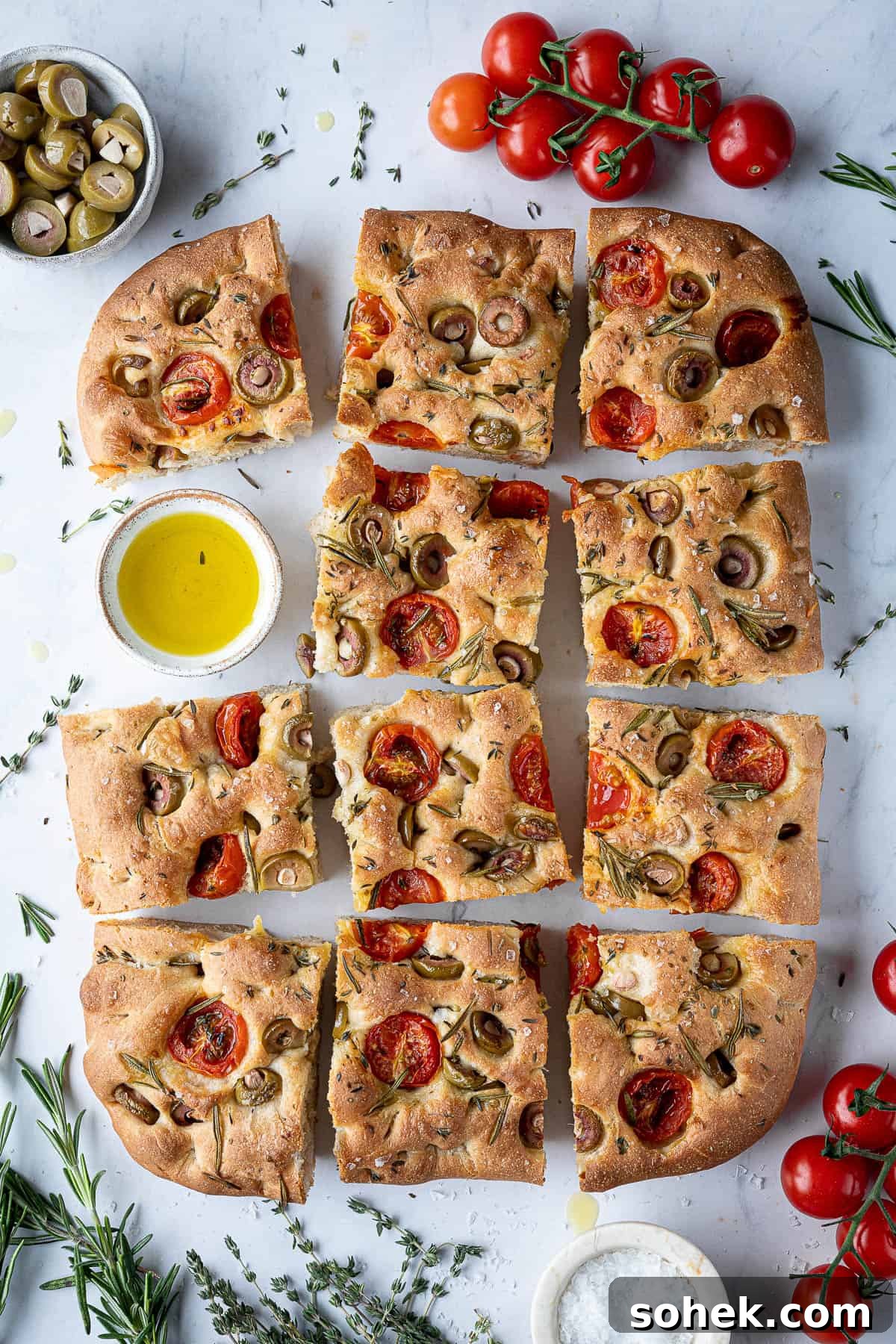
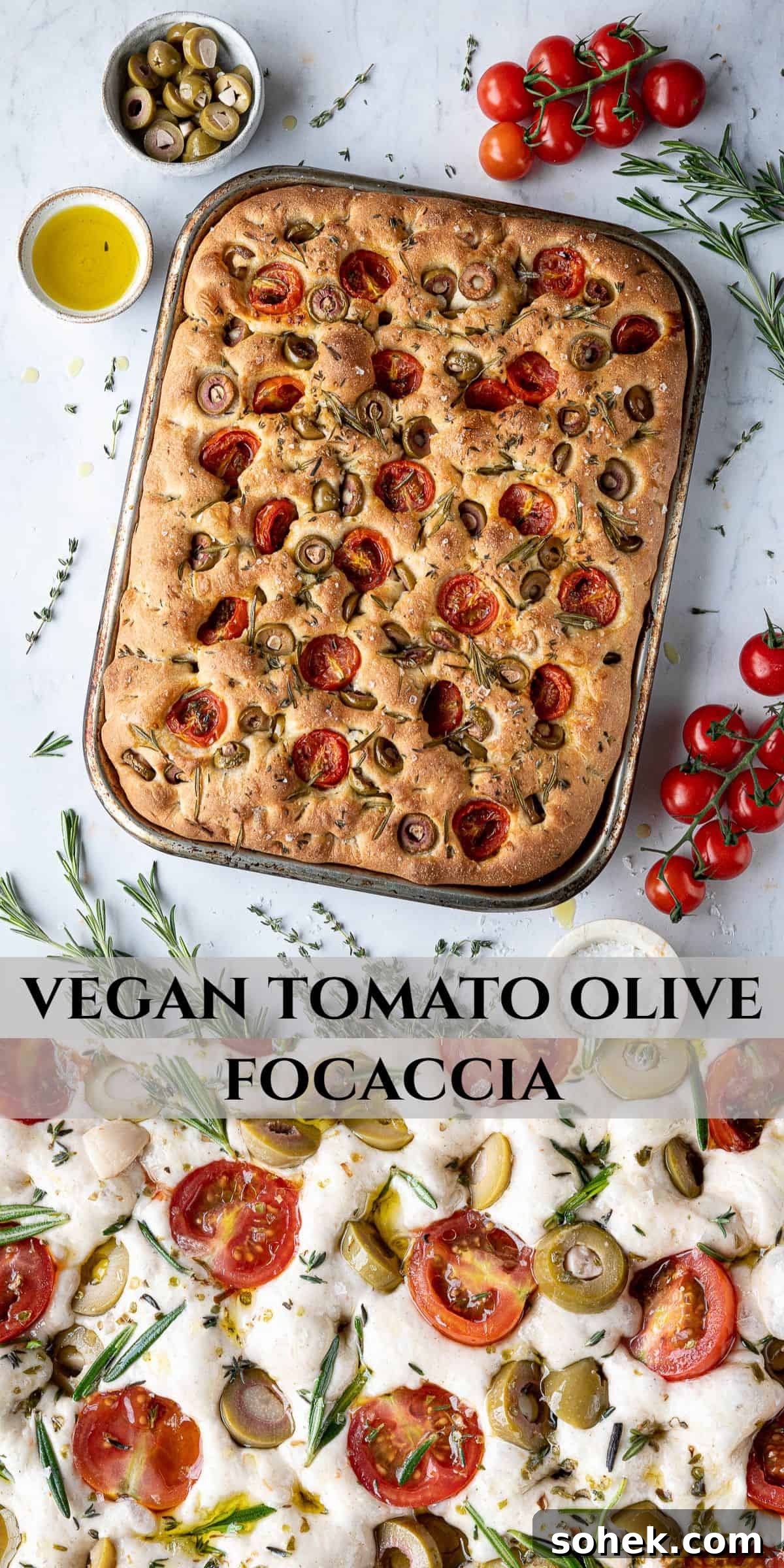
Tomato and olive focaccia – a delicious focaccia bread that is soft, tender, chewy and packed with flavour.
Easy to make, it works brilliantly as a side, with dips or for sandwiches. Naturally vegan and dairy-free.
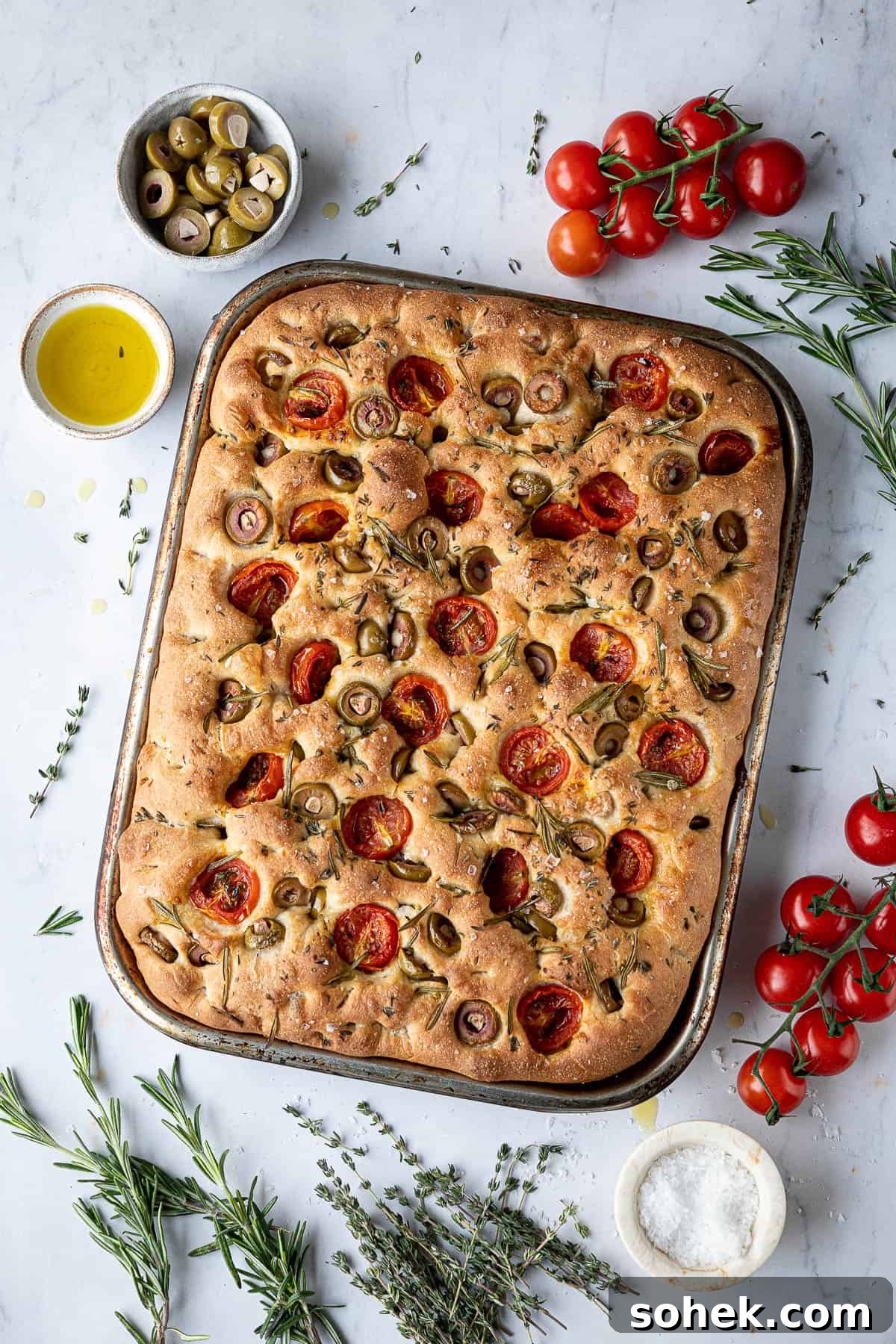
Focaccia is one of my favourite breads to bake: it’s straightforward, requires no intricate shaping and delivers incredible flavour and texture. This tomato and olive focaccia is adapted from a salt-and-rosemary focaccia by baker Richard Bertinet.
I tried Bertinet’s BBC Maestro bread-making course and found it an excellent resource for both beginners and more experienced bakers. The course focuses on dough handling, judging readiness and practical shaping techniques, and the video lessons make it easy to follow along and improve your skills.
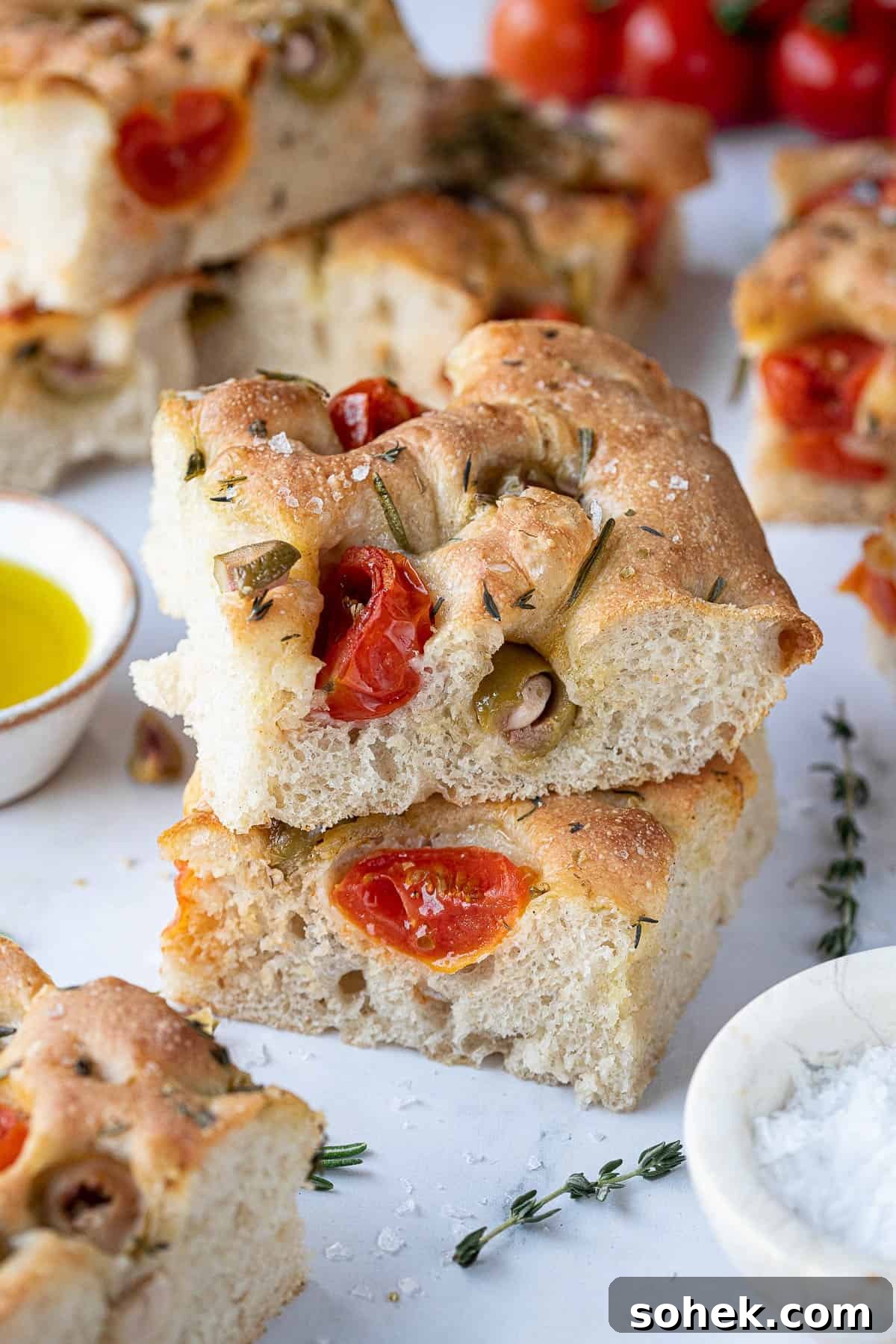
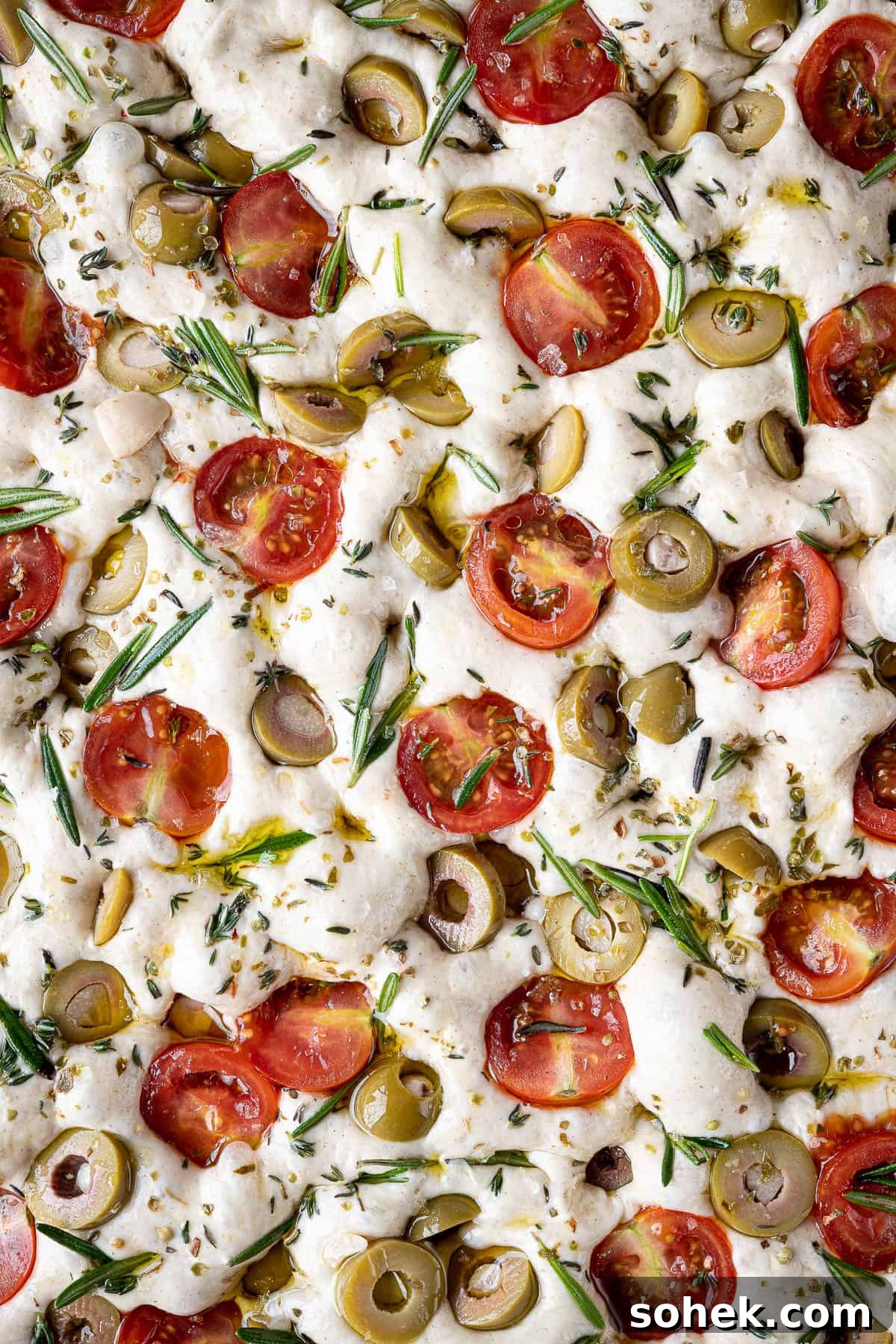
I’ve adapted one of his recipes to create this tomato and olive version. It’s a generous, shareable loaf with a crisp, golden crust, an open, chewy crumb and bright, savoury toppings.
What Do I Need To Make Tomato And Olive Focaccia?:
Bread flour: Use white bread flour (called strong white bread flour in the UK). It has the higher protein content needed for the right texture. Avoid plain/all-purpose, gluten-free or wholemeal flours for this recipe.
Yeast: Instant yeast is simplest—it can be added straight to the flour. If you only have active dry yeast, see the instructions below to activate it first.
Olive oil: Choose a good-quality olive oil for flavour. A mild oil works well in the dough with extra virgin olive oil for drizzling at the end.
Salt: Salt enhances flavour, colour and crust. Use fine sea salt or table salt in the dough, then sprinkle flaky sea salt on top before baking if desired.
Olives: Any pitted olives will do. Slice them if needed; garlic-stuffed Halkidiki olives are a nice choice but use what you prefer.
Tomatoes: Cherry or baby plum tomatoes work well. You can substitute semi-dried tomatoes if you prefer.
Herbs: Fresh rosemary and thyme are lovely, with a light sprinkle of dried oregano if you like.
How To Make Tomato And Olive Focaccia:
(Full measurements and detailed instructions are in the recipe card below)
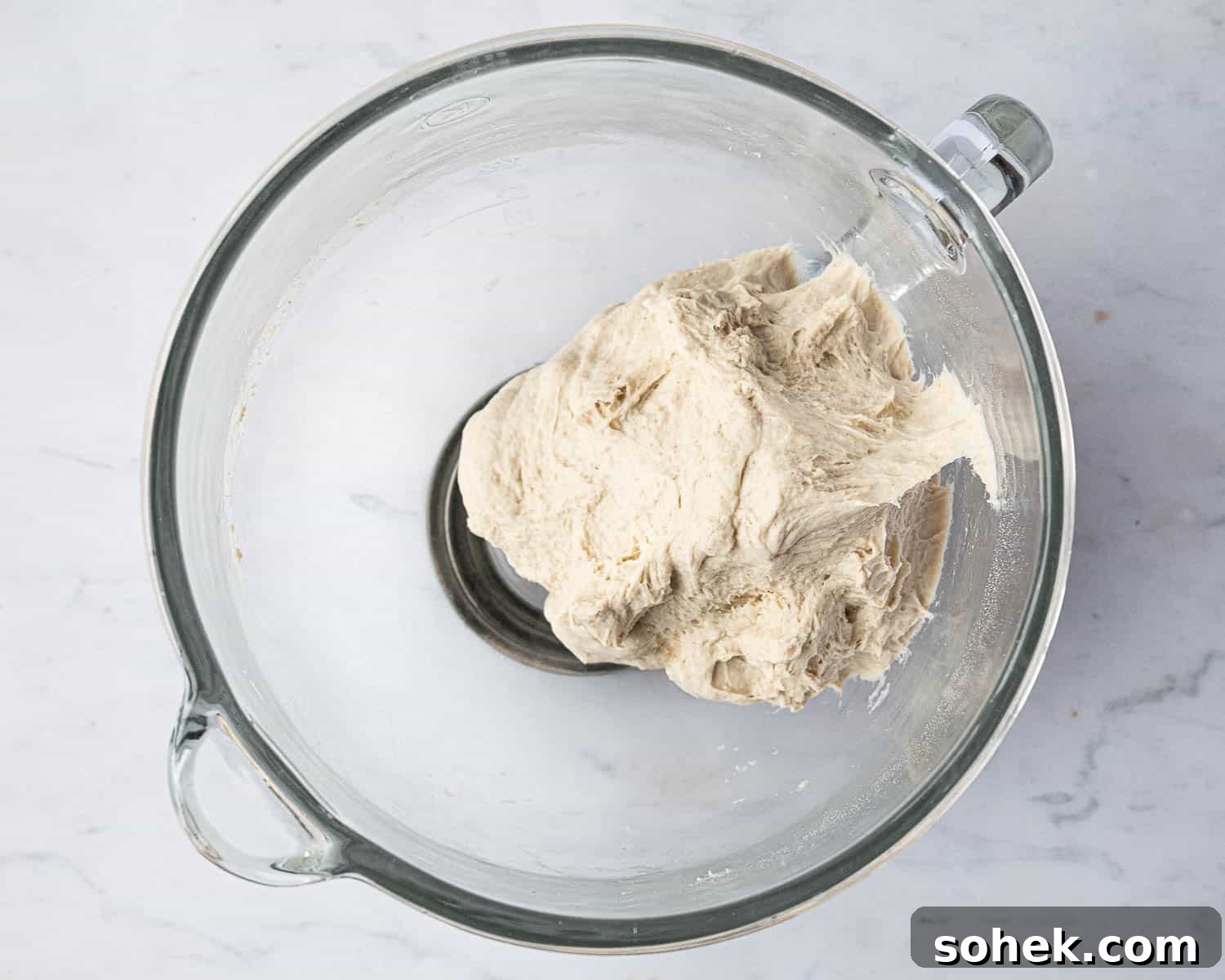
Place the water in the bowl of a stand mixer fitted with a dough hook. Add the bread flour and instant yeast and mix on low speed for about 4 minutes until a rough dough forms.
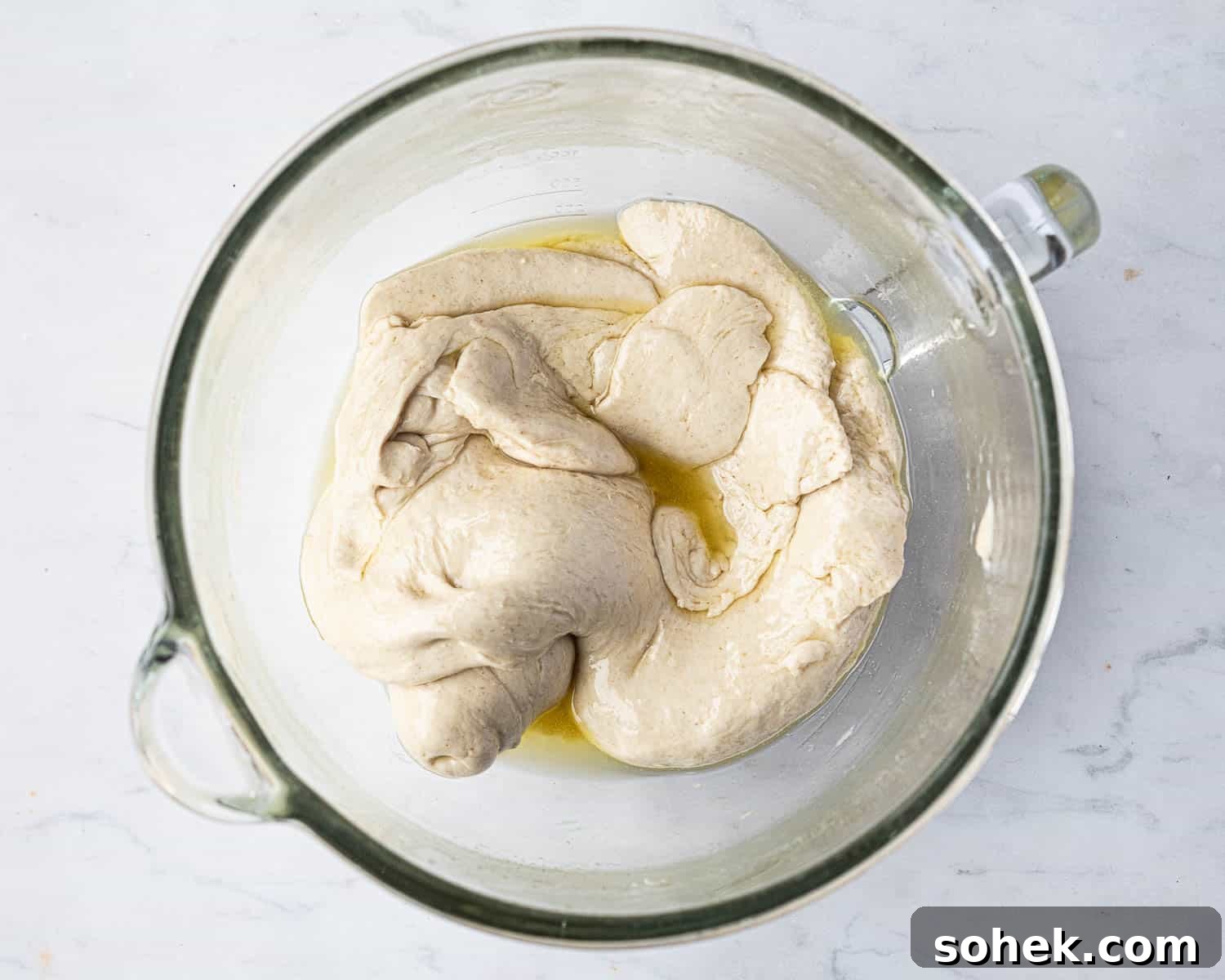
With the mixer running, drizzle in the olive oil slowly and continue mixing on low for about 7 minutes. The dough will be slippery at first as it absorbs the oil, but it will become cohesive.
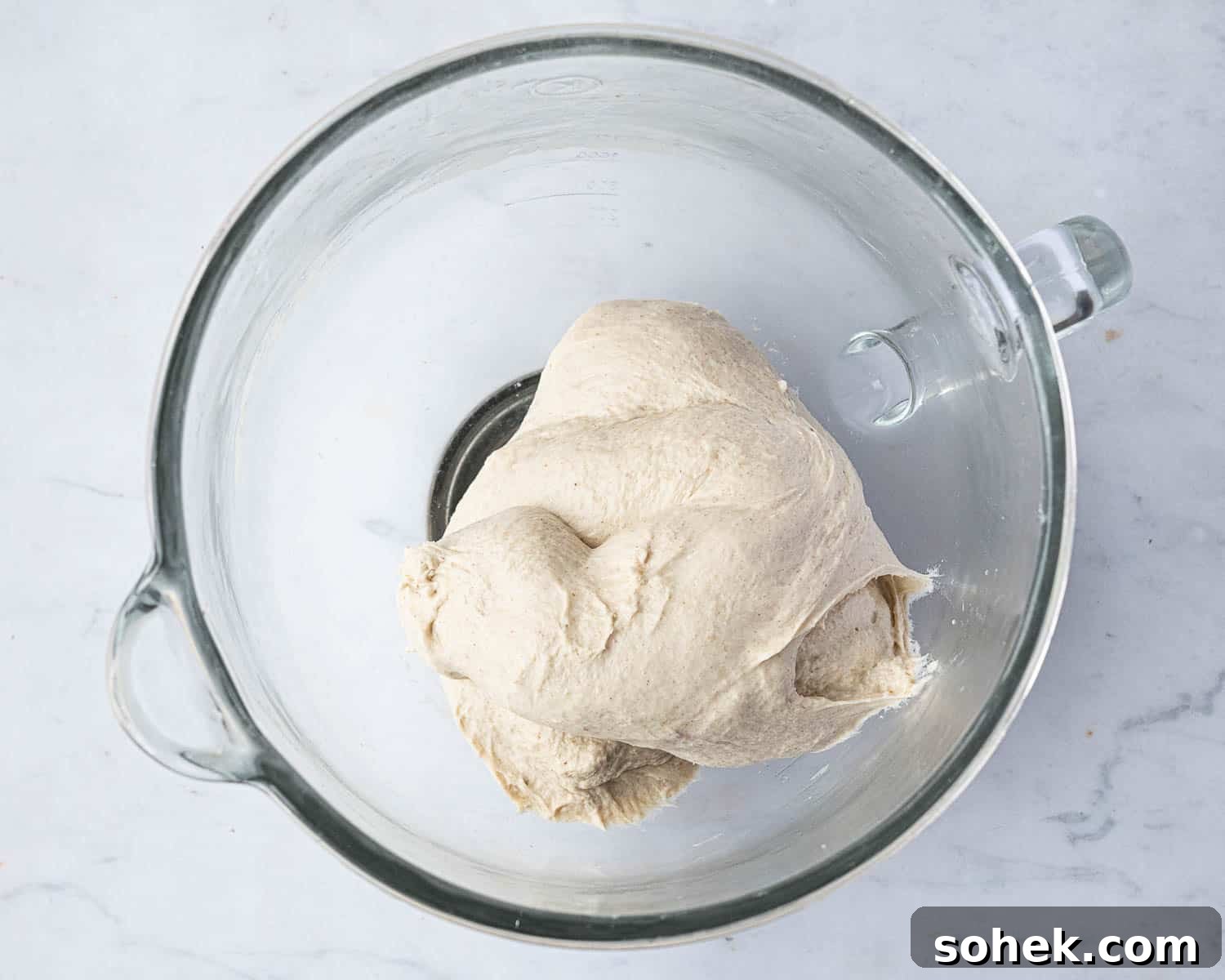
Increase the mixer to medium for about 3 minutes, then add the salt. Mix on medium until the dough pulls cleanly away from the sides of the bowl. The dough should be sticky but smooth and elastic—resist adding more flour.
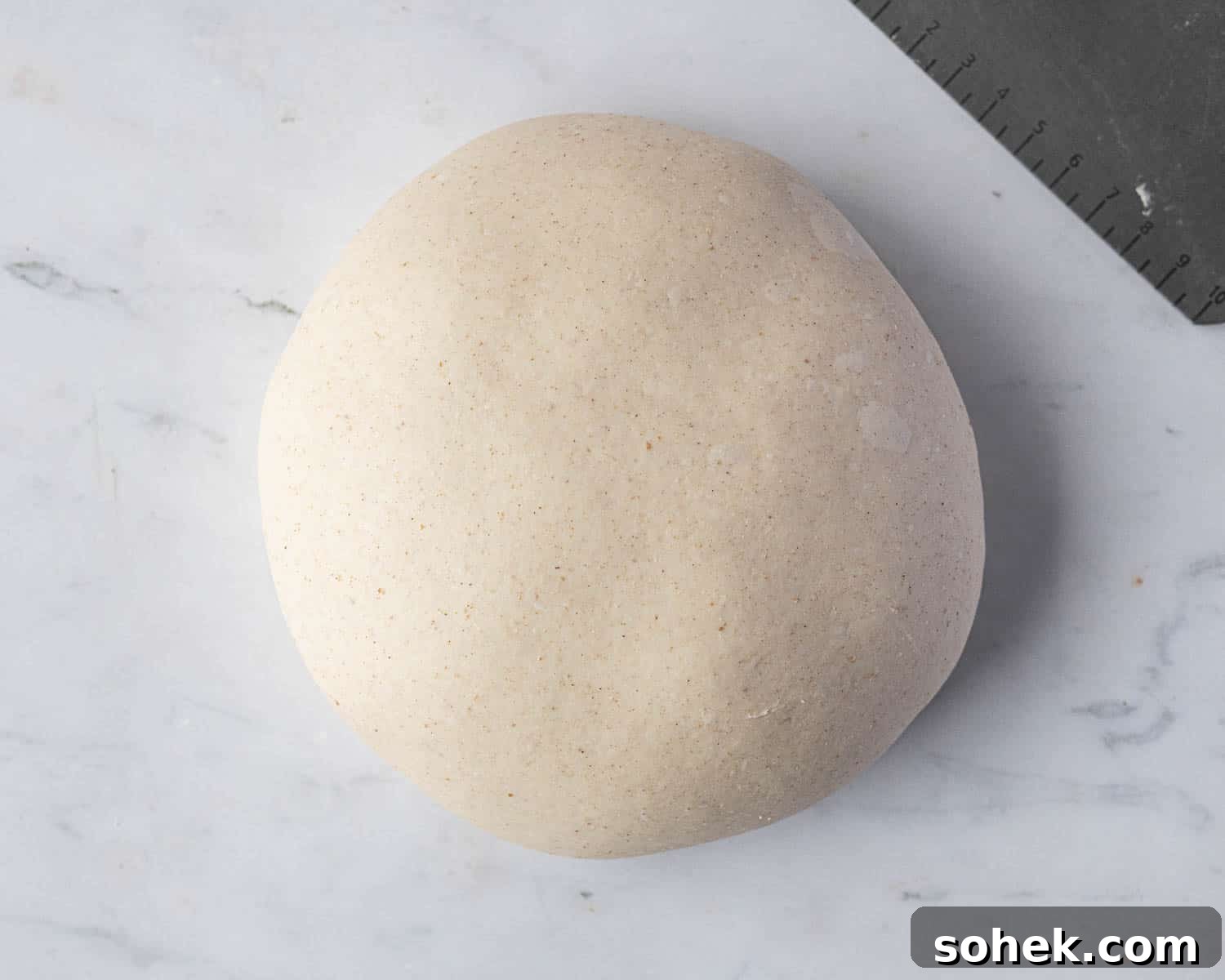
Turn the dough onto an unfloured surface and use a dough scraper or oiled hands to shape it into a tight ball with a shiny top.
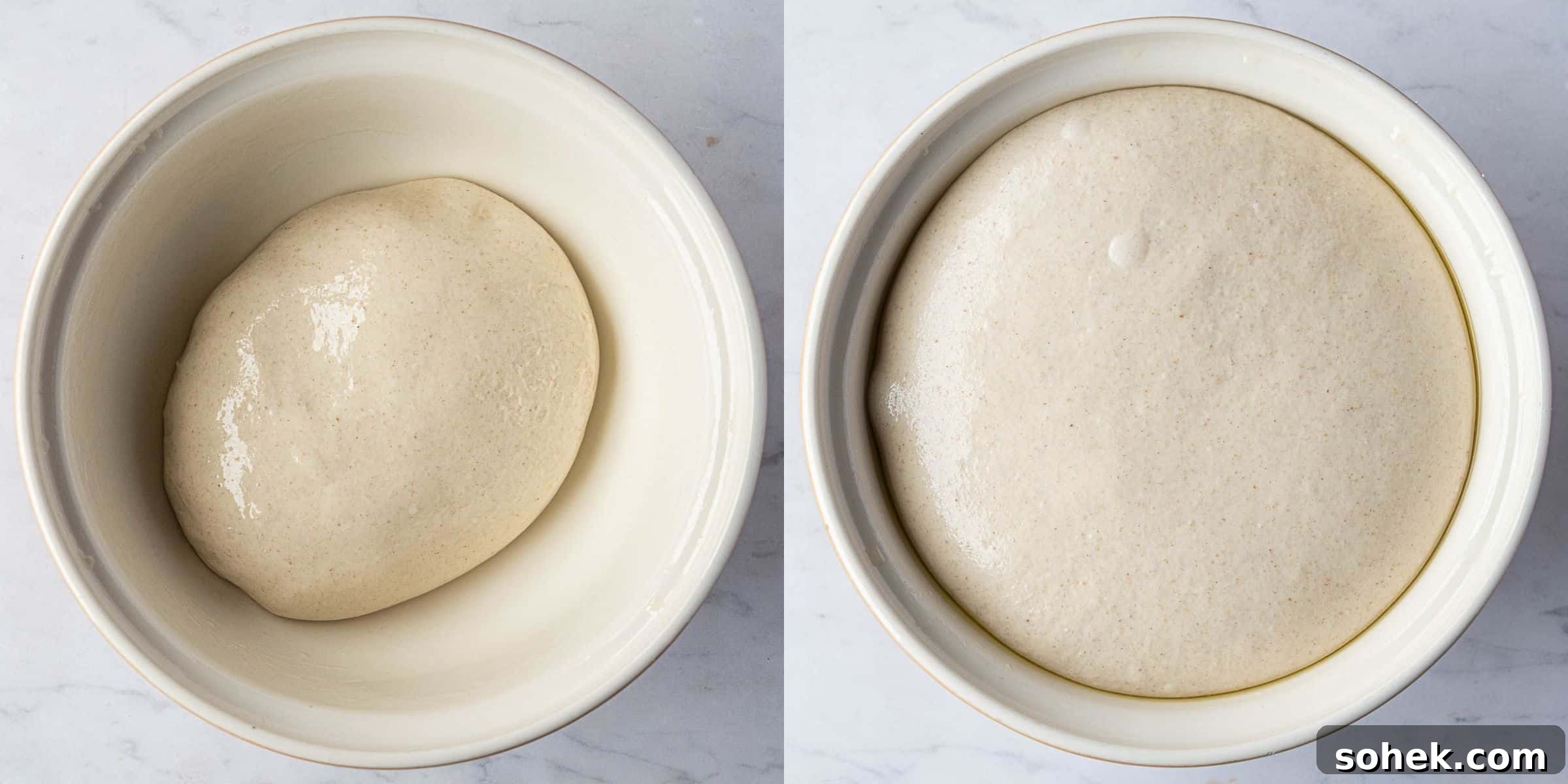
Place the dough in a lightly oiled bowl, cover and leave to rise for 1½–2 hours until roughly doubled and full of large air bubbles.
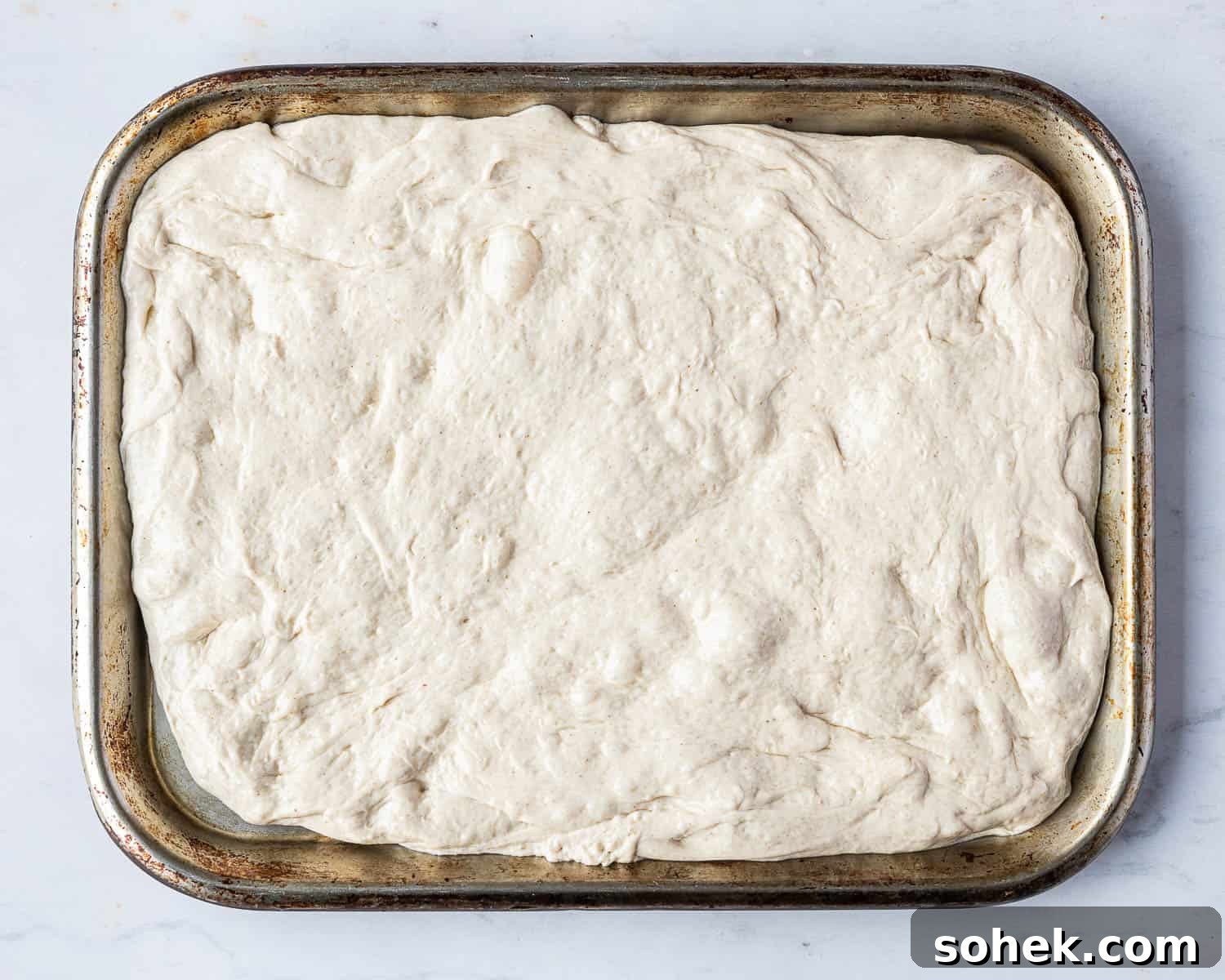
Scrape the risen dough onto an oiled surface, gently stretch it into a rough rectangle and flip it into an oiled 23 x 33 cm (9 x 13 in) baking or roasting tin.
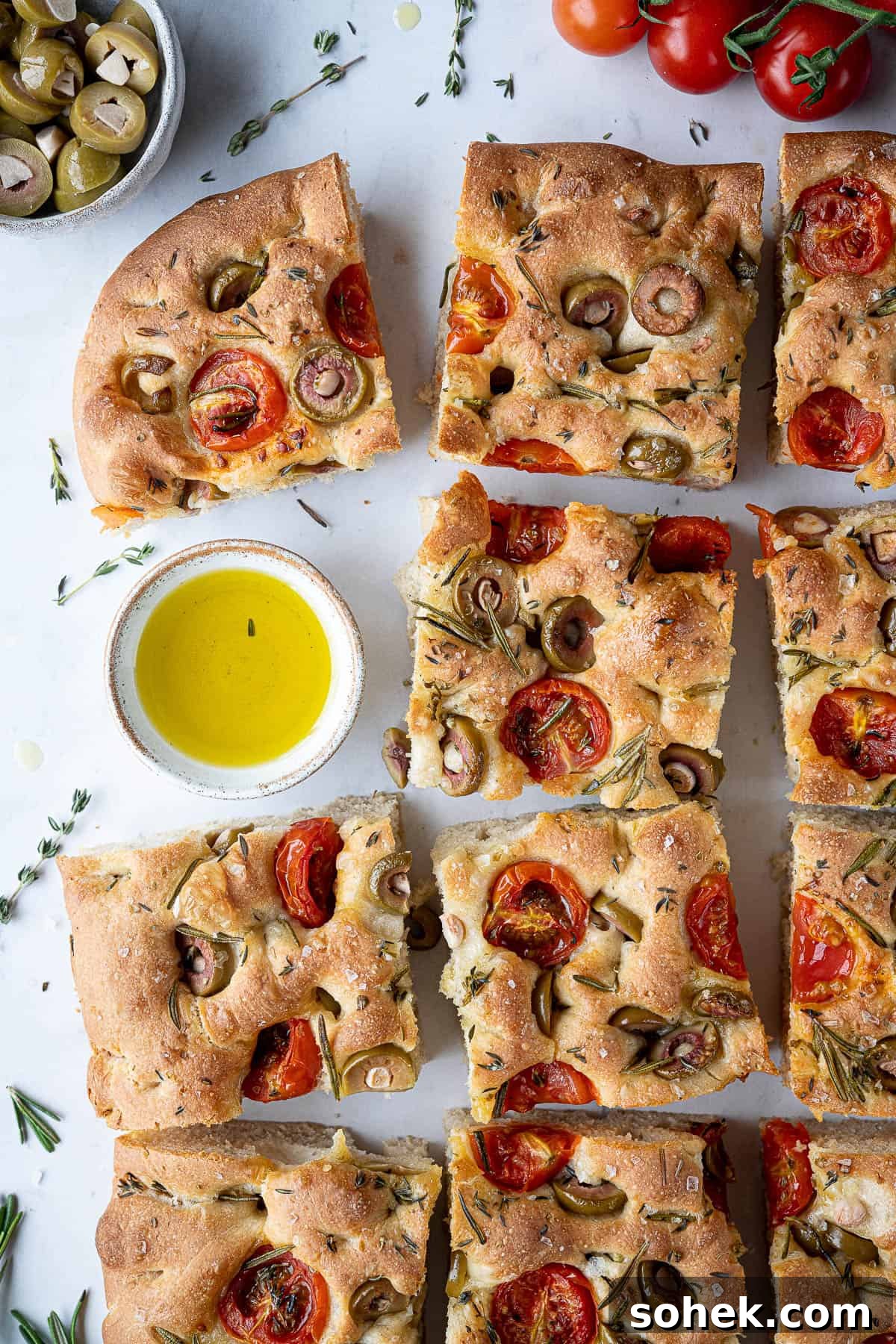
Scatter the sliced olives over the dough and arrange halved cherry tomatoes with the cut side up. Add rosemary and thyme leaves and a couple of generous pinches of dried oregano.
With oiled fingers, press the toppings gently into the dough, using a clawing motion so they sink slightly into the surface.
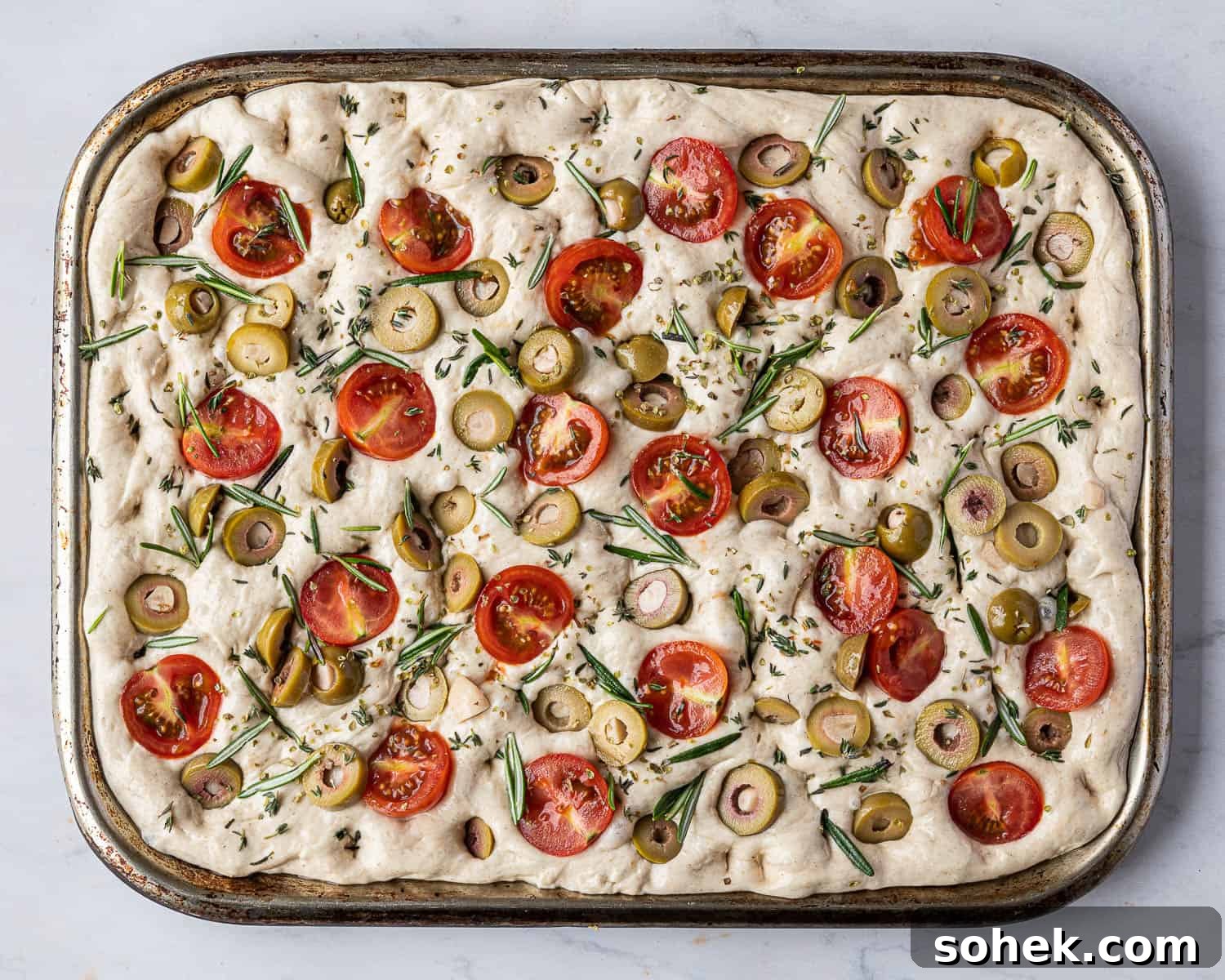
Cover loosely and leave to rise for 20–30 minutes until bubbly. Preheat the oven to 220°C / 200°C fan / 425°F / gas mark 7 while the dough proofs.
Drizzle more olive oil over the surface, dimple the dough again with your fingers pressing to the base of the tin to create air pockets, and sprinkle flaky sea salt if you like.
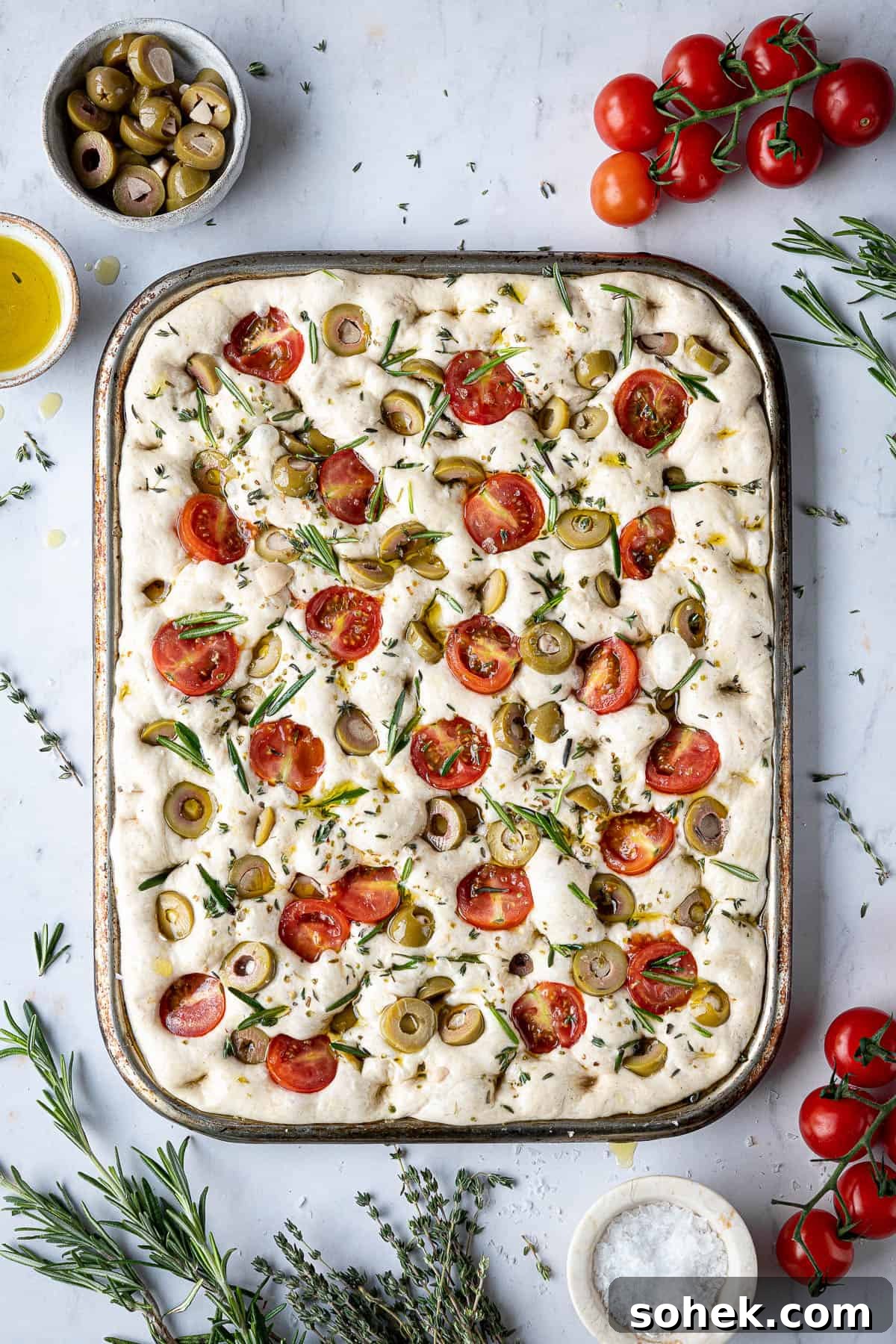
Bake for about 20 minutes until well browned and crisp on top. Transfer to a wire rack to cool slightly and drizzle with a little extra virgin olive oil before serving if you wish.
Top Tips:
Use gram measurements with a digital scale for best results—cup measures are less precise for baking.
Focaccia dough should be fairly wet and sticky; this hydration helps create the chewy, open crumb. Avoid adding extra flour.
If you have a stand mixer, use it to handle the sticky dough. If kneading by hand, a dough scraper and oiled hands make the job easier.
For convenience and extra flavour, you can do the first rise overnight in the fridge instead of at room temperature.
Ensure your yeast is fresh; expired yeast can prevent proper rising. Rising times vary with temperature—warmer conditions speed things up.
What Kind Of Yeast?
I recommend instant yeast (also called easy-bake yeast) for ease: it can be added directly to the flour. If using active dry yeast, dissolve 10 g (3 tsp) in lukewarm water and leave 10–20 minutes until bubbly, then continue with the recipe.
Can I Bake It In Advance?
Focaccia is best eaten the day it’s baked. It will still be acceptable the next day but will lose some softness. To keep leftovers longer, freeze airtight within a day of baking for up to three months. Defrost at room temperature and warm through before serving.
More Vegan Sharing Bread Recipes:
- Herby vegan breadsticks
- Sun dried tomato breadsticks
- Vegan garlic dough balls
- Vegan pretzel bites
- Vegan garlic pull apart bread
- Vegan pesto bread
- Vegan beer pretzels
- Sea salt and rosemary focaccia
- Vegan naan bread
- Easy flatbreads
If you try this recipe I’d love to hear how it turned out—rate it, leave a comment or tag @domestic_gothess on Instagram and use #domesticgothess
All images and content are copyright protected. If sharing this recipe, please use the site’s share buttons and link back rather than reposting the full content.
Tomato And Olive Focaccia
Ingredients
Dough:
- 320 g (1 + ⅓ cup) cool water
- 500 g (4 ¼ cups) white bread flour
- 7 g (2 ¼ tsp) instant yeast
- 50 g (¼ cup) olive oil, plus extra for drizzling
- 10 g (2 tsp) fine salt
Toppings:
- 100 g (3 ½ oz) olives, sliced
- 175 g (6 oz) cherry tomatoes, halved
- a few sprigs fresh rosemary and thyme, leaves only
- a couple of pinches dried oregano
- extra virgin olive oil
- flaky sea salt
Instructions
- Put water, flour and yeast in the mixer bowl fitted with a dough hook. Mix on low for about 4 minutes until a dough forms.
- With the mixer running, slowly drizzle in the olive oil and mix on low for about 7 minutes.
- Increase speed to medium for about 3 minutes, add salt and continue until the dough pulls away from the bowl. It should be sticky but smooth—don’t add more flour.
- Turn out onto an unfloured surface and shape into a ball with a dough scraper or oiled hands.
- Oil a bowl and coat the dough lightly with oil. Cover and leave to rise 1½–2 hours until doubled and bubbly.
- Scrape the dough onto an oiled surface, stretch into a rectangle, and flip into an oiled 23 x 33 cm / 9 x 13 in tin.
- Top with sliced olives and halved tomatoes, scatter rosemary, thyme and oregano, and press the toppings gently into the dough with oiled fingers.
- Cover and let rise 20–30 minutes until bubbly. Preheat oven to 220°C/200°C fan/425°F/gas 7.
- Drizzle with more olive oil, dimple the surface with your fingers, sprinkle flaky salt if using, and bake for about 20 minutes until well browned. Cool on a rack and drizzle with extra virgin olive oil before serving.
Notes
- See the post above for tips, details and step-by-step photos.
- Use gram measurements with a digital scale for consistent baking results.
I was gifted the BBC Maestro course to review but I was not paid to write this post and all opinions are my own.