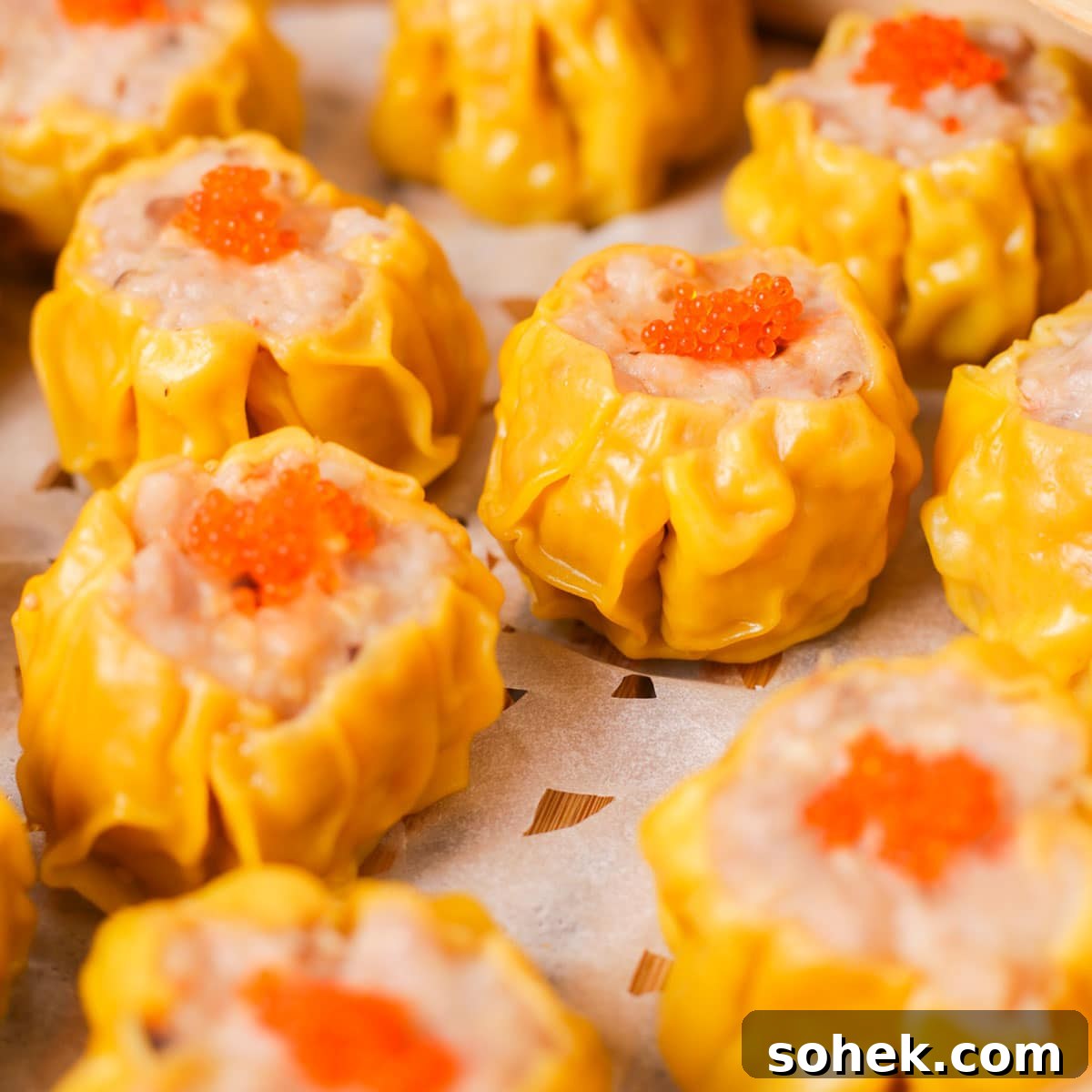
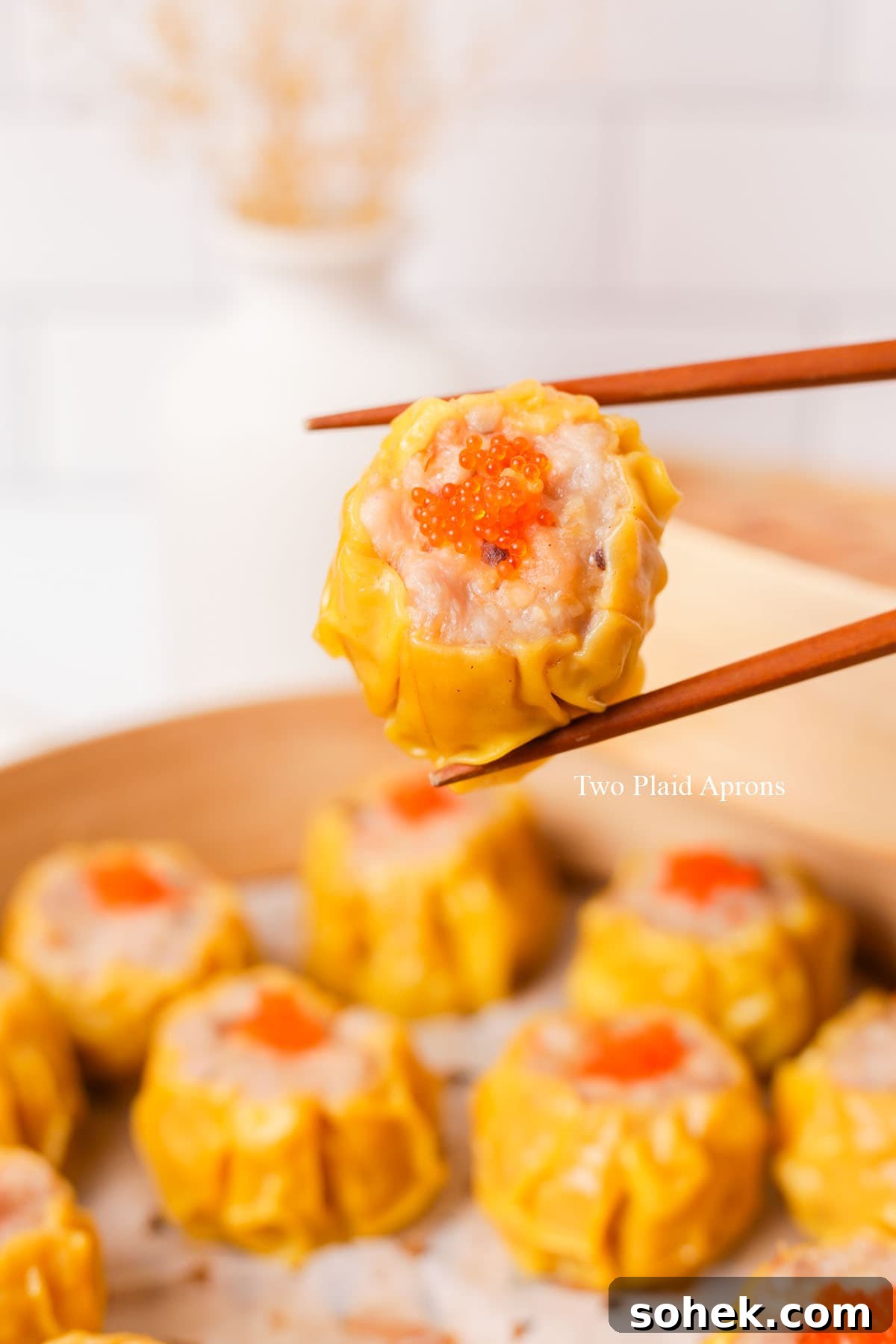
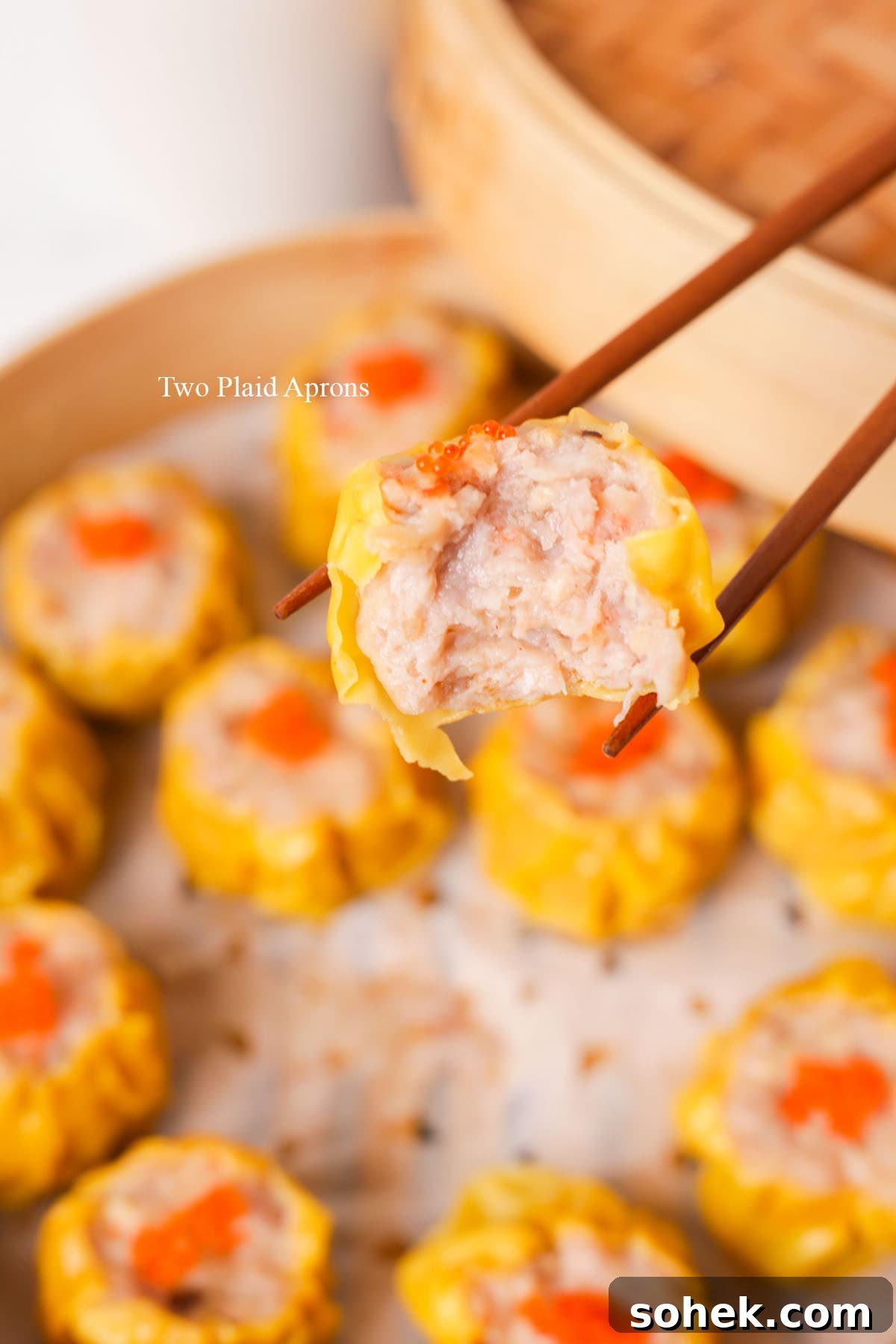
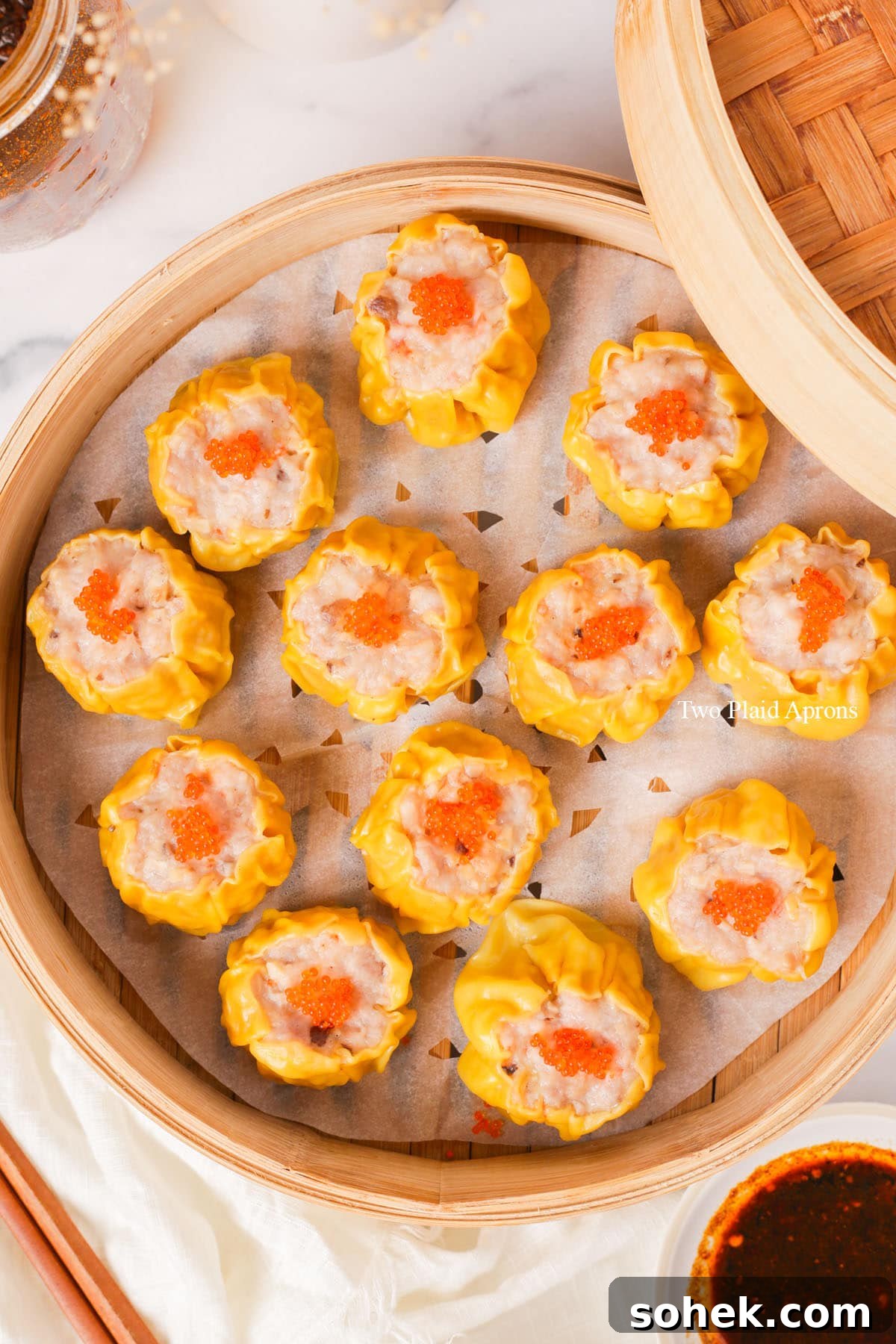
Cantonese shumai, also called siu mai or shao mai, is one of the most popular dim sum dishes. These open-faced dumplings are filled with a juicy mixture of pork and shrimp, accented with fragrant shiitake mushrooms, wrapped in thin yellow wrappers, and often topped with a small spoonful of tobiko (fish roe) or a pea or diced carrot. The texture is pleasantly bouncy and tender, making them hard to stop eating—perfect served alongside other dim sum favorites for an at-home yum cha experience.
If you make this recipe or any from our blog, tag us on Instagram with #twoplaidaprons or mention @two_plaid_aprons in your stories — we love seeing your creations! 🥰
What is shumai?
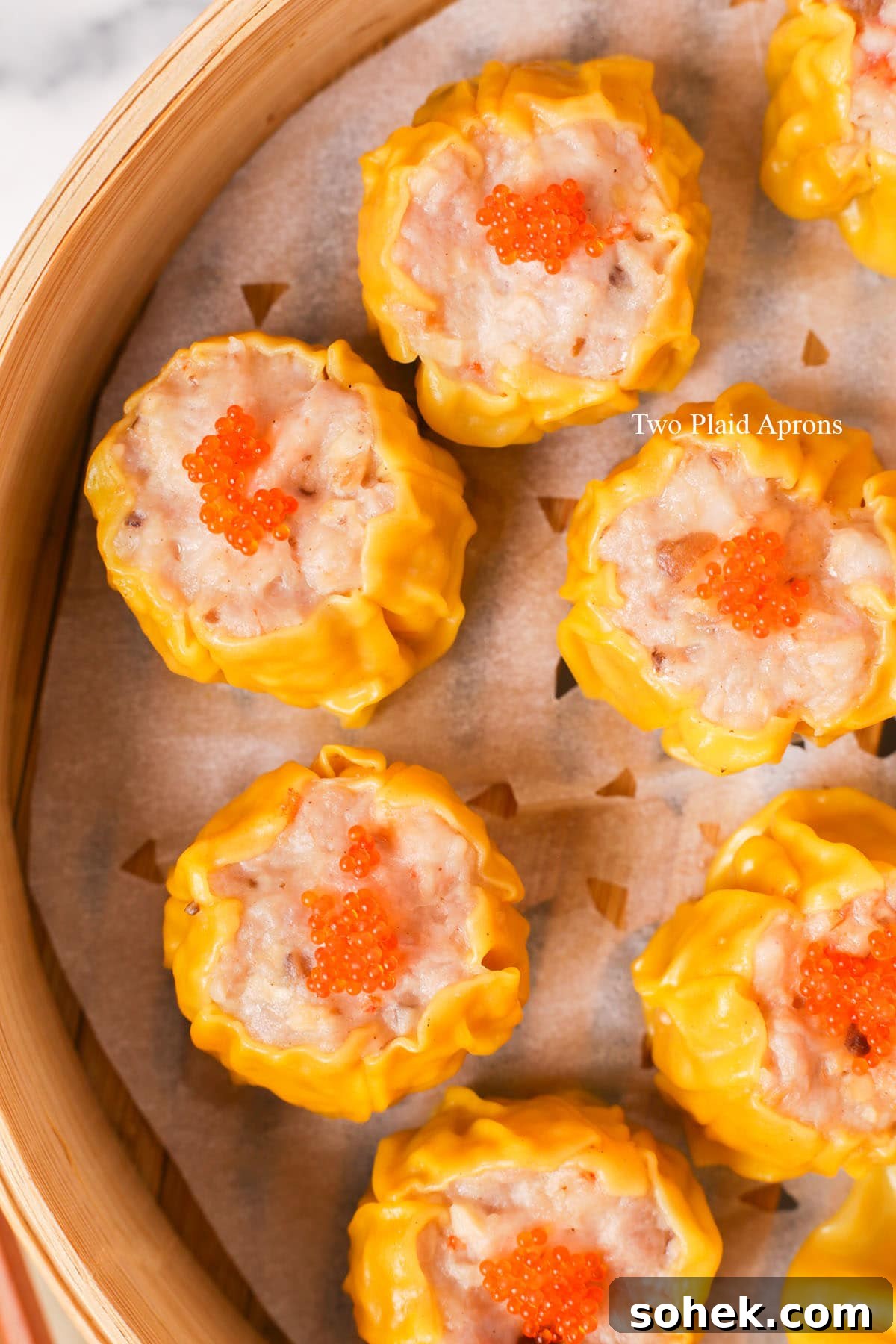
Shumai (also spelled siu mai or shāo mai 烧卖) is a classic Cantonese dim sum item. These dumplings are typically open on top and wrapped in thin yellow wrappers. The filling commonly combines ground or finely chopped pork with shrimp and sometimes shiitake mushrooms, water chestnuts, green onions, or bamboo shoots. The term “shumai” likely comes from a Japanese pronunciation of siu mai and has become widely used in many parts of the world; all three names refer to essentially the same dumpling style.
How to eat shumai and what to serve with them
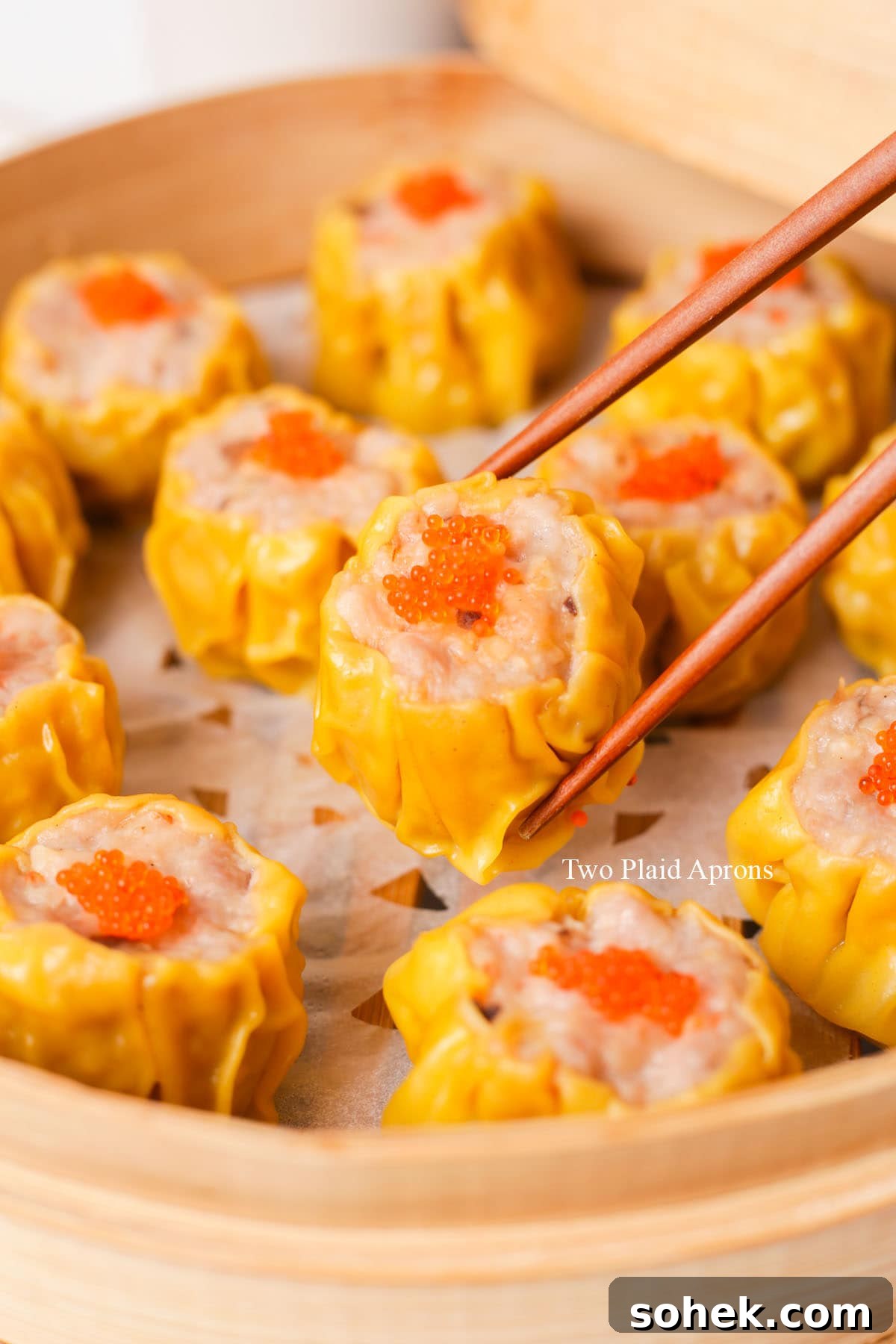
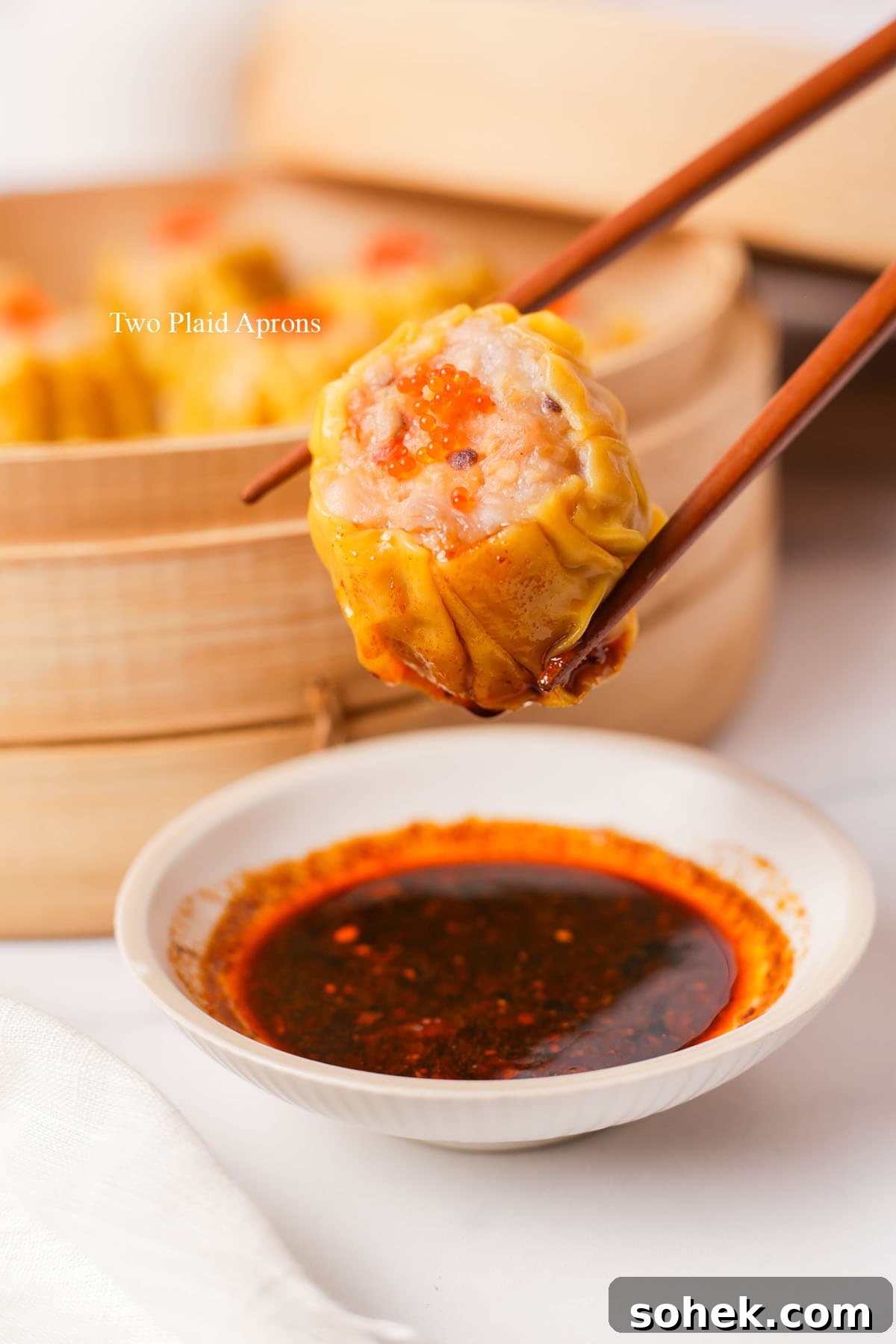
Shumai are delicious eaten plain, but if you enjoy dipping sauces, try Chinese black vinegar, chili oil, or a mix of both. Very thinly julienned ginger is also a classic addition to the vinegar. Serve shumai hot for the best flavor and juiciness.
Popular accompaniments:
- Chinese smashed cucumber salad
- Other dumplings (e.g., pork and chive, pork and cabbage)
- Cheung fun (rice noodle rolls)
- Lo bak go (turnip cakes)
- Char siu pork and baked BBQ pork buns
- Salt and pepper tofu
- Hot teas — Pu’er, chrysanthemum, jasmine, oolong, or green tea

Ingredient notes
See the recipe card below for exact quantities.
The main ingredients
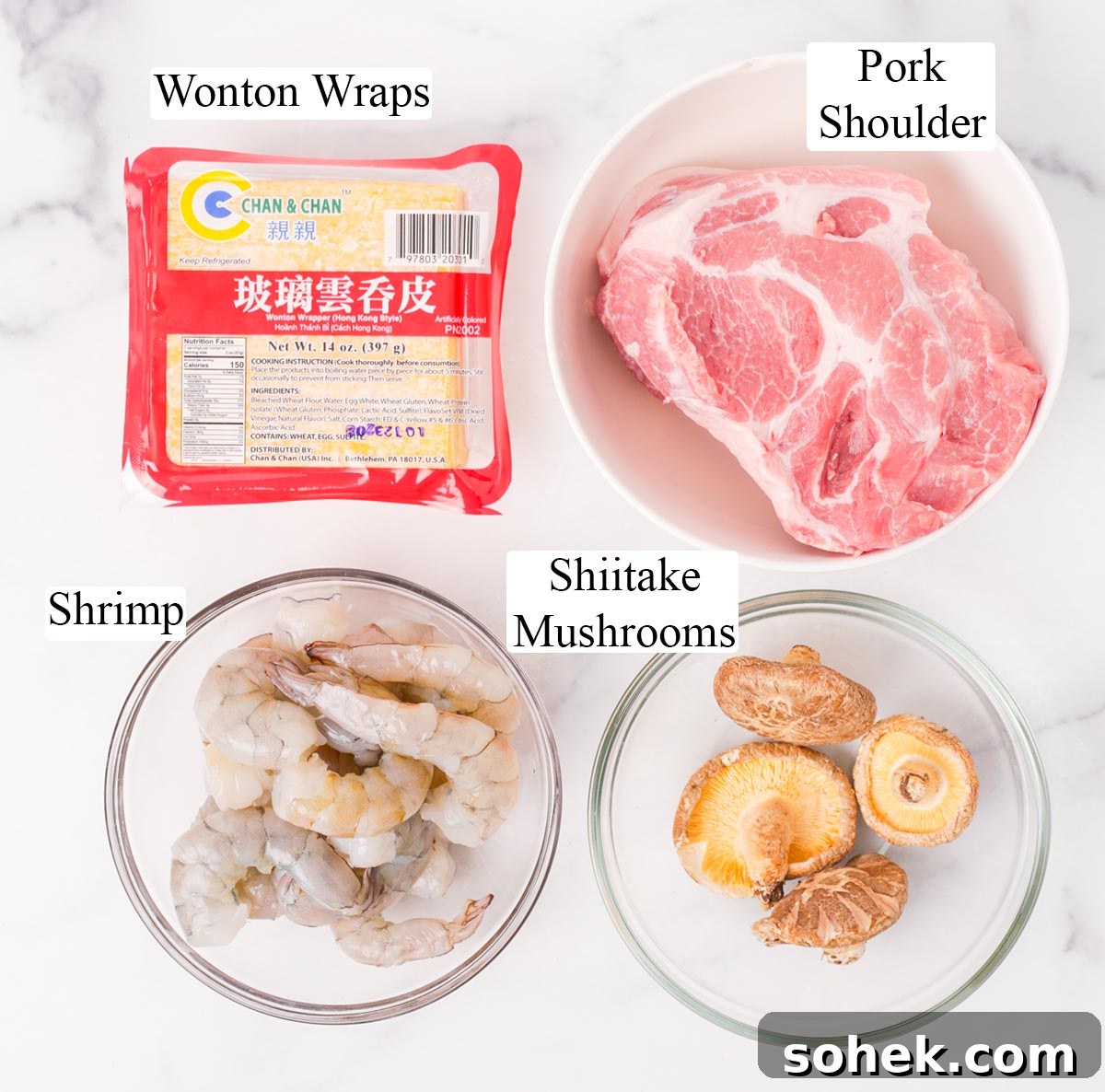
- Pork shoulder – A slightly fatty cut like pork shoulder yields the best texture and juiciness. Avoid very lean cuts (pork loin or chops). Boneless country ribs are an alternative. For ideal texture, finely chop the pork by hand; if using ground pork, choose one with around 30% fat.
- Shrimp – Most Cantonese shumai combine pork and shrimp. Use peeled and deveined shrimp of your preferred size.
- Dried shiitake mushrooms – Rehydrate before using; they add notable umami and fragrance. Optional additions include water chestnuts, green onions, or bamboo shoots.
- Shumai wrappers – Specialty shumai wrappers are ideal but can be hard to find. Square wonton wrappers work well as a substitute—just trim the corners for a rounder shape. Wonton wrappers come in deep yellow or paler varieties; the deeper yellow gives a more classic look.
Other ingredients and why they matter
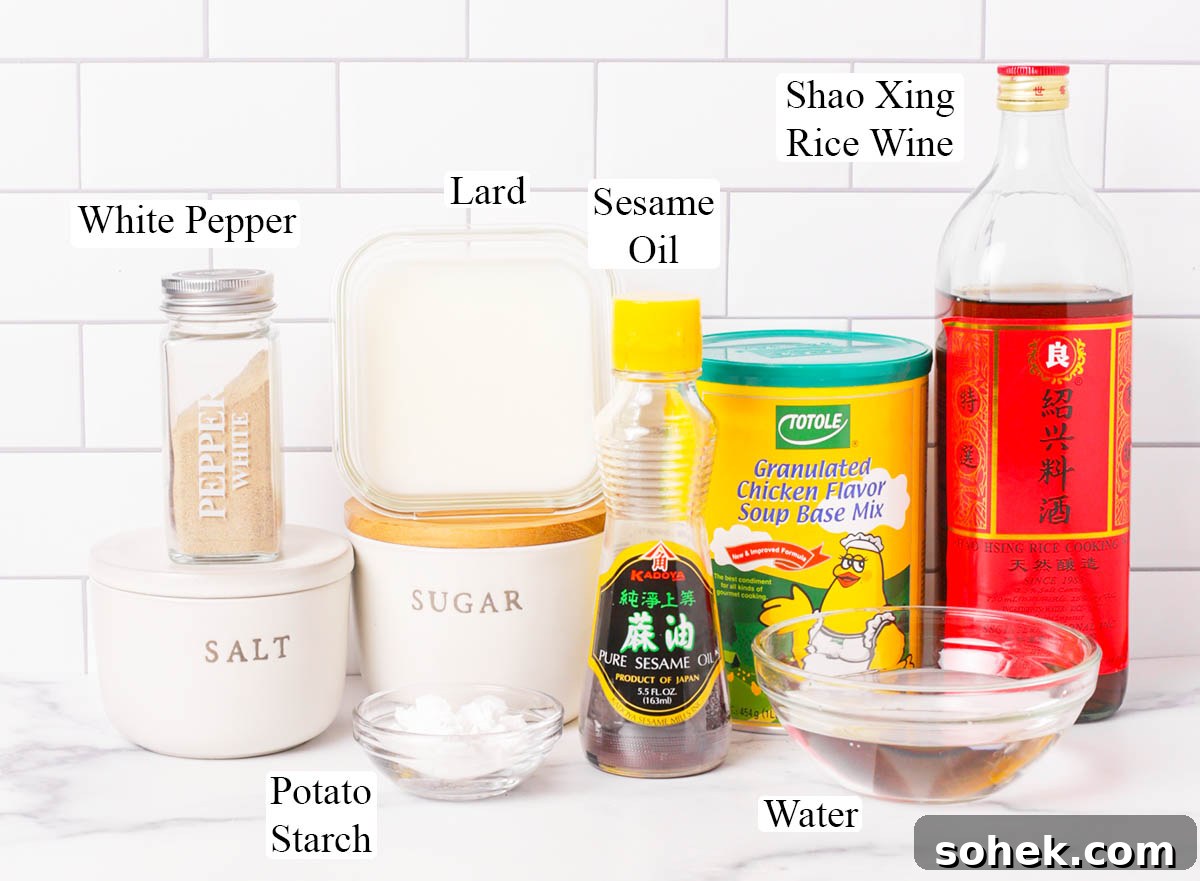
- Water – Adds moisture so the filling stays juicy.
- Lard – Keeps the filling tender and flavorful. Optional but recommended for authentic texture; you can buy lard or render your own from pork fat.
- Starch (potato starch or cornstarch) – Helps bind the filling and gives a tender, slightly bouncy texture while retaining moisture and seasoning.
- ShaoXing rice wine – Adds aroma and helps remove any off-flavors from pork or shrimp.
- Sugar, salt, white pepper – Balance and round out the flavors; a touch of sugar is traditional and important for depth.
- Chicken bouillon powder – Enhances savory depth in the filling.
- Toasted sesame oil – A small amount adds a subtle nutty note.
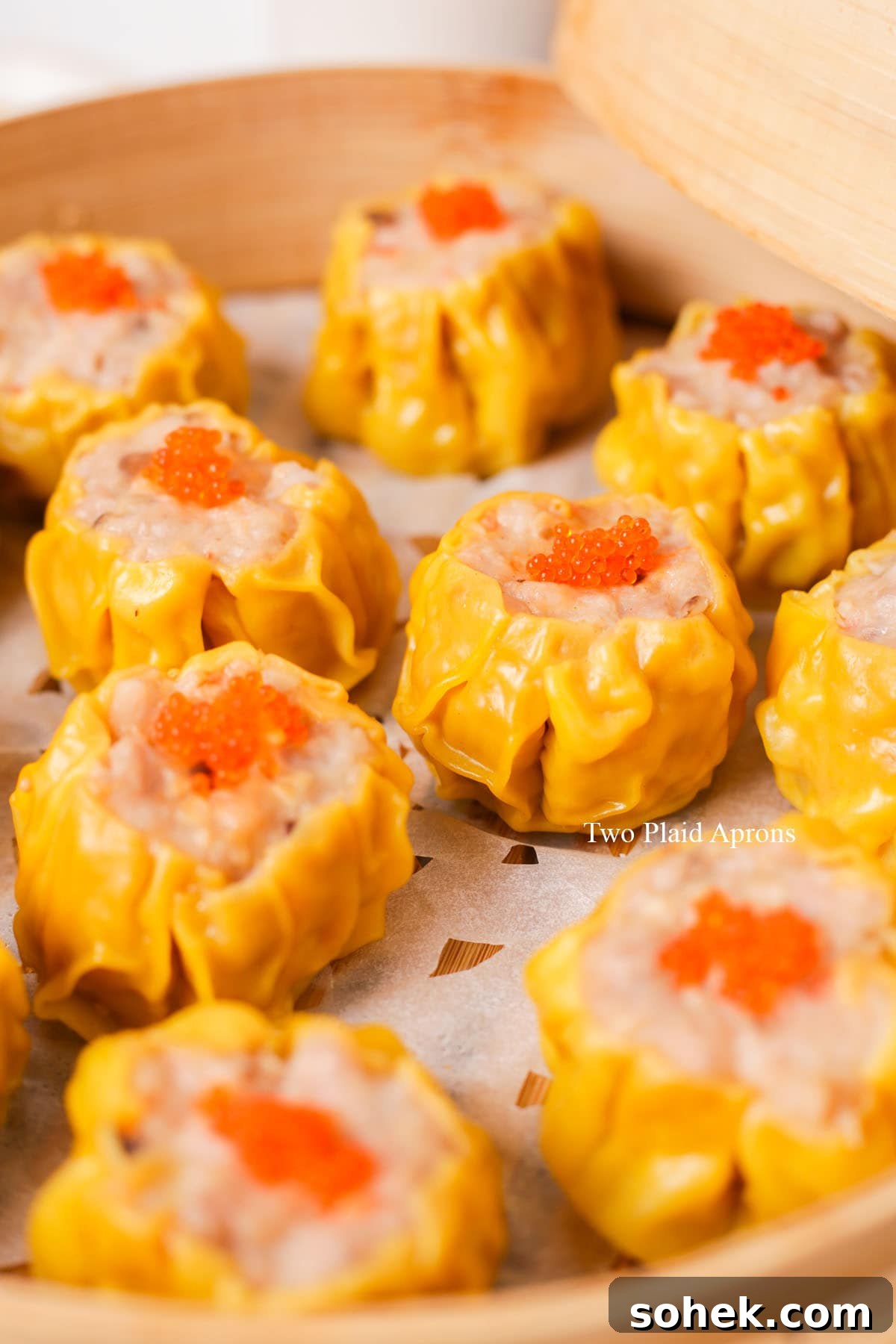
- Garnishes – Tobiko (roe) is often placed on top after steaming. Alternatively use a small pea or a diced carrot piece before steaming.
The secret ingredient: lard
Lard is a traditional addition that improves flavor and keeps the filling moist. You can use store-bought lard or render your own from fatty pork trimmings or pork skin. Rendering is straightforward: blanch the fat, dry it, then simmer on low until liquid fat renders. Strain and cool before storing in an airtight container.
How to make homemade lard
1. Collect pork fat (fatty pork skin or trimmings) and cut into 1-inch pieces. It’s fine if small bits of meat remain attached.
2. Blanche the fat by covering it with water, bringing to a brief boil, then draining and rinsing to remove scum.
3. Dry the fat thoroughly with paper towels and clean the pot.
4. Simmer the fat over low heat, stirring occasionally, until the liquid fat has rendered and the solids turn golden brown (about 30 minutes). Spoon the clear liquid fat into a clean container and discard the browned solids.
5. Strain the hot liquid through a fine mesh strainer into an airtight jar and allow to cool and solidify. Store in the refrigerator or a cool, dark place for several months.
How to make Cantonese shumai (siu mai)
See the recipe card below for full ingredients and exact measurements.
Prepare ingredients and equipment
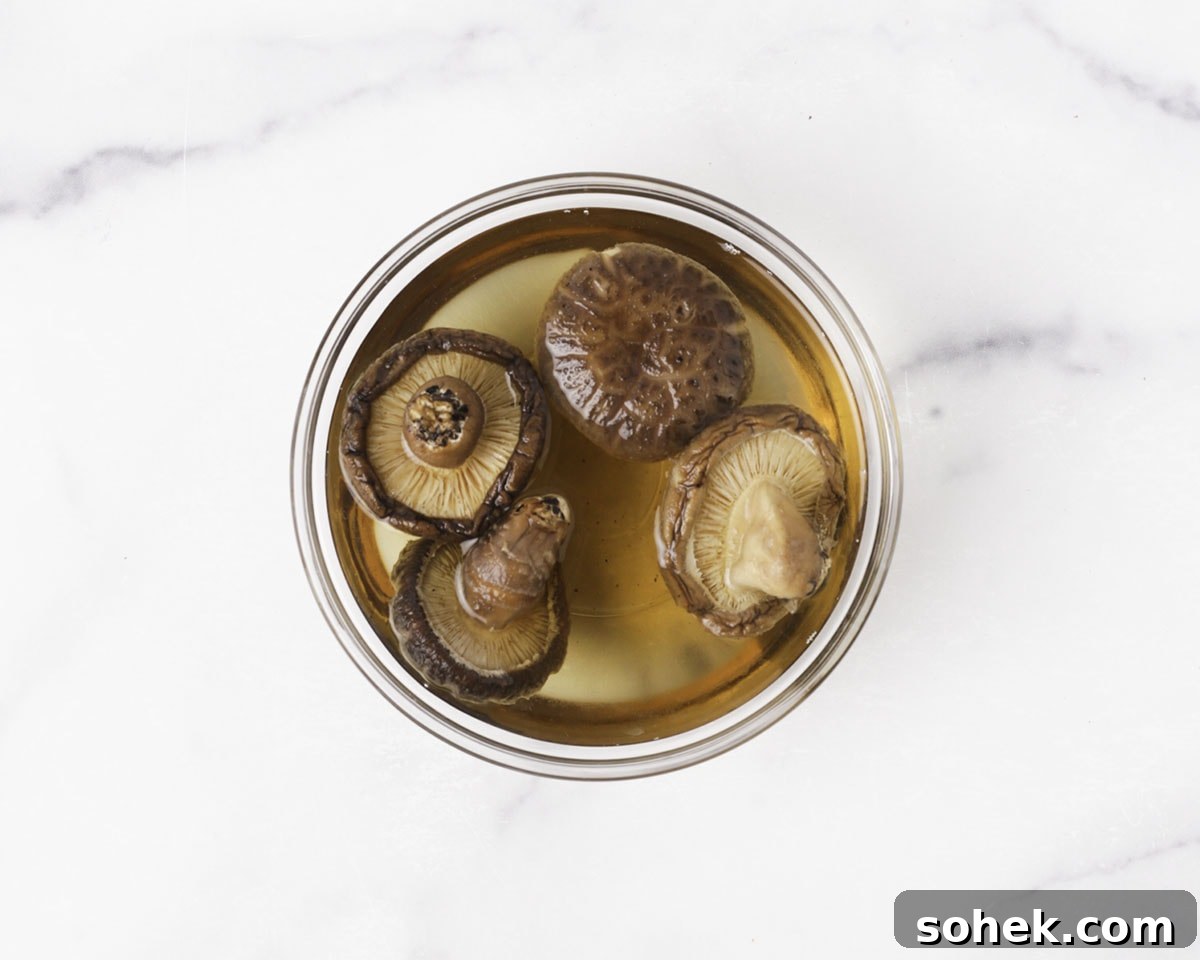
- Soak dried shiitake mushrooms in hot water for at least 15 minutes, trim stems, and finely mince the caps.
- Finely chop pork shoulder into pea-size pieces (or use coarsely ground pork if needed).
- Crush and roughly chop the shrimp into a paste by flattening them under the flat of a knife, then give a few chops.
- Line a sheet tray with cling film for finished shumai and prepare a steam basket lined with perforated parchment. You can cut thin rounds of carrot as liners if preferred.
- If using square wonton wrappers, trim the corners to make an octagon for a neater shumai shape; save the trimmings to crisp or use in soup.
Make the filling (stand mixer method)
- Place finely chopped pork in a stand mixer with a paddle attachment on medium speed until the pork becomes slightly sticky. Add crushed shrimp and mix until combined and slightly paste-like.
- Add water and mix on low until absorbed.
- Add lard and potato starch and mix on low to combine. Then add Shaoxing rice wine, sugar, chicken bouillon powder, salt, sesame oil, and white pepper; mix on low until even. Scrape sides as needed.
- Fold in minced shiitake and mix just to combine. Chill the filling 15–30 minutes if time allows.
Make the filling (hand method)
Use the same sequence but mix and knead the pork vigorously by hand until it becomes slightly paste-like, then incorporate shrimp, water, lard, starch, and seasonings, finishing with shiitake.
How to wrap shumai
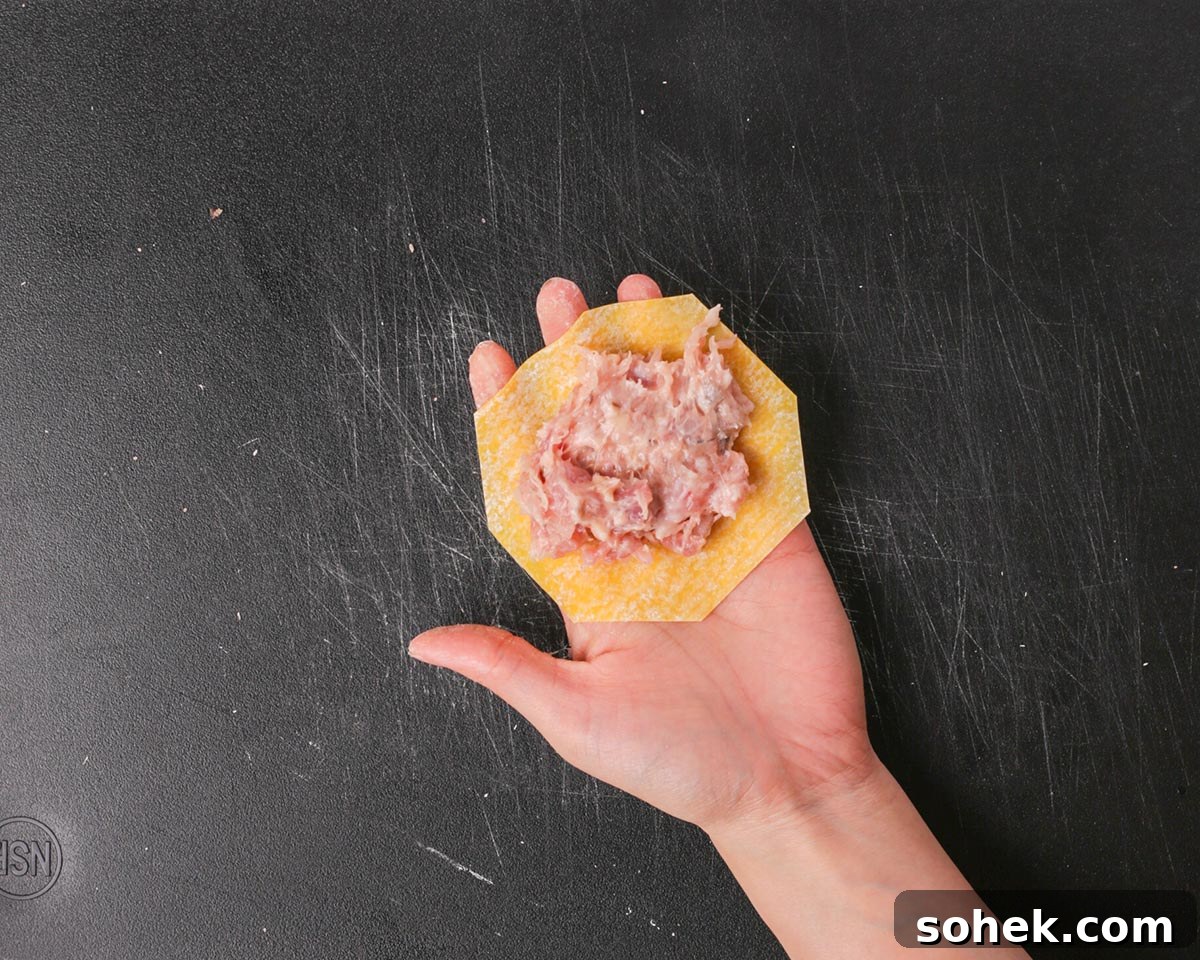
- Place about 2 tablespoons of filling in the center of a wrapper. Spread the filling slightly toward the edges.
- Form an “O” with your fingers and drape the wrapper over the fingers, or hold the wrapper on a spatula. Press down in the center with a butter knife while shaping the sides up to form a cup. Squeeze gently so the wrapper adheres to the filling and smooth the top.
- Aim for shumai about 1 inch wide and slightly taller than 1 inch. Tap the bottom on the work surface to flatten if desired.
- Place finished shumai on the prepared tray, avoiding contact between pieces. They can be cooked immediately or frozen raw for storage.
How to cook shumai
- Add about 1 inch of water to a wok or pot and bring to a boil.
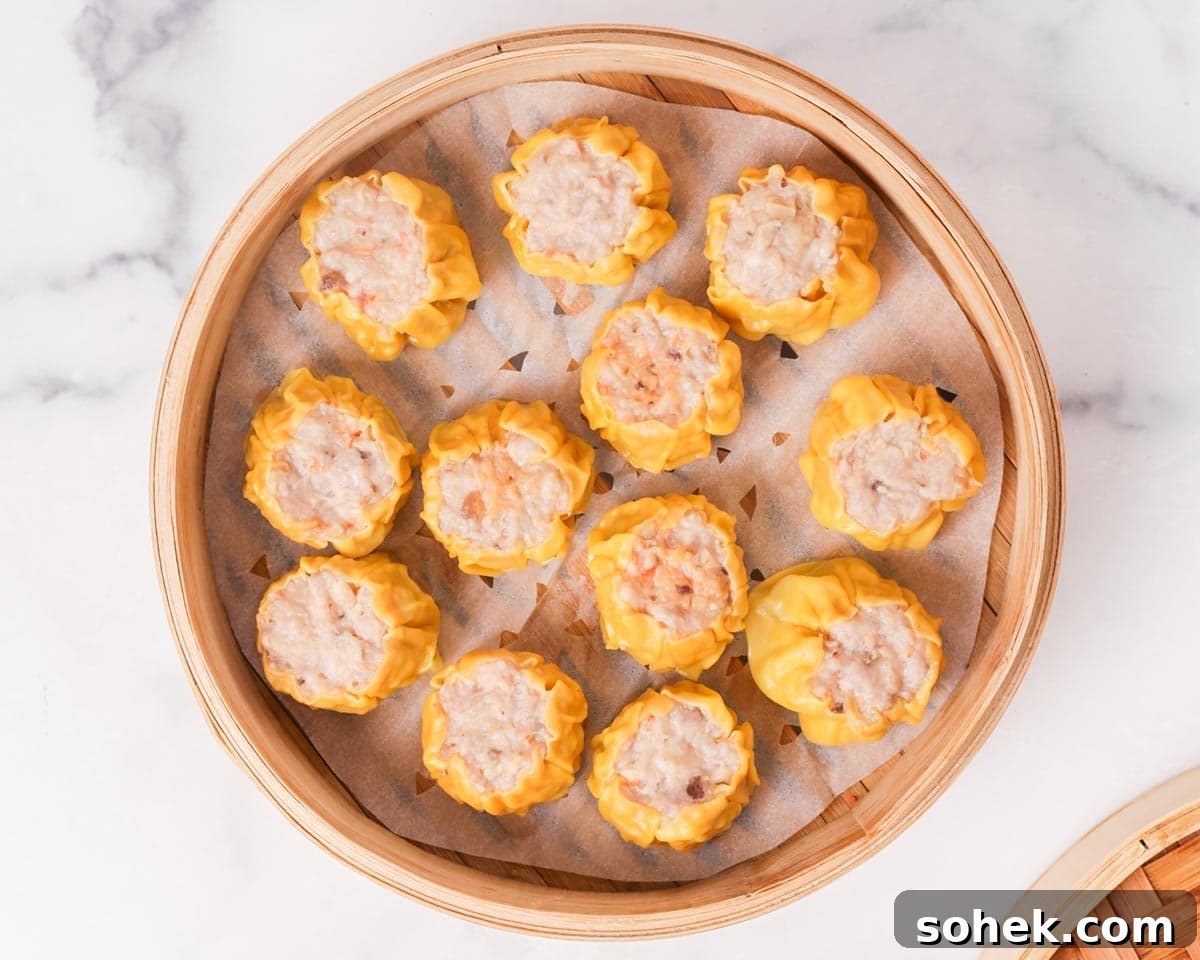
- Arrange shumai in a steam basket lined with perforated parchment, leaving at least ½ inch between pieces.
- If using a pea or diced carrot garnish, place it on each shumai now.
- When the water is boiling, reduce to a strong simmer. Place the basket over the water, cover, and steam for about 10 minutes for fresh shumai (13–14 minutes if frozen) or until the filling is cooked through. Remove from heat—be careful, steam is very hot.
- If using roe, add a small amount to the center of each shumai after steaming and off the heat.
Storage
Shumai are best fresh, so cook only what you will eat. For storage, freeze raw assembled shumai on a lined tray without touching; once solid, transfer to an airtight container or freezer bag. They keep 2–3 months frozen. To cook from frozen, steam 13–14 minutes or until cooked through.
Leftover cooked shumai can be refrigerated in an airtight container for 3–4 days. Reheat by steaming for about 5 minutes or microwaving covered until hot.
Reheating
Microwave: arrange shumai in a loosely covered microwave-safe dish and heat until hot. Steaming: place shumai in a lined steam basket and steam over high simmering water for about 5 minutes or until heated through.
FAQ
Cantonese shumai are typically made from pork and shrimp, often with shiitake mushrooms and other optional ingredients like water chestnuts or bamboo shoots.
What is the orange stuff on top of shumai?
That is usually tobiko (fish roe) or sometimes a small piece of diced carrot.
What is the difference between dumplings and shumai?
Shumai are a type of dumpling distinguished by an open top and a thin yellow wrapper, whereas “dumpling” is a broader category that includes many shapes and fillings.
What can I use instead of shumai wrappers?
Wonton wrappers are an excellent substitute; trim the corners to approximate a round wrapper.
What can I use instead of potato starch?
Cornstarch works as a substitute if potato starch is unavailable.
Recipe
Cantonese Shumai (Siu Mai)
Yield: 28 shumai
Time: Prep 45 mins | Cook 15 mins | Total 1 hr
Ingredients
- 1 lb boneless pork shoulder, finely chopped
- 8 oz shrimp, peeled and deveined
- 4 dried shiitake mushrooms, rehydrated and minced (optional)
- 1/2 cup water
- 4 tbsp lard (optional)
- 2 tbsp potato starch (or cornstarch)
- 2 tbsp Shaoxing rice wine
- 1½ tbsp granulated sugar
- 1 tbsp chicken bouillon powder
- 2½ tsp salt
- 2 tsp toasted sesame oil
- 1/4 tsp white pepper
- 25–28 shumai wrappers or wonton wrappers
Optional garnish
- Roe (fish or crab)
- Finely diced carrot
- Peas
To serve (optional)
- Chinese chili oil
- Chinese black vinegar
- Very thinly julienned ginger
Instructions
- Soak shiitake in hot water 15 minutes, trim stems, and mince.
- Finely chop pork into pea-sized pieces. If mixing by hand, mince until slightly paste-like.
- Flatten shrimp under the knife to about 1/8″ thick, then chop into a rough paste.
- Stand mixer method: mix chopped pork on medium until slightly sticky, add shrimp and mix until paste-like, add water on low until absorbed. Add lard and starch, then seasonings; mix on low. Fold in minced shiitake. Chill 15–30 minutes if possible.
- Hand method: knead pork until slightly sticky, add shrimp and water and mix until absorbed. Add lard, starch, seasonings, and shiitake; mix well.
- To wrap: place ~2 tbsp filling in center of wrapper, shape into a cup by bringing up the sides and pressing the center down with a butter knife or spatula. Smooth the top and adjust so shumai is about 1″ wide and slightly taller than 1″.
- Arrange shumai on a lined tray without touching. Steam in a lined basket over a high simmer for 10 minutes (fresh) or 13–14 minutes (frozen). Add roe after cooking if desired.
- Serve hot with black vinegar, chili oil, or plain.
Storage & reheating
Freeze raw shumai on a tray until solid, then transfer to a bag for up to 2–3 months. Cook from frozen for 13–14 minutes. Refrigerate cooked shumai up to 3–4 days and reheat by steaming or microwaving.