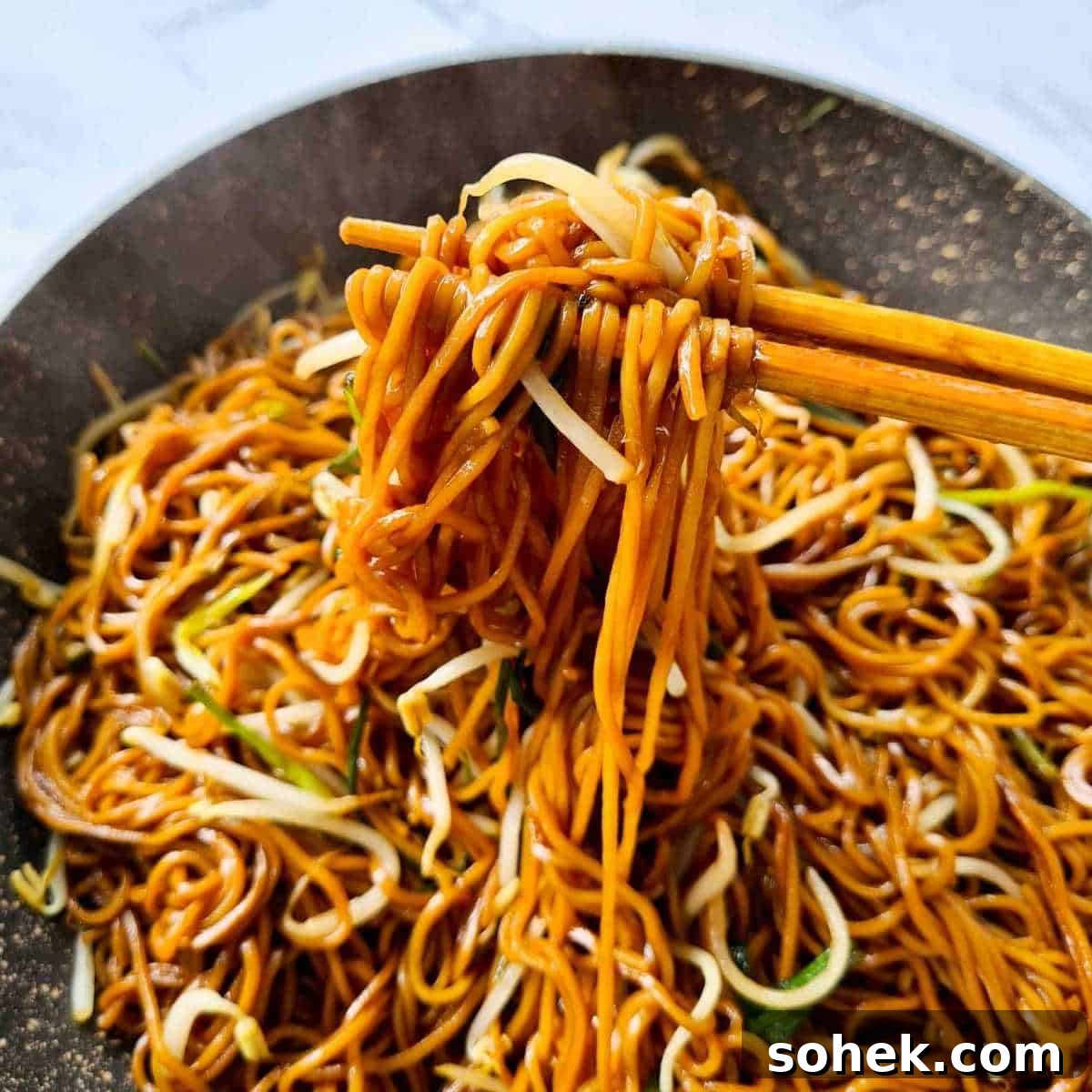
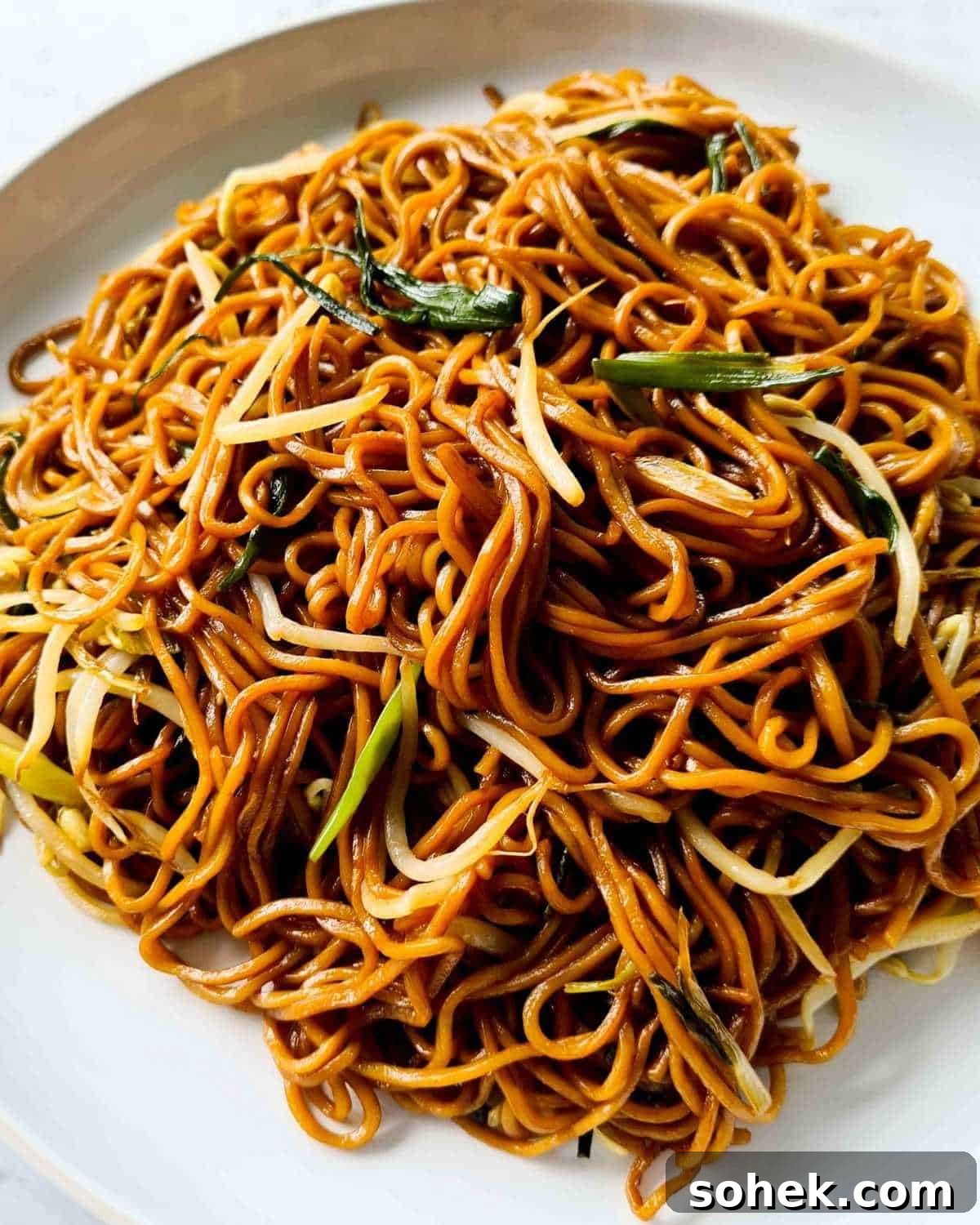
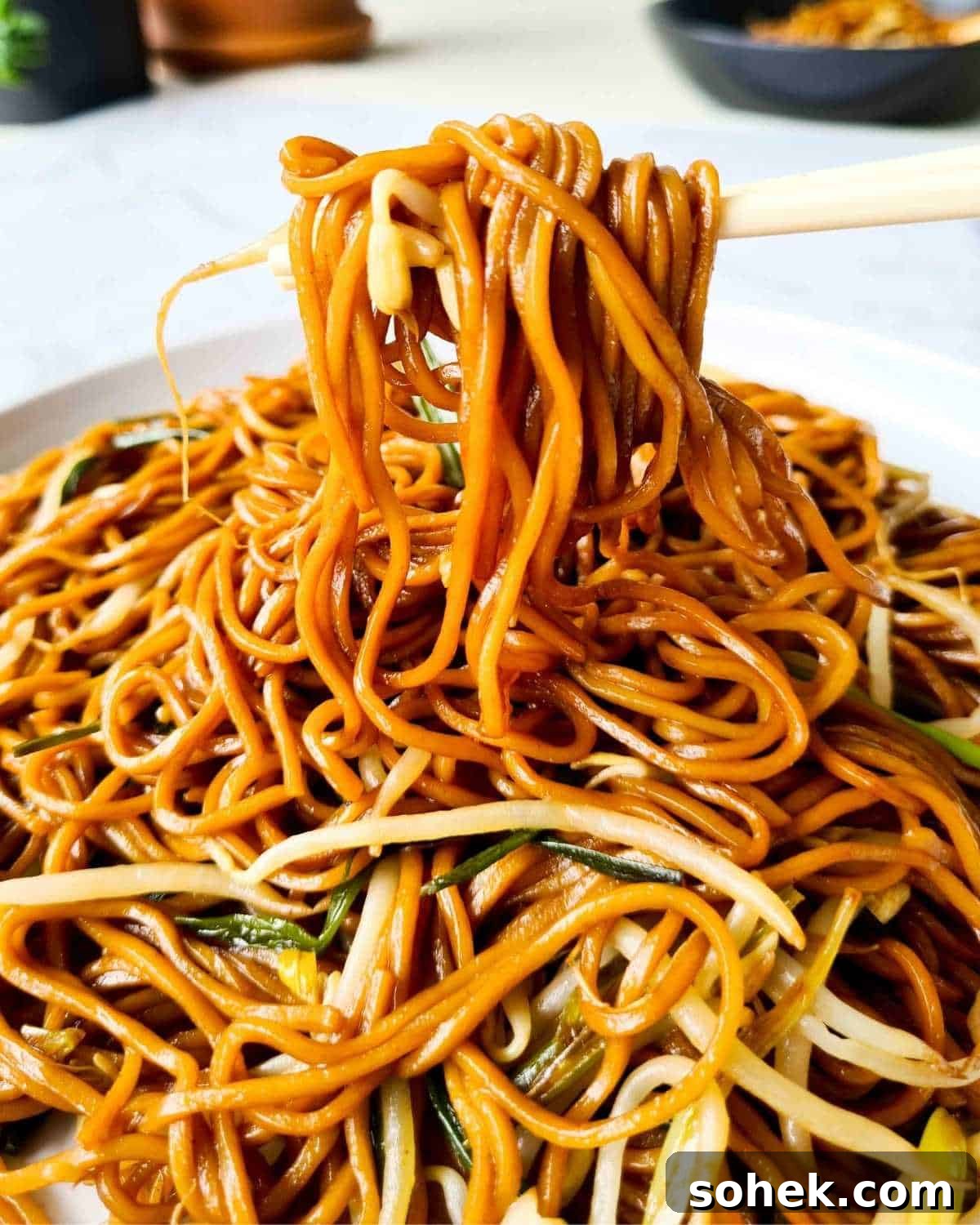
Simple, easy and super yum 15 minute chow mein! These pan-fried Cantonese soy sauce noodles are commonly served like a side dish, alongside meat, vegetable dishes and dim sum. They are also perfectly satisfying on their own.
To elevate the dish, top with a couple of fried eggs or a generous drizzle of Homemade Chilli Oil. Yum!
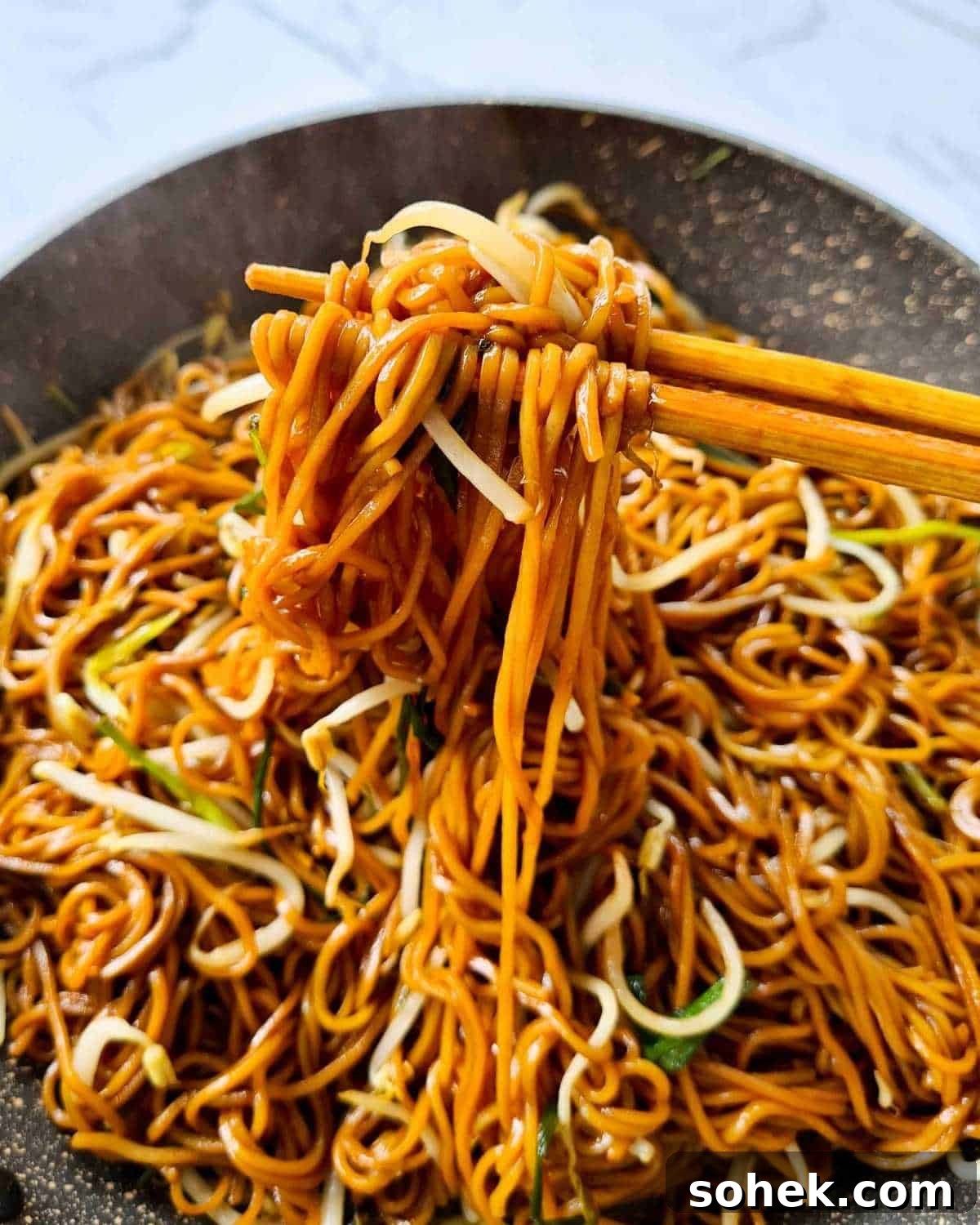
‘Wok hei’ (air of the wok)
These noodles are intentionally simple—noodles, spring onions, bean sprouts and seasoning—so quick, high-heat cooking is essential to boost flavour.
In Cantonese this is called ‘wok hei’ (鑊氣), the “air of the wok.” In Mandarin it’s often referred to as ‘huo chi’ (火氣), or “breath of fire.” Heat the wok or frying pan until very hot before adding oil.
Cooking on high heat is crucial for this soy sauce noodles dish. Fast, hot cooking caramelises the ingredients and builds complexity and depth of flavour.
Ingredients
Egg noodles
Thin egg noodles contain fresh eggs that add richness and a pleasant chew when cooked. They come in three main varieties:
- Fresh uncooked
- Fresh pre-cooked (often labelled “chow mein”, crinkly in appearance)
- Dried egg noodles (sold on shelves rather than in the fridge)
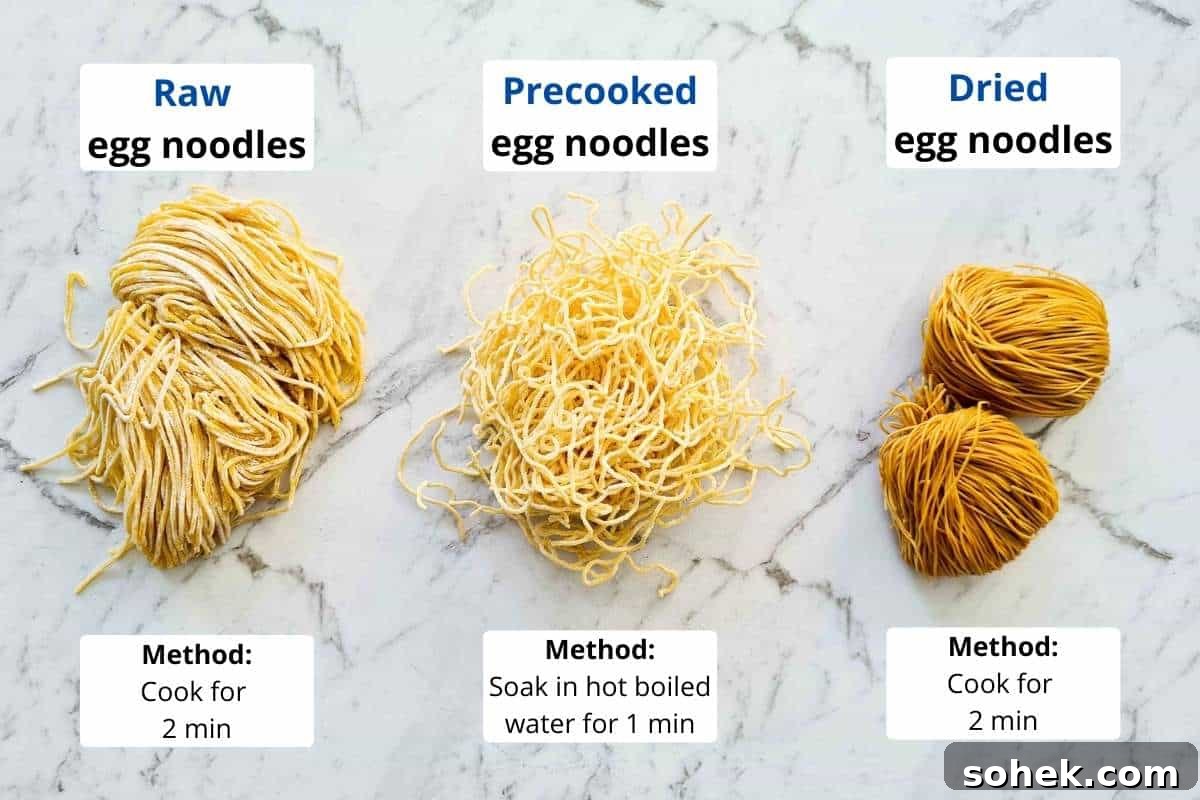
All three varieties work well in this recipe. If you prefer, thicker Hokkien noodles are also fine though they deviate from the Cantonese style. Thin egg noodles are widely available at Asian supermarkets and many mainstream stores.
Egg noodles vs wonton egg noodles
Packets in the fridge section may be labelled “Hong Kong-style egg noodles” or “Hong Kong-style wonton egg noodles.” They look very similar—thin, raw and coated with cornstarch. Wonton egg noodles sometimes have a slightly higher egg content, but either will work. For this stir-fry, regular egg noodles are ideal; choose wonton egg noodles when making wonton noodle soup.
Remaining ingredients
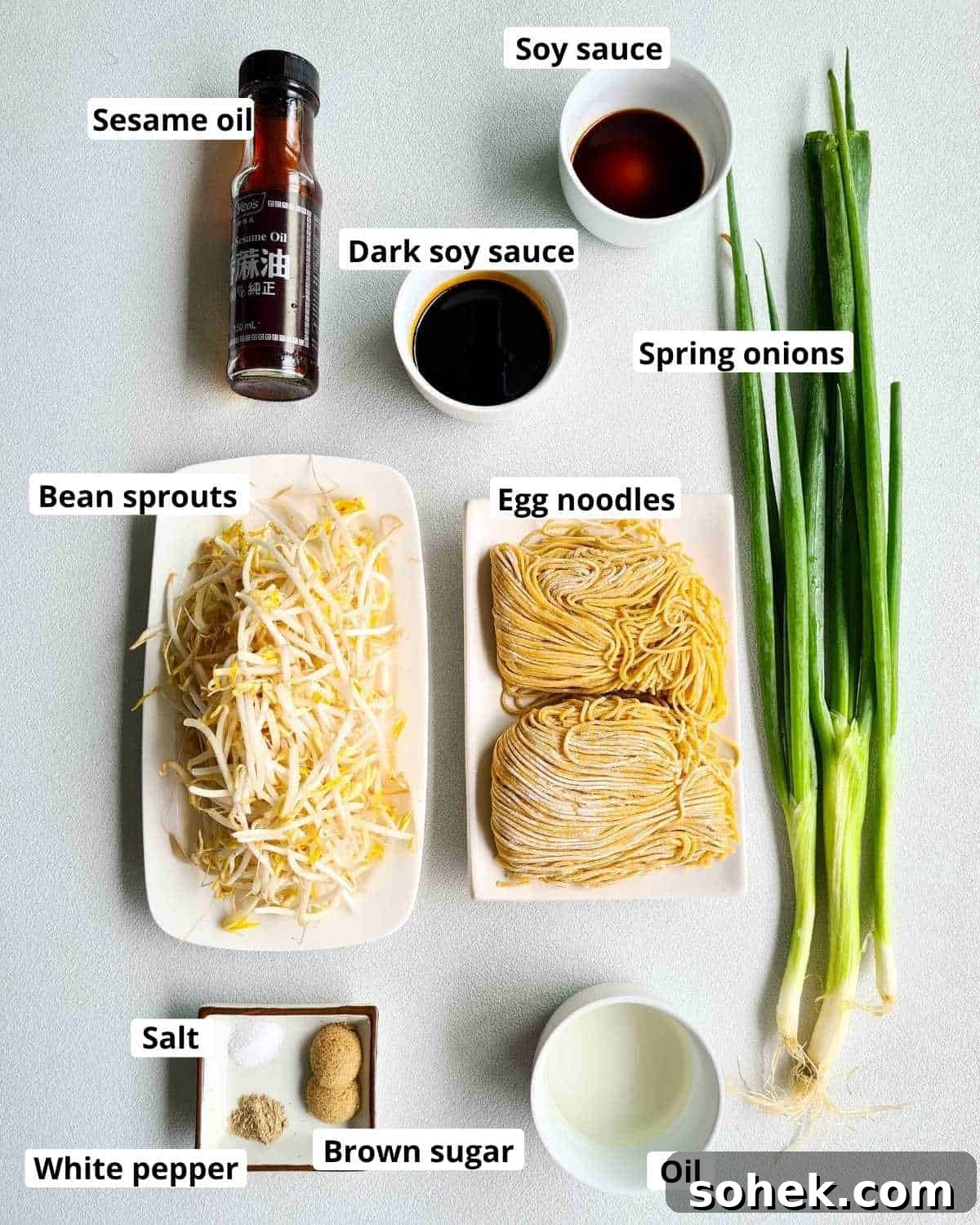
- Dark soy sauce and soy sauce – provide colour, richness and umami. Dark soy sauce is darker and richer but usually less salty than light soy sauce.
- Bean sprouts – mung bean sprouts add freshness and crunch. Buy the freshest sprouts you can: they should look crisp with no excess liquid in the bag.
- Brown sugar – can be substituted with white sugar. Brown sugar adds a touch of molasses richness.
How to make pan fried soy sauce noodles
This Cantonese chow mein takes about 15 minutes and requires minimal prep. For stir-fries, prep everything first so items are ready within arm’s reach.
Preparation is key
Trim spring onions and cut into roughly 6 cm (2.5 inch) lengths, then thinly slice lengthways. This opens the onion and helps release flavour while matching the size of the bean sprouts for even distribution.
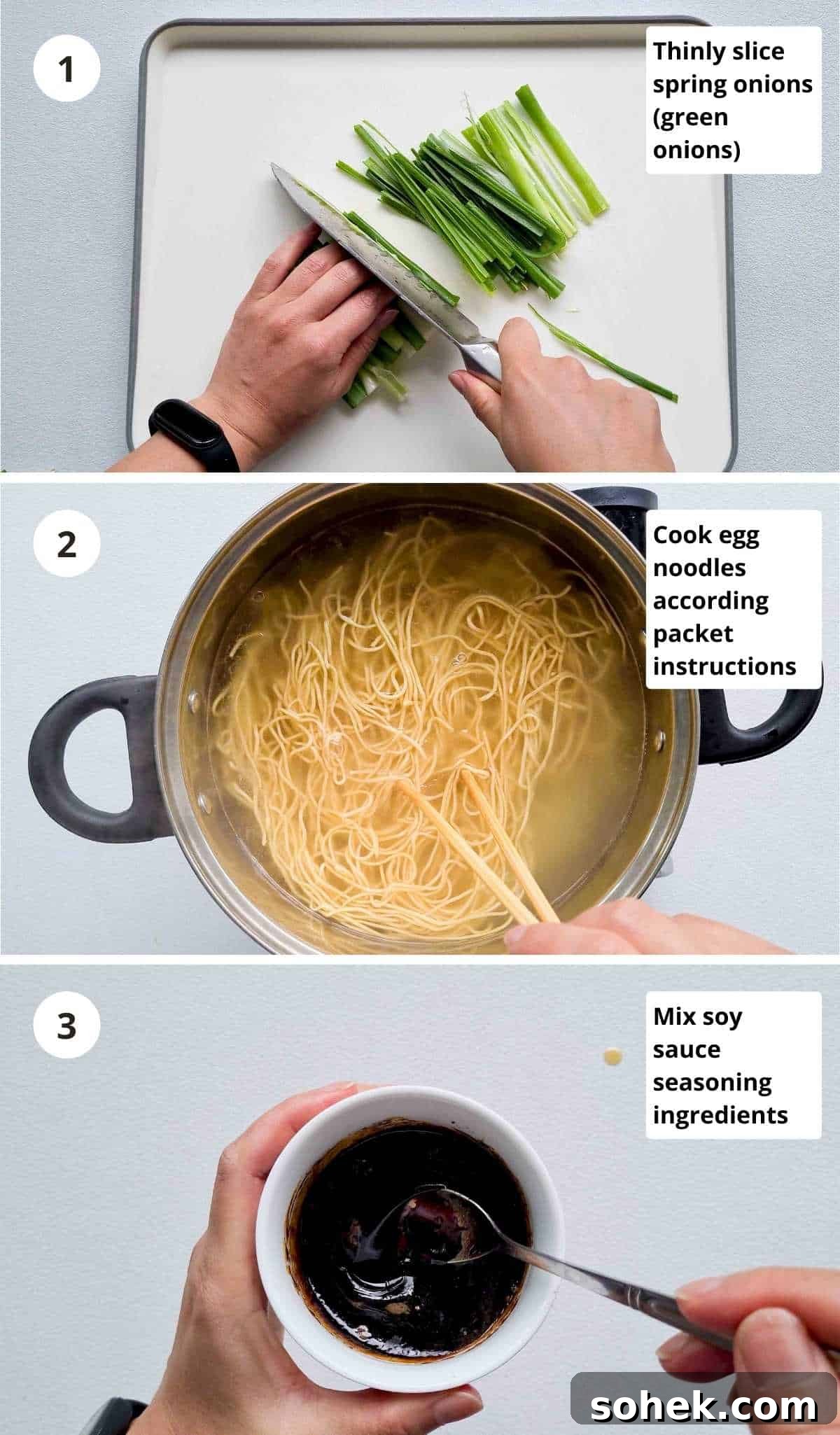
Cook raw egg noodles according to packet instructions (usually 2–3 minutes) then drain. For pre-cooked chow mein noodles, soak in hot water as directed (often about 1 minute) and drain.
Mix the seasoning in a small bowl: dark soy sauce, soy sauce, brown sugar, salt, white pepper and sesame oil. Stir until combined.
Pan fry on high heat
Heat a wok or large non-stick frying pan on high until very hot. Add oil, then fry the spring onions until fragrant and lightly golden.
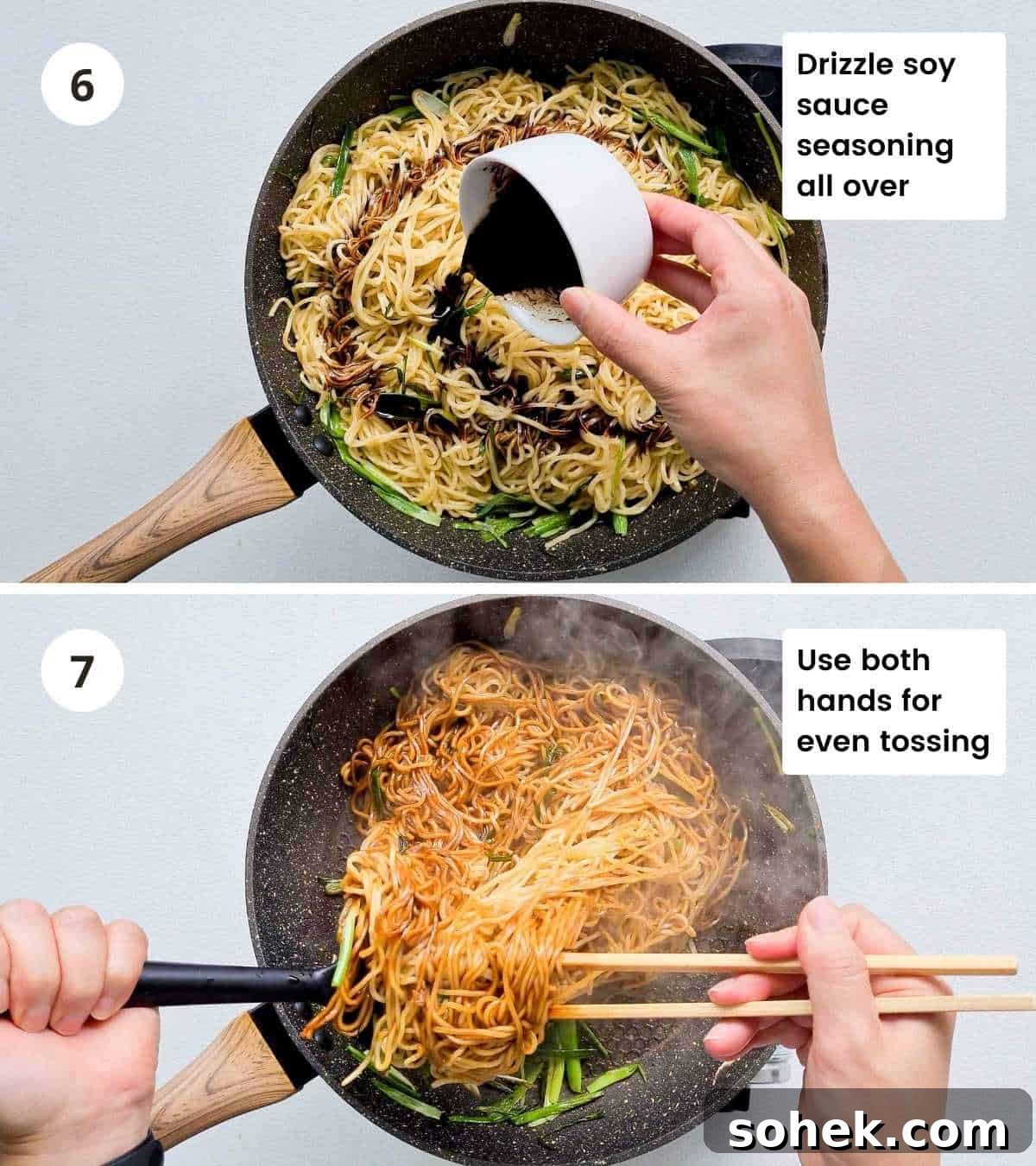
Push the spring onions to the edges of the pan and add the noodles. Toss quickly on high heat using two spatulas or a spatula and chopsticks. The pan should sizzle loudly—this brief caramelisation, about 1–2 minutes, builds flavour without burning.
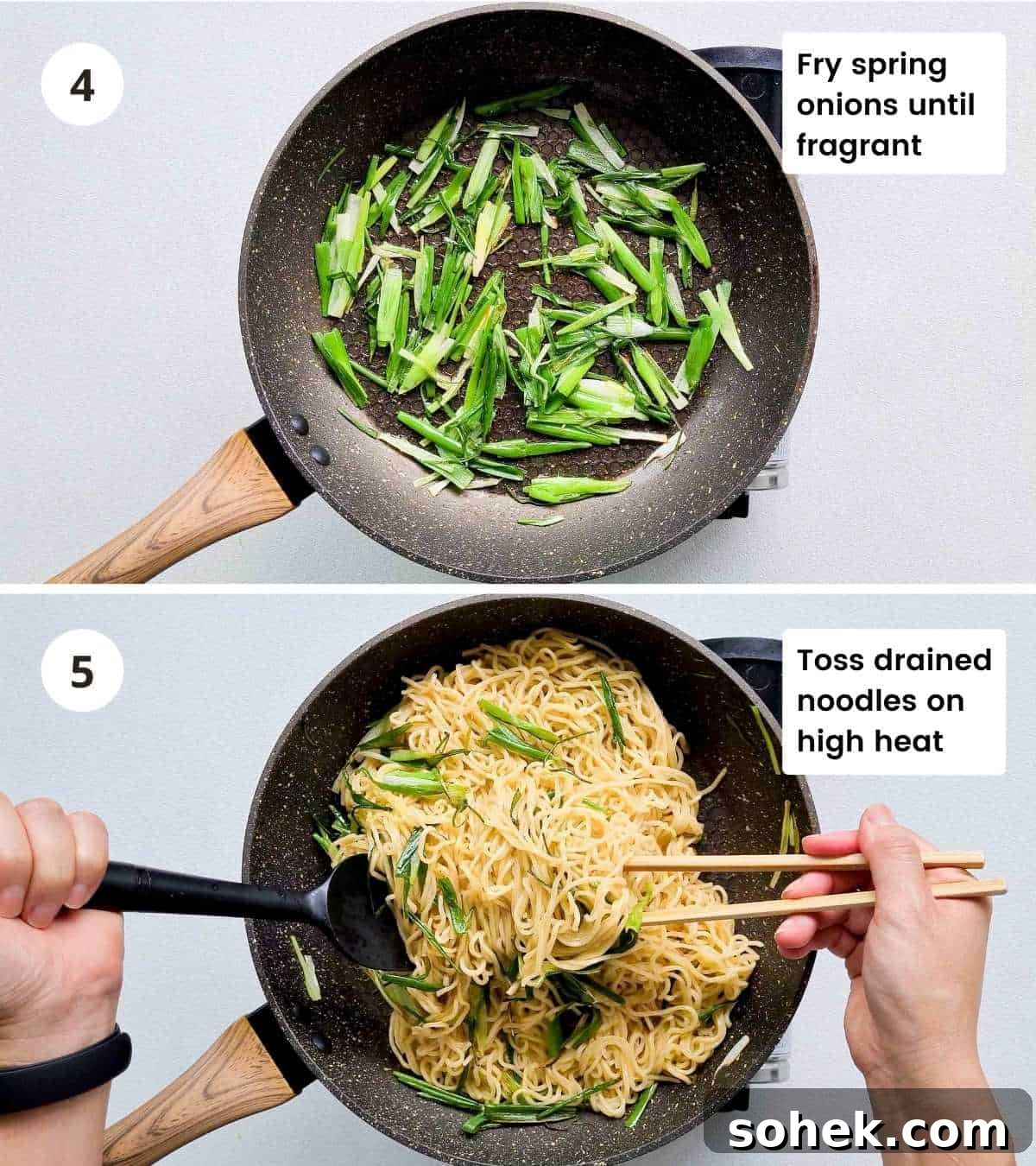
Drizzle the soy sauce seasoning over the noodles and continue tossing on high for another minute or two so the sauce sizzles and the dish develops “wok hei.”
Add the washed, drained bean sprouts and toss until evenly combined. Bean sprouts are mostly water and will release moisture quickly, helping the noodles toss more easily and adding a crisp texture.
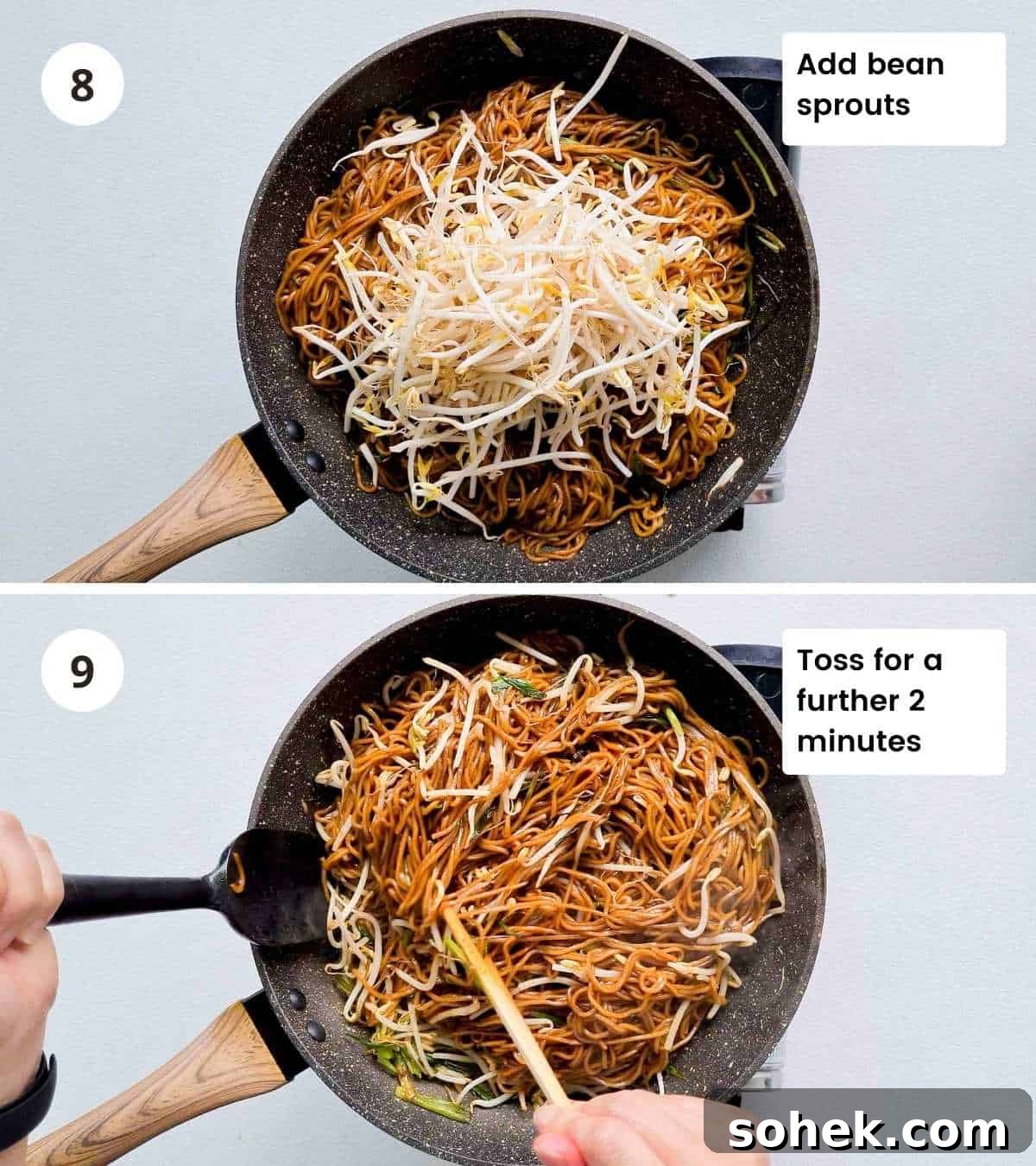
That’s it—ready in about 15 minutes from start to finish.
Serving suggestions
Serve the soy sauce noodles with lighter dishes that complement their richness. Ideas:
- Easy Pork Wontons – juicy, simple wontons make a great accompaniment.
- Vegan Dumplings – vegetable-packed dumplings pair well for a meat-free meal.
- 15 minute Butter Garlic Prawns – quick prawns add protein and a different flavour profile.
- San Choy Bow – crisp lettuce cups with savoury filling make a refreshing contrast; try adding a little soy sauce noodles into the wrap.
- Easy Chinese Steamed Fish – delicate steamed fish with ginger and spring onion is a light option.
These lighter or more subtly flavoured dishes balance the soy-sauce-forward noodles nicely.
Useful tips and tricks for making soy sauce noodles
- Use a well-seasoned wok and heat it until smoking if you have one—this helps prevent sticking and develops flavour.
- Non-stick pans work well and make stir-frying easier if your wok isn’t well seasoned.
- Loosen cooked noodles before stir-frying—running them briefly under tap water or tossing with a little oil prevents clumping and makes tossing in the pan easier.
Good to know (FAQs)
Homemade egg noodles are made from flour, eggs, water and salt. Store-bought fresh Hong Kong-style egg noodles often include wheat gluten, sodium bicarbonate, cornstarch and small amounts of preservatives or colourings.
Yes. Fresh egg spaghetti is the closest substitute in flavour; angel hair or thin pasta can also work, though texture will differ.
Moderation is key. Egg noodles are low in fat but higher in carbohydrates—balance them with vegetables and protein for a more nutritious meal.
You can add vegetables and proteins (meat, seafood or tofu) to make a lo mein-style dish. If adding other ingredients, stir-fry them first and add the noodles last, adjusting seasoning as needed.
Leftovers/freezing
Store leftovers in airtight containers in the fridge for up to 5 days or freeze for up to 2 months.
Made this recipe? Leave a comment to share your feedback or questions—I’d love to hear from you.
Happy cooking! – Gen
Video
📖 Recipe
Soy Sauce Pan Fried Noodles (Cantonese Chow Mein)
Makes 4 portions (or 6 as a side).
Ingredients
- 350 g / 12 ounces fresh thin egg noodles (or 4 small bundles dried)
- 3 cups bean sprouts, washed and drained
- 3 spring onions (green onions), or 4 small ones
- 1½ tbsp neutral tasting oil (or peanut oil)
Soy sauce seasoning
- 1 tbsp dark soy sauce
- ½ tbsp soy sauce
- 2 tsp brown sugar (or white)
- ½ tsp sesame oil
- ¼ tsp white pepper
- ¼ tsp salt
Instructions
- Trim and cut spring onions into 6 cm (2½ inches) lengths, then thinly slice lengthways.
- Combine soy sauce seasoning ingredients in a small bowl and mix well.
- Cook egg noodles according to packet instructions, then drain (usually 2–3 minutes).
- In a large non-stick frying pan or wok over high heat, sauté spring onions in oil until lightly golden, 1–2 minutes.
- Push spring onions to the rim, add drained noodles and toss on highest heat for about 1 minute. Loosen noodles beforehand if needed.
- Drizzle in soy sauce seasoning and toss for about 1 minute until evenly distributed.
- Add bean sprouts and toss for a further 2 minutes until well combined.
Notes
1. Egg noodles come in three forms: fresh raw, fresh precooked and dried—any work for this recipe; follow packet instructions.
2. Use the freshest bean sprouts: look for crisp sprouts with no excess liquid in the bag.
3. Loosen cooked noodles before stir-frying: rinse briefly under tap water or toss with a little oil to prevent sticking.
Use a non-stick frying pan or wok for easiest results.
Mention @Casuallypeckish or tag #casuallypeckish
Nutrition
Carbohydrates: 46.2 g |
Protein: 13.4 g |
Fat: 7.7 g |
Sodium: 873 mg
More easy Asian recipes
-
Vietnamese Vermicelli Bowl with Lemongrass Chicken
-
Beef Noodle Stir Fry
-
How to Make Chilli Oil
-
Vegan dumplings (with chili oil dipping sauce)