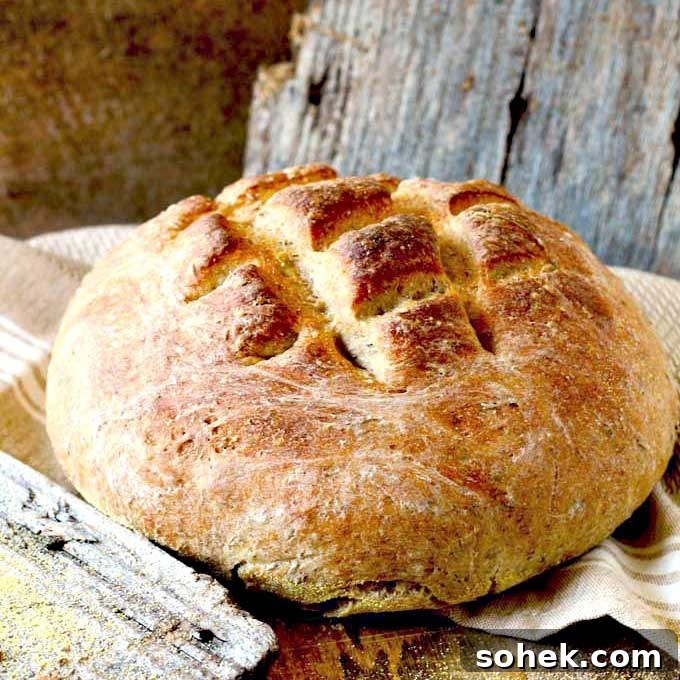
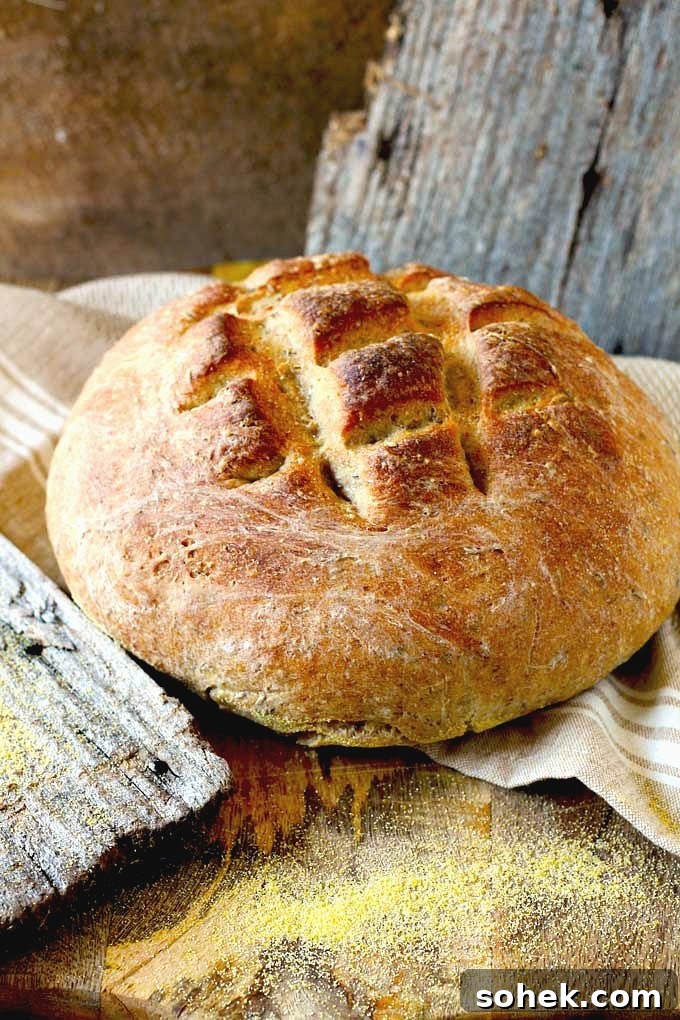
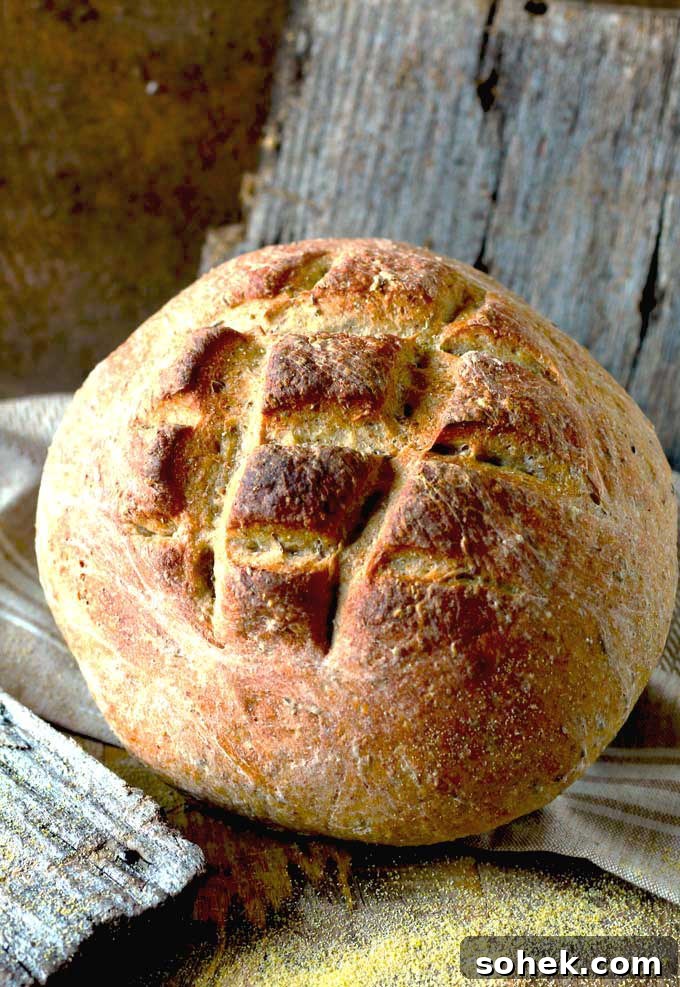
This authentic-tasting German loaf is a family favorite. My grandfather’s family came from Germany, and this hearty Bauernbrot was often served alongside a bowl of soup or a rich beef stew.
Making Bauernbrot at home is straightforward, though the total time spans several hours. Most of that is inactive resting and rising time, so the hands-on work is minimal.
What Are German Breads?
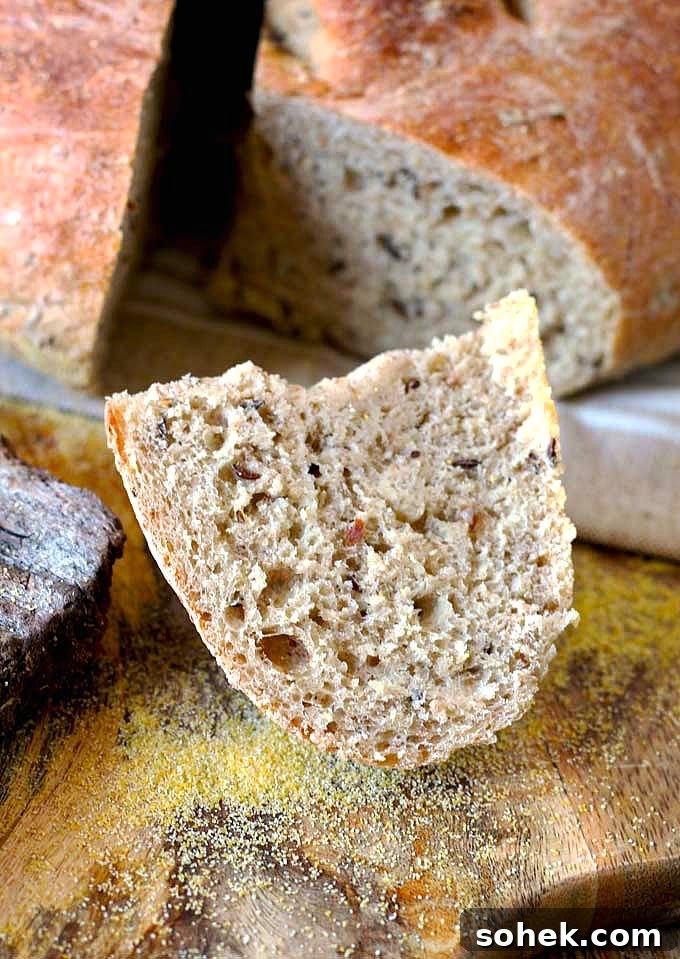
German bakers take bread seriously. Across Germany you’ll find hundreds of regional varieties made from different grains and seeds. Compared with some other European breads, German breads tend to be more rustic and dense because they often include rye, whole grains or seeds. This combination of ingredients and traditional techniques is why many consider German breads among the best.
Typical ingredients include rye, whole wheat, spelt, oats and seeds such as caraway, anise and sesame. Well-known examples are pumpernickel, pretzels (Brezeln), Vollkornbrot (whole rye bread), multigrain loaves (like Fünfkornbrot), sourdough rye (Roggenbrot), Brötchen rolls and Bauernbrot, the classic farmer’s loaf described here.
Bauernbrot
Bauernbrot, or farmer’s bread, is especially common in southern Germany and on farms. It is heartier than a typical country loaf (Landbrot) because it uses a higher proportion of rye flour and traditionally relies on a sourdough starter. That starter gives the bread a gentle tang. Caraway seeds are often included, offering the characteristic aromatic note found in many German breads.
How To Make Bauernbrot
Equipment is simple: a few bowls, a wooden spoon, a baking sheet (or baking stone) and a bench surface for kneading. The method uses a starter, a flour mixture and a couple of rest periods to develop flavor and texture.
-
Begin by preparing the starter: bread flour, rye flour, water, yeast and honey combined and left to activate briefly.
-
In another bowl, combine the flour mixture: bread flour, caraway seeds, salt and a small amount of instant yeast.
-
Pour the flour mixture over the starter without stirring. Cover with plastic wrap or a towel and let it rest for at least two hours (up to five). This long rest deepens flavor.
-
After resting, add oil and stir the flour into the starter until it forms a dough.
-
Turn the dough onto a lightly floured surface and knead about 10 minutes until smooth and elastic. If sticky, add a little extra flour sparingly.
-
Place the dough in a lightly oiled bowl, cover and rest 10 minutes, then knead briefly again and return to the bowl.
-
Let the dough rise in a draft-free spot until doubled, about 1½–2 hours. Punch down, knead lightly 3–4 times, shape into a ball and allow a second rise of about 45 minutes.
-
For a chewy crust, create steam in the oven by placing a shallow metal pan on the lowest rack and pouring hot water into it when you place the loaf inside.
-
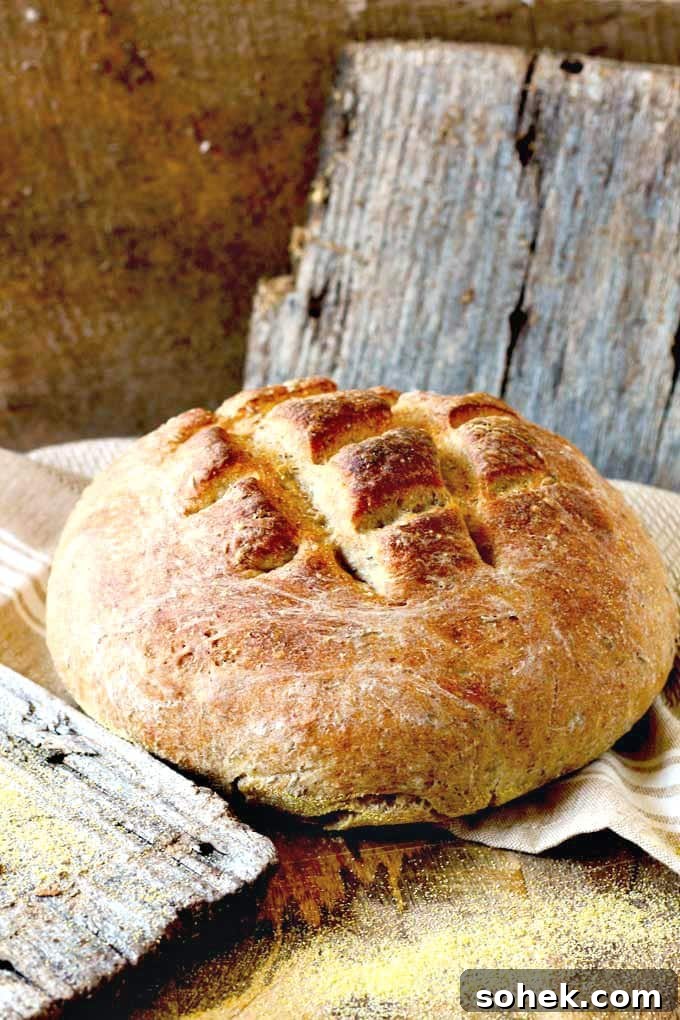
Shape the dough into a ball, oil the top, place it on a cornmeal-dusted baking sheet, cover and let rise about an hour. Slash the top in a crisscross pattern, mist with water from a spray bottle and bake: start at 425°F for 15 minutes with steam, then reduce to 400°F and bake another 35–45 minutes until an instant-read thermometer reads 190°F in the center.
-
Remove the loaf and cool completely on a rack before slicing.
German Rye Bread Tips and Notes
-
You can adjust the ratio of rye to bread flour to suit your taste. If you prefer less rye flavor, reduce the rye proportion and increase bread flour.
-
Adjust or omit caraway seeds if you don’t like them.
-
Substituting up to half of the bread flour with whole wheat will give a nuttier loaf; if you do this, you may need to add a little extra water for proper hydration.
Take a Look At These Other Bread Recipes:
-
Parker House Rolls
-
Buttermilk Biscuits
-
Irish Soda Bread
-
Sourdough Sandwich Bread
-
Overnight Sourdough Bread
Bauernbrot German Farmer’s Bread
 Kathy McDaniel
Pin
Ingredients
For the Dough Starter
- ¾ cup Bread flour
- ¾ cup Rye flour
- 3 tablespoons Honey
- 1 ½ cup Lukewarm water
- ½ teaspoon Instant yeast
For the Flour Mixture
- 2 ½ cups Bread flour
- 2 tablespoons Caraway seeds
- 2 teaspoons Salt
- ½ teaspoon Instant yeast
- 1 tablespoon Vegetable oil, plus more to grease the bowl
- Cornmeal – for the baking tray
Instructions
-
Combine the starter ingredients in a large bowl and mix until smooth. Let sit 10 minutes to activate the yeast.
-
While the starter rests, whisk together the flour mixture: bread flour, caraway seeds, salt and instant yeast.
-
Pour the flour mixture over the starter without stirring. Cover and leave at room temperature for at least two hours and up to five hours.
-
The starter will bubble up through the flour during this rest, adding depth of flavor.
-
Add the oil and stir the mixture until it forms a dough. Transfer to a lightly floured surface and knead about 10 minutes until smooth and elastic, adding a little flour only if needed.
-
Rest the dough 10 minutes, then knead another 5–10 minutes.
-
Place the dough in a lightly oiled bowl, oil the top, cover and let rise in a warm, draft-free spot until doubled, about 1½–2 hours. Punch down, knead lightly and shape into a ball. Return to the bowl, cover and let rise about 45 minutes more.
-
Preheat the oven to 425°F and position a shelf on the lowest level. Place a small metal pan on that shelf for steaming later. Shape the dough into a ball, set it on a cornmeal-dusted baking sheet, lightly oil the top and cover; let rise another hour.
-
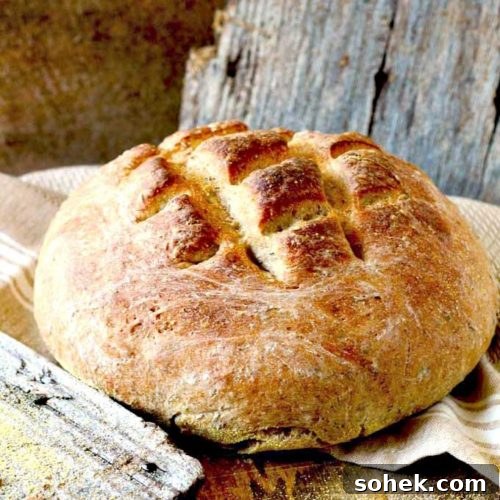
Score the top with three parallel cuts, then three perpendicular cuts to form a crosshatch. Mist with room-temperature water from a spray bottle.
-
Place the baking sheet in the oven and pour about 1 cup of water into the small pan to create steam. Close the door immediately and bake 15 minutes at 425°F. Reduce the temperature to 400°F and bake another 35–45 minutes, until an instant-read thermometer registers 190°F in the center.
-
Transfer the loaf to a cooling rack and cool completely before slicing.
Notes
- Use a spray bottle with room-temperature water to mist the loaf before baking to help form a crisp crust.
- Nutrition values are estimates and may vary by ingredient brands and portion sizes.
- This recipe yields one loaf (about 12 servings).
- Recipe adapted from whats4eats.