This post may contain affiliate links; see privacy policy for details.
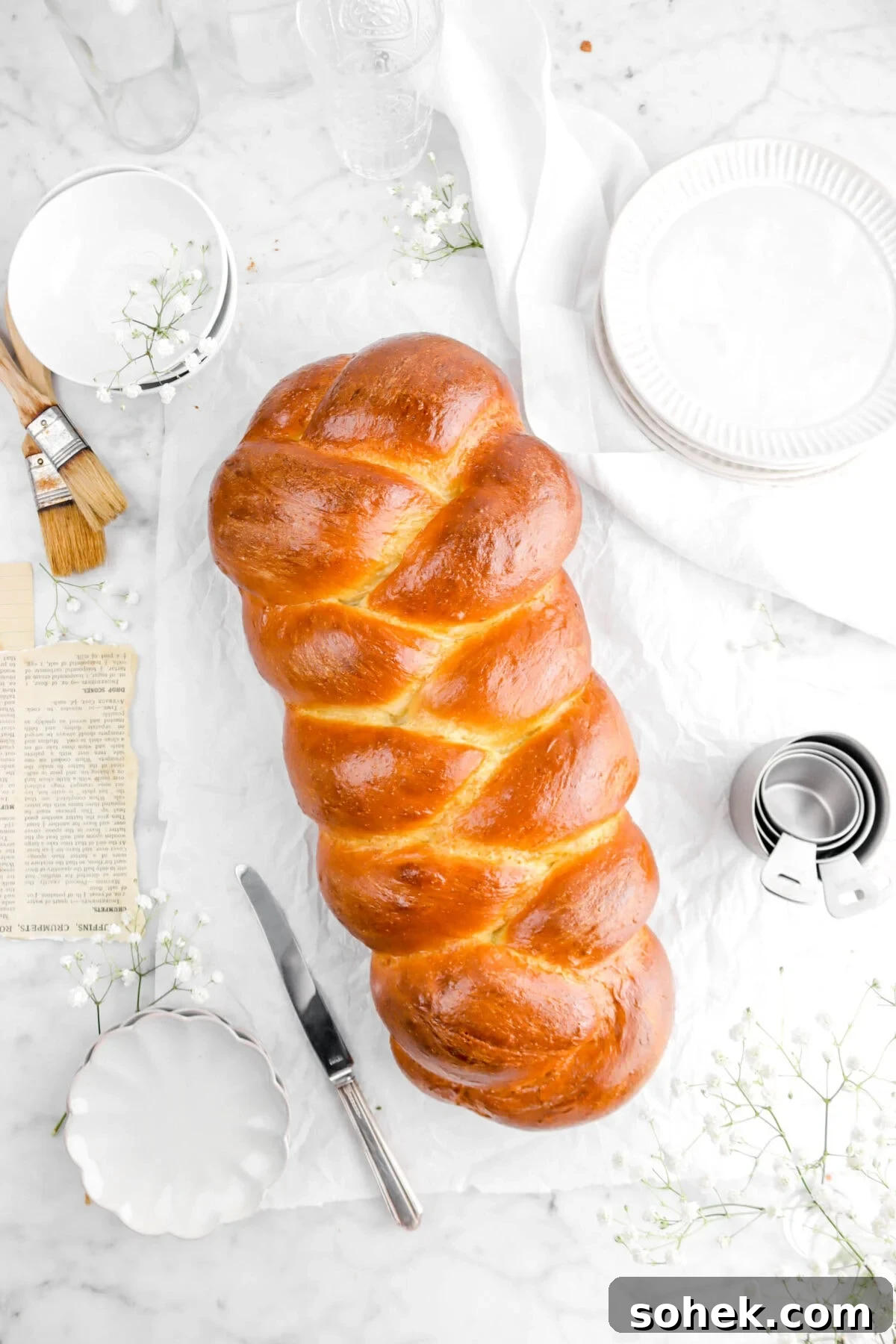
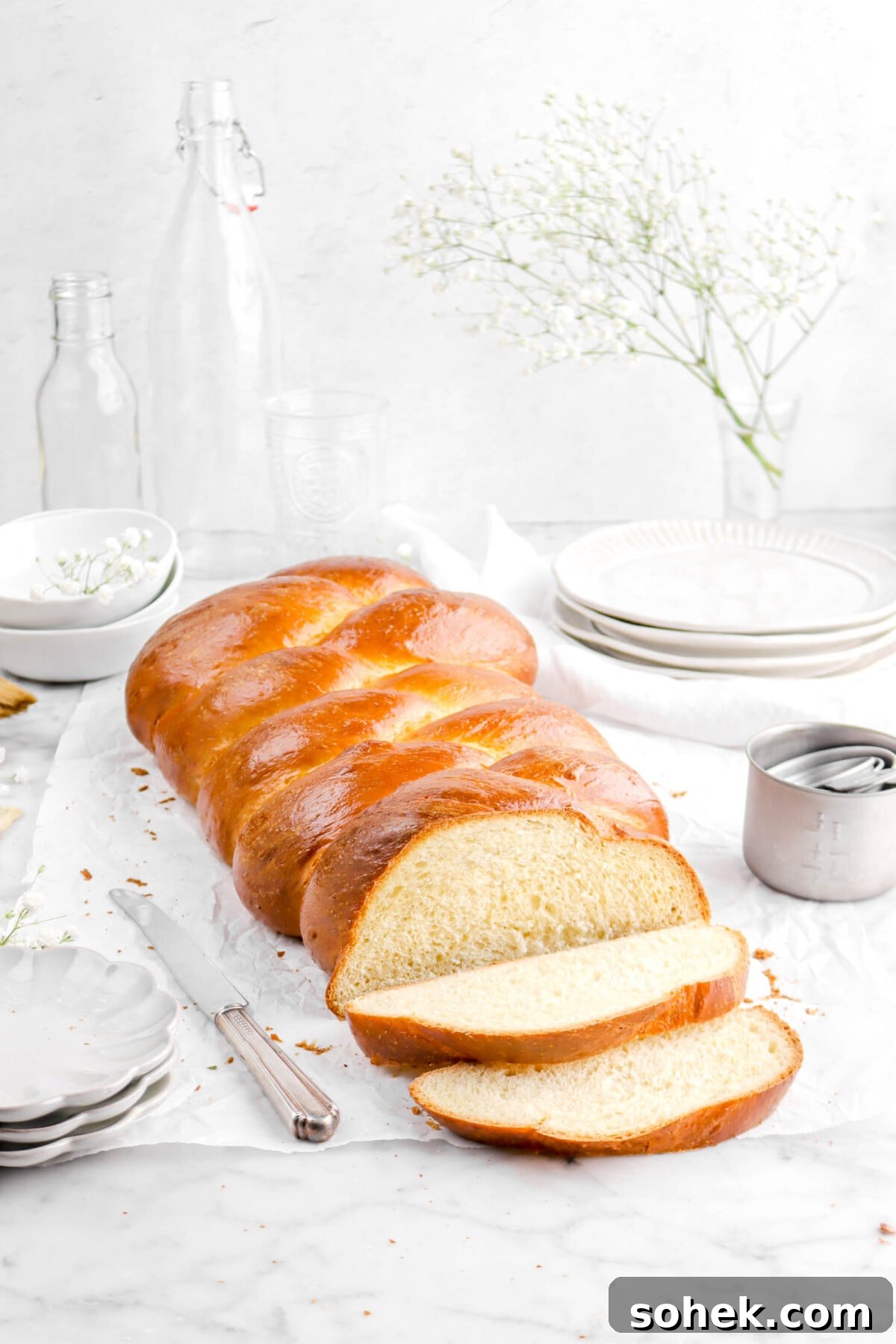
Sharing a delicious homemade challah perfect for a midweek bake or any special occasion. This loaf is made with simple ingredients and delivers soft, chewy slices with a tender crumb. It’s wonderful served on its own, smeared with butter and jam, or used in recipes like french toast, bread pudding, casseroles, or as the base for sandwiches. The method is straightforward, and the result is a gorgeous, versatile loaf you’ll want to make again and again.
About The Recipe
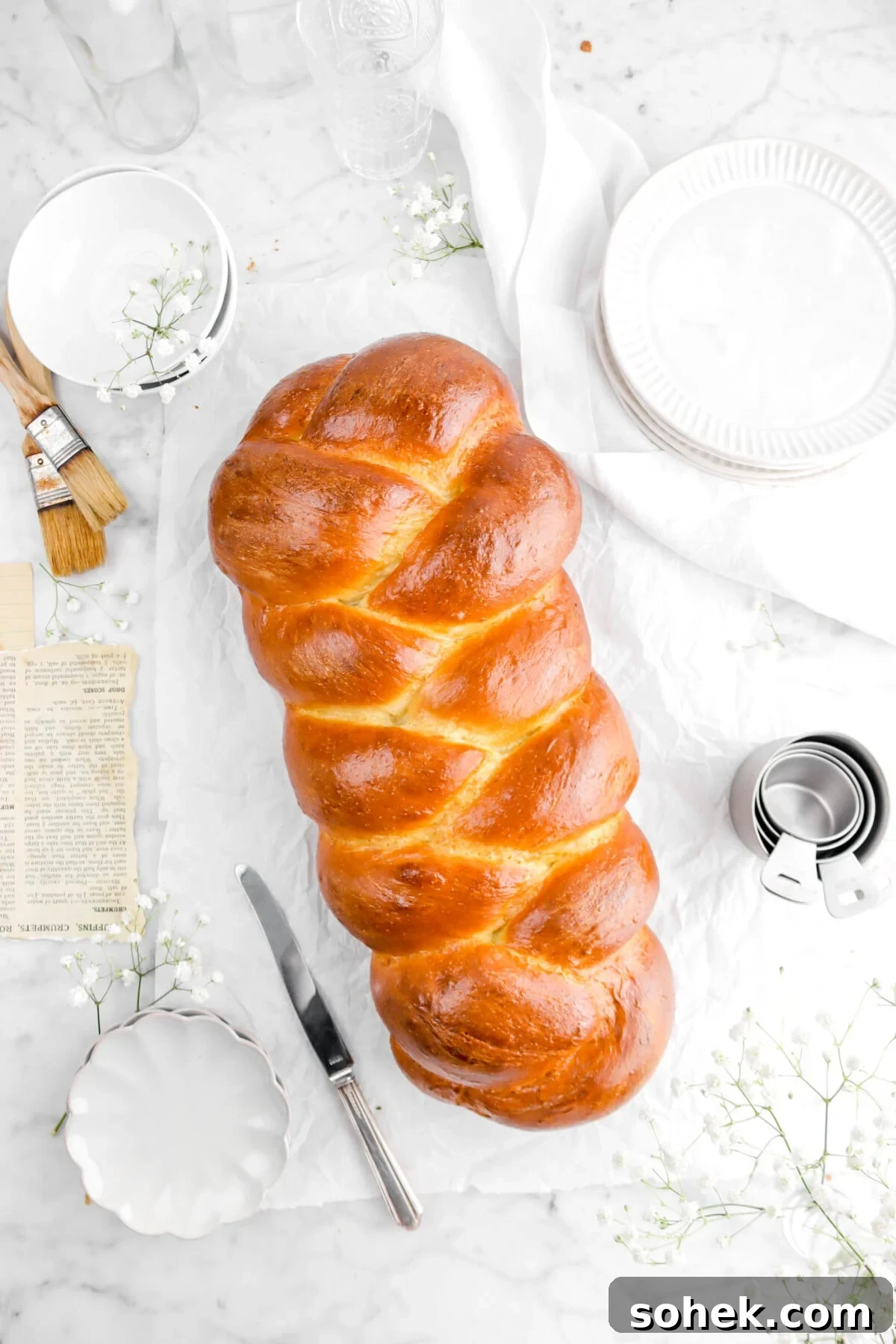
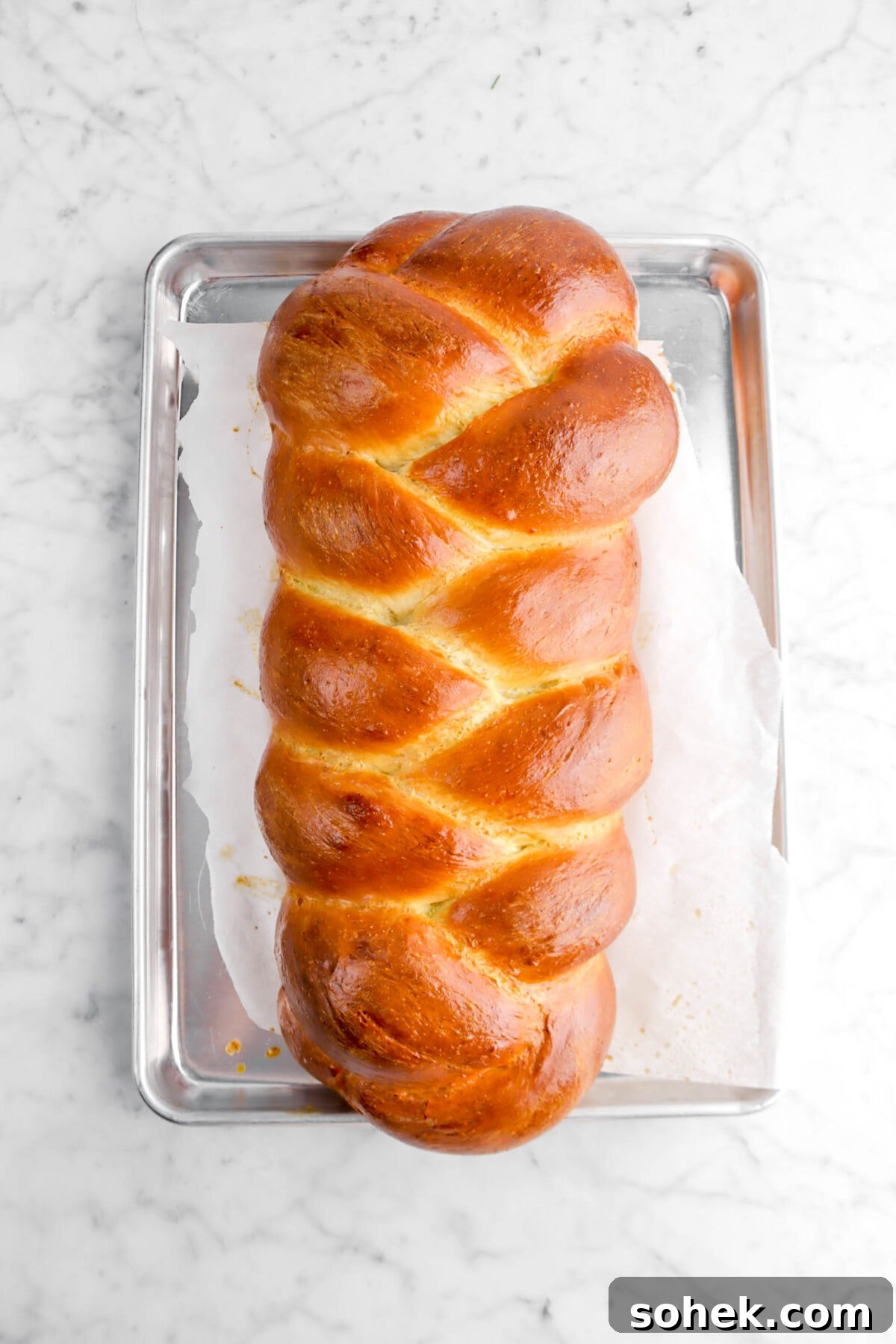
We finally baked challah this year after wanting to for a long time. It’s a large, impressive loaf—about 18–20 inches long after baking—so be prepared to handle a big, beautiful bread. The dough is enriched and forgiving, and while braiding looks fancy, this recipe uses a simple three-strand braid so anyone can do it.
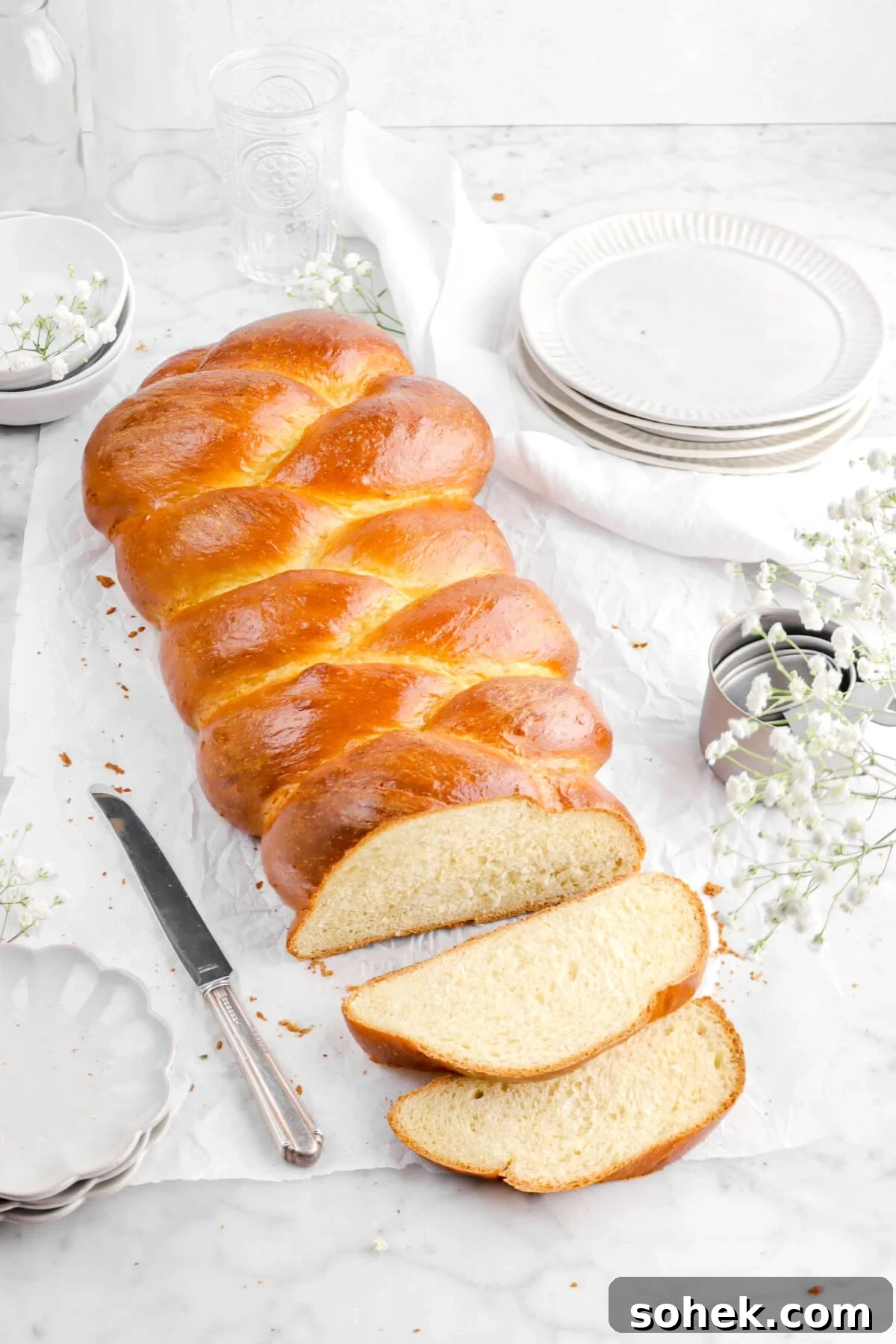
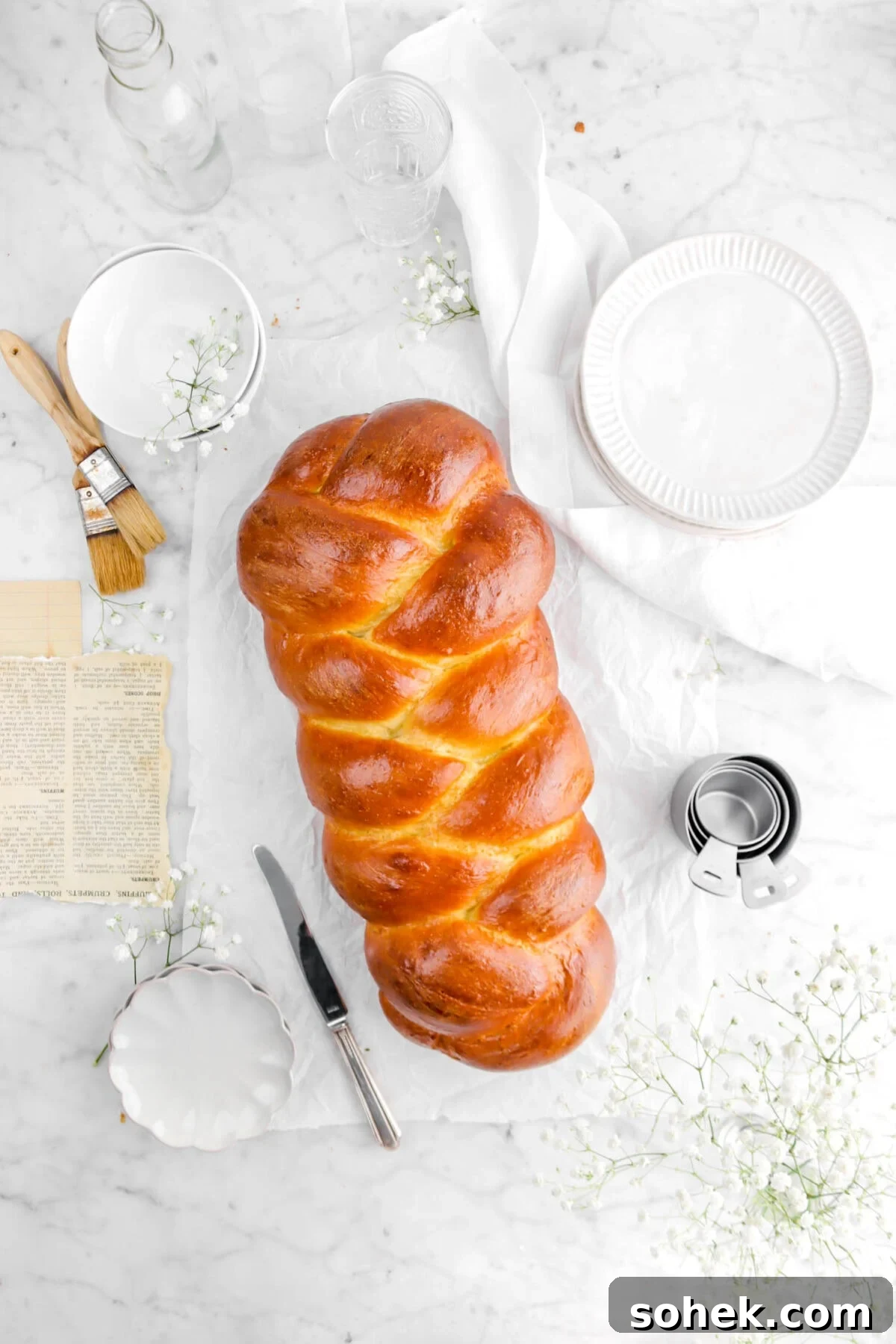
This challah is large and show-stopping, but the steps are simple. Even if bread baking makes you nervous, this recipe is approachable: mix, knead, let the dough proof, shape into three equal strands, braid, proof again, and bake. The egg wash creates a glossy, deep golden crust, and a final brush mid-bake helps even out the color.
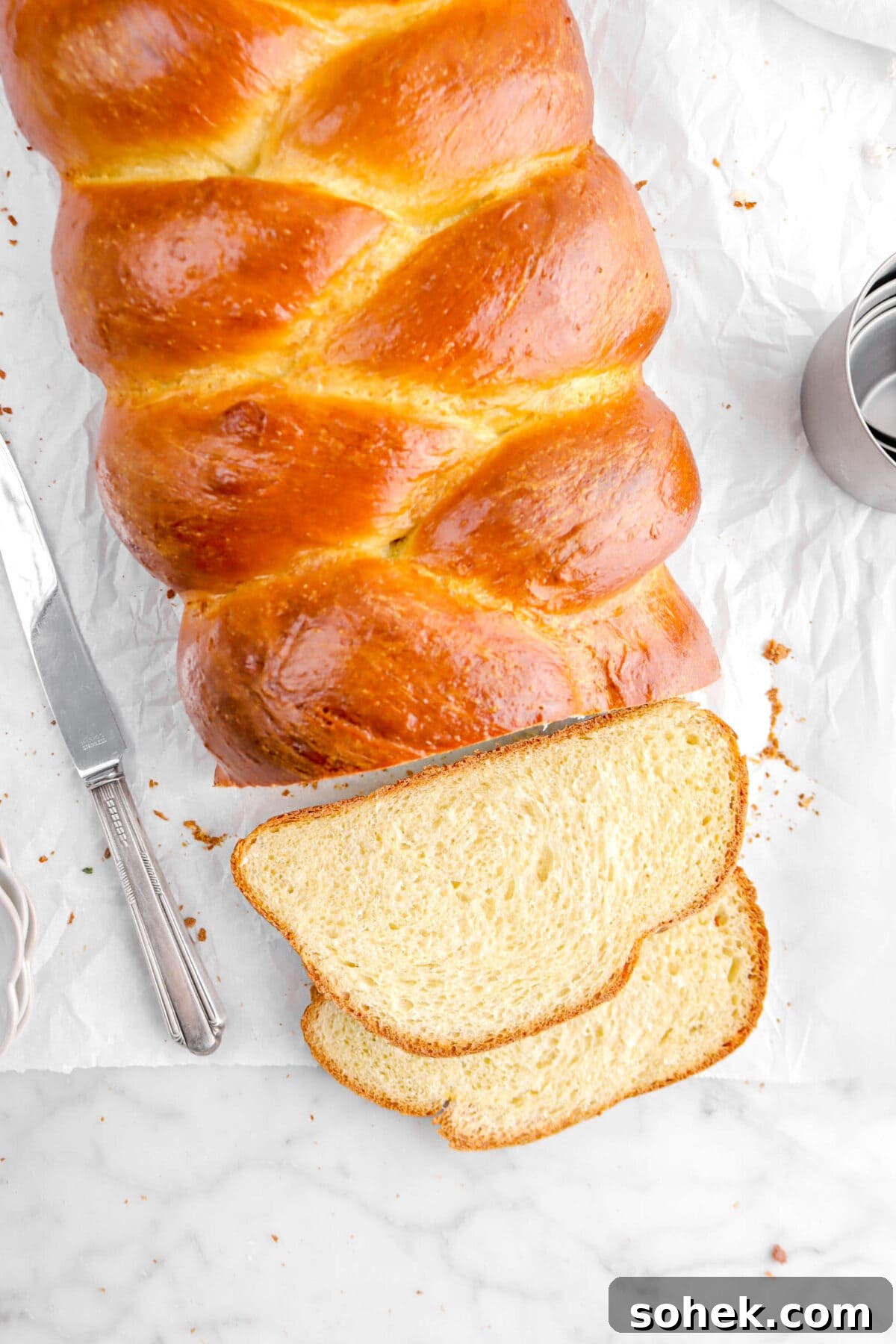
Braiding is fun and satisfying. A three-strand braid looks intricate but is quick to learn. The finished loaf is tender, moist, and richly flavored—an excellent choice whether you’re serving it plain or using it in other dishes.
Reasons You Will Love This Challah
- Easy to follow and reliable.
- Simple three-strand braid—beautiful but not complicated.
- Uses just a handful of everyday ingredients.
- Naturally dairy-free, making it versatile for many diets.
- With proofing time included, it’s ready in a few hours.
- Great for many recipes: french toast, sandwiches, bread pudding, and more.
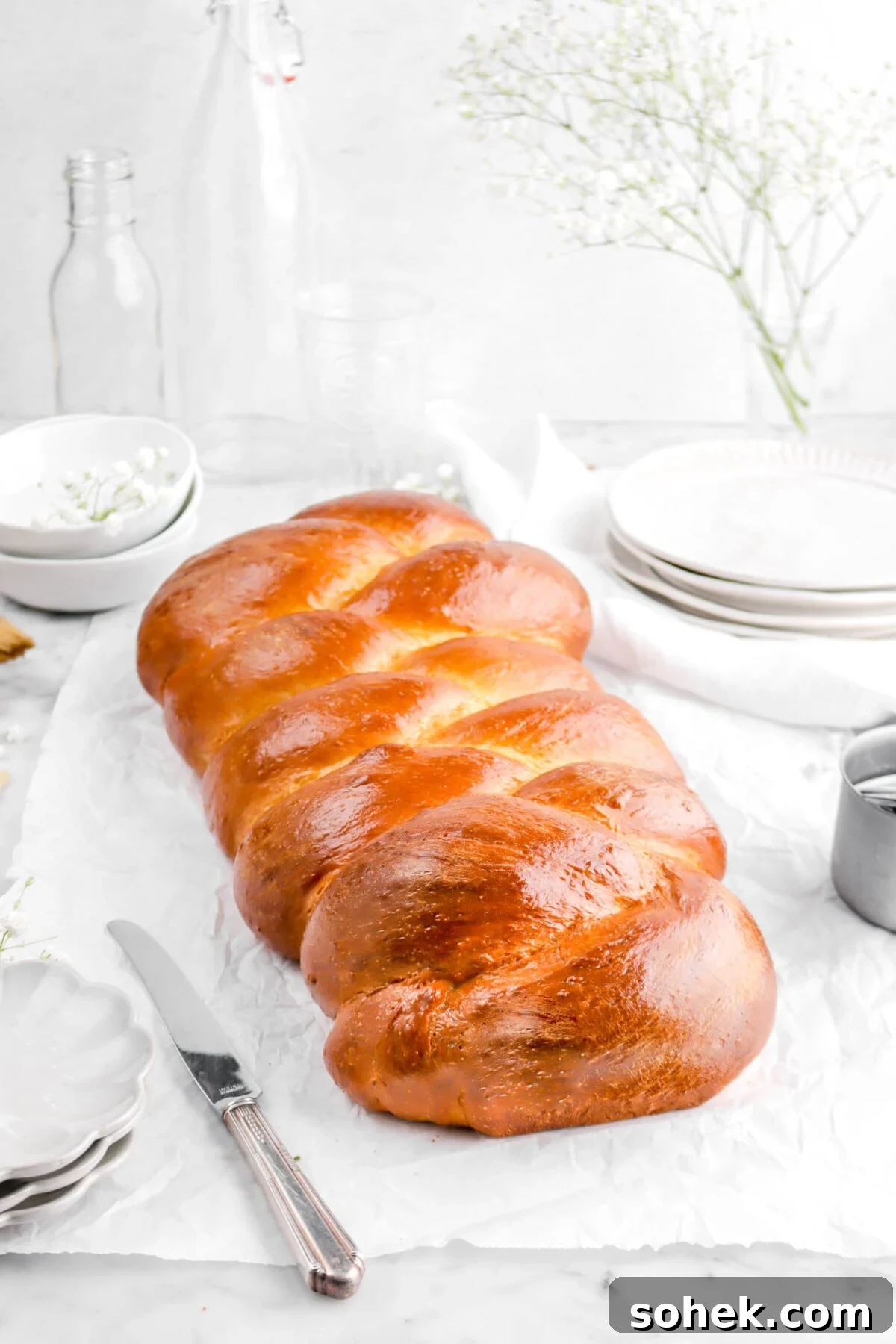
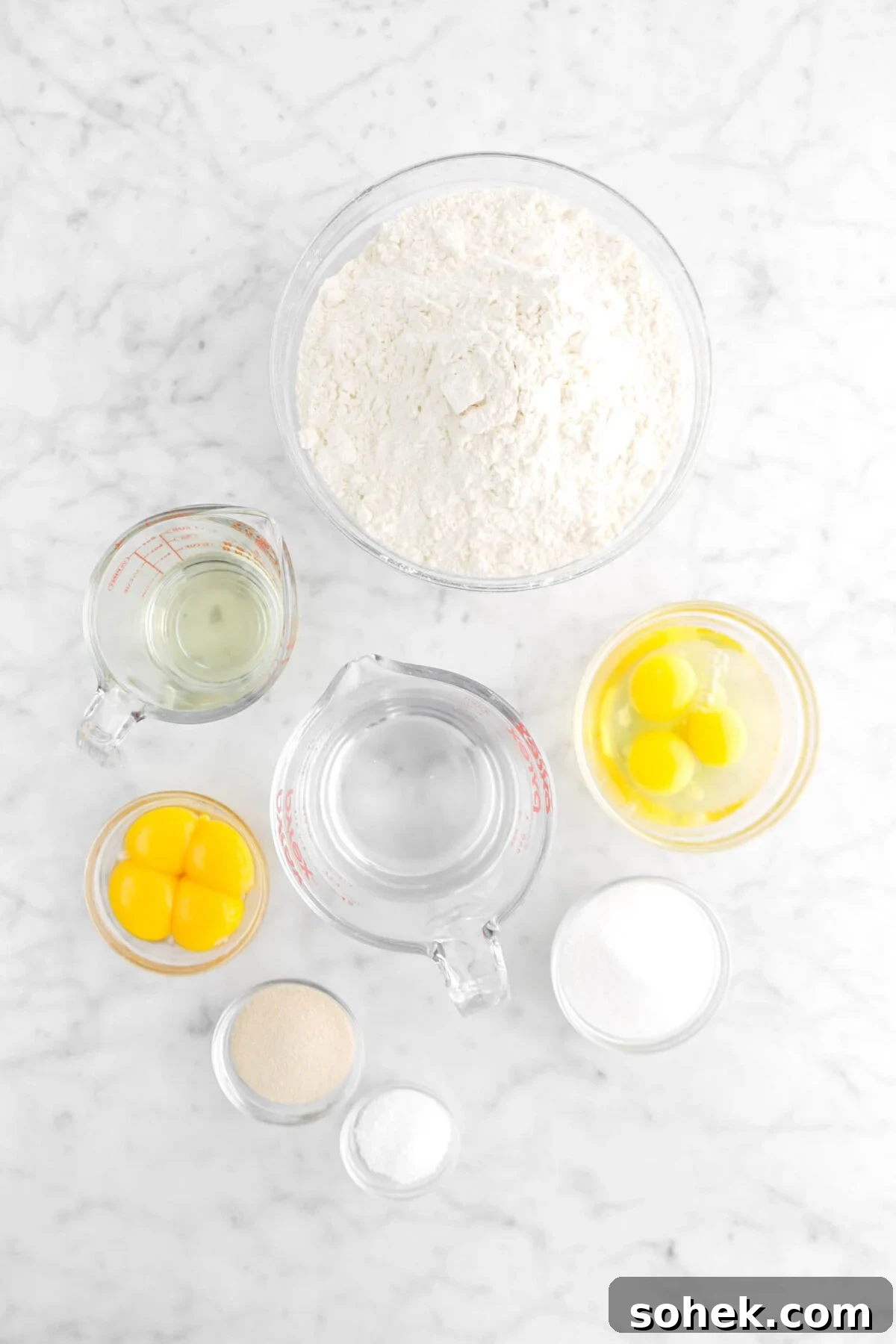
Ingredients
Full ingredient amounts and detailed instructions appear in the recipe card below.
For the Bread
- Bread flour
- Granulated sugar
- Kosher salt
- Instant yeast
- Large egg yolks
- Whole eggs
- Vegetable oil
- Water
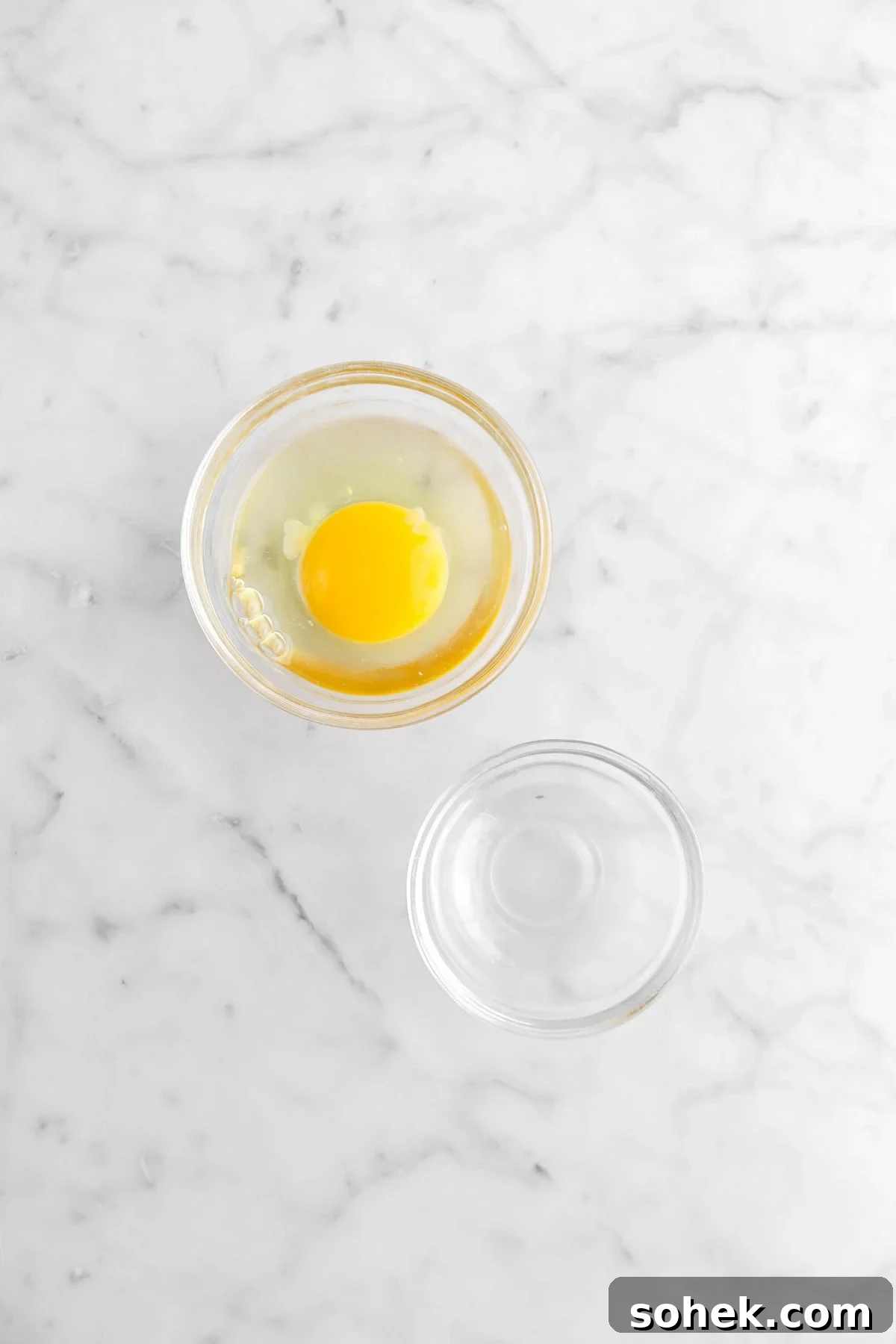
For the Egg Wash
- Large egg
- Water
How To Make Challah
Step 1: Make the dough
Combine the dry ingredients in the bowl of a stand mixer fitted with a dough hook. Add the egg yolks, whole eggs, oil, and water. Mix on low for several minutes, then increase speed and knead until the dough is smooth and slightly shiny. It should pass the windowpane test or otherwise feel elastic and cohesive.
Step 2: First proof and divide
Place the dough in a lightly oiled bowl and cover. Let it rise in a warm spot until roughly doubled in bulk (about two hours, depending on room temperature). Turn the dough out onto an unfloured surface, gently deflate, and divide into three equal pieces. Shape each piece into a rectangle, rest for 15 minutes, then roll each into a 12-inch log.
Step 3: Braid and second proof
Pinch the three logs together at one end and braid using a standard three-strand technique: move the right strand over the middle, then the left over the new middle, and repeat until finished. Tuck and seal the ends. Place the braid on parchment on a sheet pan, cover with sprayed plastic or a damp towel, and let rise until noticeably puffy, about one hour.
Step 4: Egg wash and bake
Whisk an egg with a bit of water to make the egg wash. Brush the loaf evenly, then bake at a moderate temperature until deeply golden and cooked through. If the crust browns too quickly, tent with foil for the final minutes. A fully baked challah should register about 190°F in the center.
What To Make With Challah
This bread works in so many preparations. Try:
- Served warm with butter and jam
- Thick-cut french toast
- Classic bread pudding
- As sandwich bread for savory fillings
- Baked into casseroles or strata
– Challah FAQ’s –
Can I make this by hand if I don’t have a mixer?
Yes. A stand mixer speeds the process, but this dough can be mixed and kneaded by hand. Knead until the dough is smooth and elastic.
Can I make smaller loaves?
Absolutely. Divide the dough into six pieces instead of three to make two smaller loaves; adjust bake time accordingly.
How do I know the dough is kneaded enough?
It should be smooth, elastic, and come away from the bowl in one piece. The windowpane test is a reliable check for gluten development.
Why is my dough taking longer to rise?
Enriched doughs with eggs and oil rise more slowly than lean breads. Room temperature, yeast freshness, and humidity all affect rise time—be patient and allow it to double.
My challah is browning before it’s done—what now?
Tent it loosely with foil for the remaining bake time. Use a thermometer to check for an internal temperature of about 190°F.
How To Store
Allow the loaf to cool completely. Store at room temperature in a zip-top bag for 2–3 days or refrigerate for up to a week. For longer storage, wrap tightly in foil and freeze for 1–2 months. Thaw and reheat gently before serving.
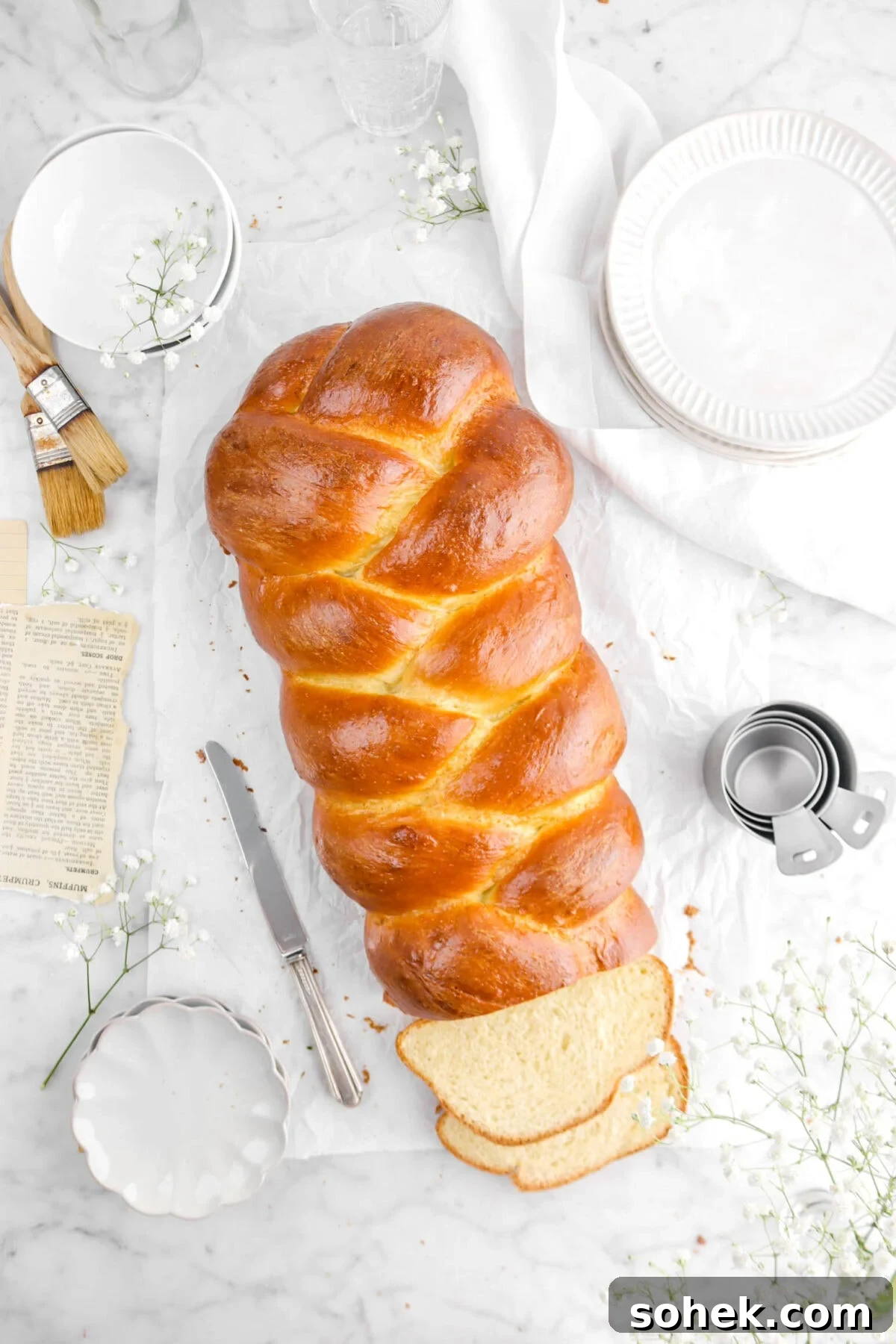
If you try this challah, leave a comment and share how you used it. Tag photos with #BakersTable to show off your loaves—we love seeing your bakes and answering questions.