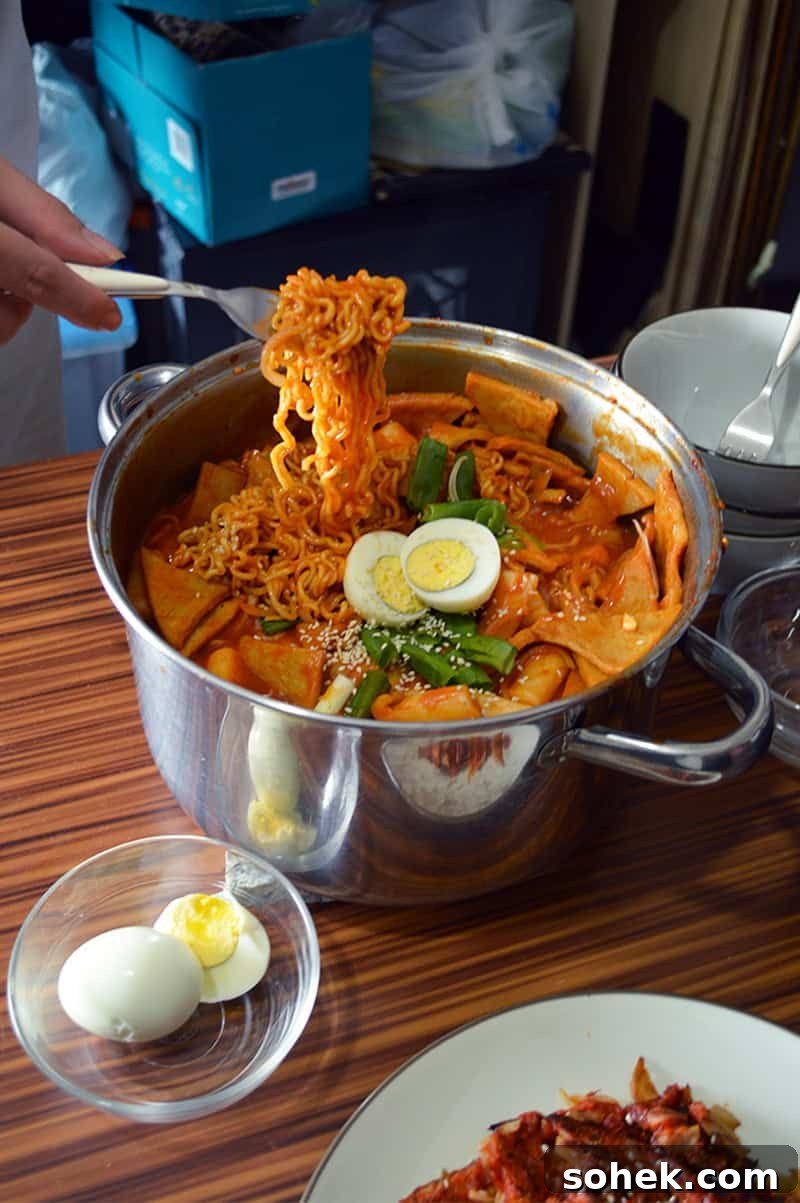
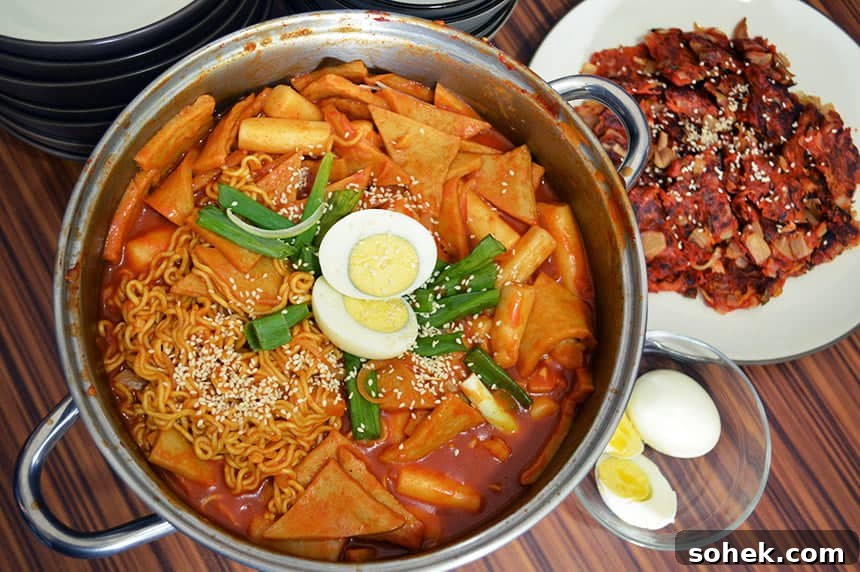
Rabokki is a hearty variation of tteokbokki that adds ramyeon noodles to the classic stir-fried rice cakes. The chewy garaetteok and tender noodles absorb the sweet-spicy sauce for a satisfying, flavorful bite.
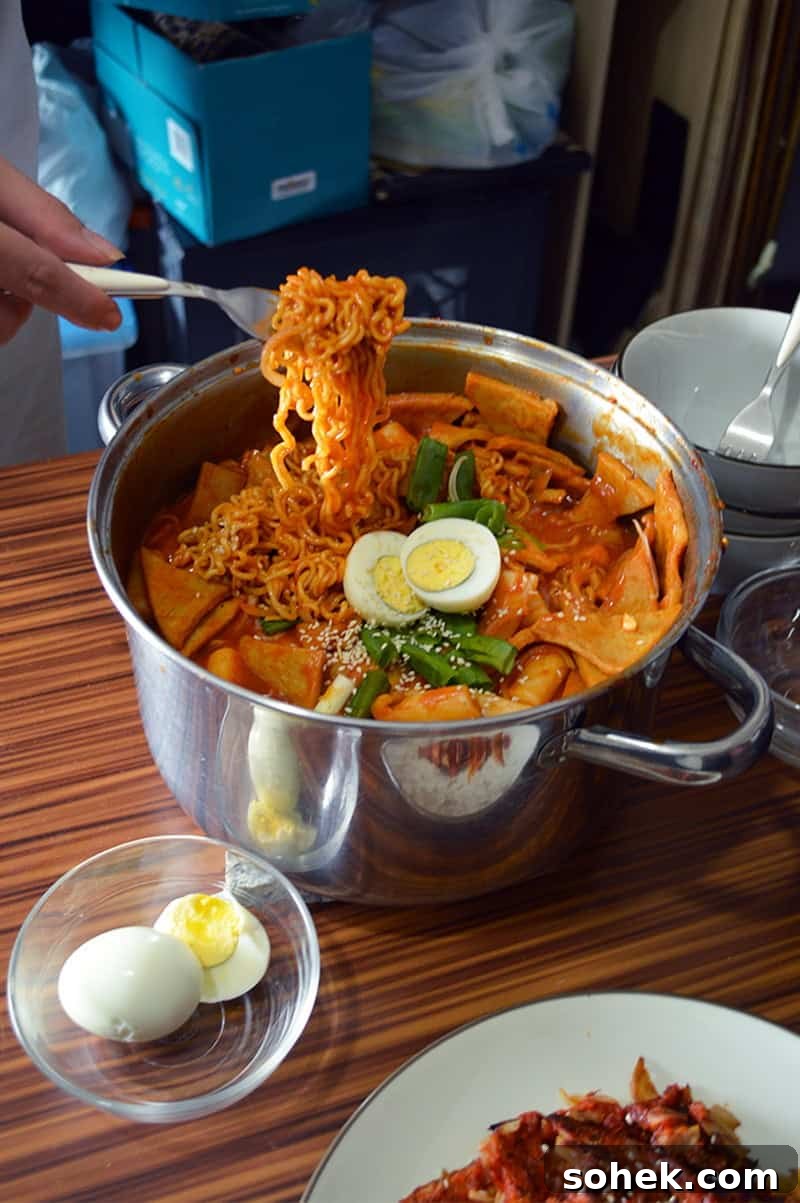
Korea’s street food scene is vibrant and irresistible. Walk any busy street in Seoul and you’ll find colorful stalls selling an array of snacks. Among them, tteokbokki stands out as an iconic favorite: bright-red, stir-fried rice cakes simmering in a bold sauce. It’s everywhere and easy to love.
Even better than plain tteokbokki is rabokki—tteokbokki upgraded with ramyeon noodles. This combination turns snack into a more filling meal. The glossy red sauce may look intimidating, but the balance of sweetness and heat from gochujang is addictive rather than overwhelming. Keep in mind rabokki is carb-forward because of the rice cakes and noodles, so it’s best enjoyed in moderation if you’re watching calories.
About Rabokki
Rabokki (라볶이) is a popular variation of tteokbokki (떡볶이) that includes ramyeon (라면) noodles. The dish centers on garaetteok, the cylindrical white rice cake, combined with ramyeon and often accompanied by eomuk (fish cake), dumplings, boiled eggs, seafood, or melted cheese. All ingredients are coated in a sweet-spicy gochujang-based sauce, which the rice cakes and noodles soak up, resulting in an enjoyable mix of chewy and soft textures. Rabokki is commonly sold by street vendors and casual restaurants and has become a beloved, widely available comfort food.
Tips on Making Rabokki
1. Choose the right rice cake
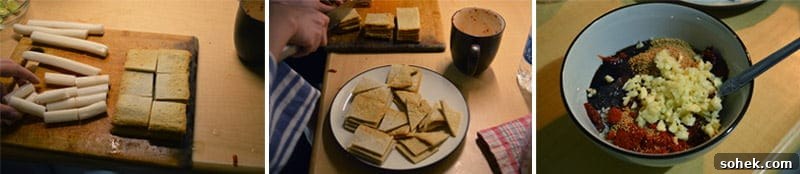
Garaetteok (가래떡) comes in different sizes and textures. For tteokbokki and rabokki, the thin, short rice cakes work best because they absorb flavor quickly and cook faster. Thick rice cakes are fine but should be cut into shorter pieces and may require longer cooking. Whenever possible, choose freshly made rice cakes—frozen ones can dry out and become brittle.
2. Make it more savory
Water works in a pinch, but a simple broth adds depth. A light anchovy-and-kelp (dashima) broth is traditional: simmer anchovies and dried kelp for about 15 minutes. For convenience, instant dashi powder is an acceptable shortcut and saves prep time.
3. Adjust the sauce
Rabokki’s signature sauce combines gochujang (Korean chili paste) with gochugaru (chili flakes). If you prefer milder heat, omit gochugaru and rely on gochujang’s flavor alone. To increase spiciness without changing flavor profile, add gochugaru. Note that different brands vary in sweetness, saltiness, and heat, so adjust to taste. If you can’t source gochugaru, cayenne can substitute in a pinch, but it won’t perfectly match the Korean pepper’s flavor and may include visible seeds if using flakes.
4. Add the ramyeon at the last minute
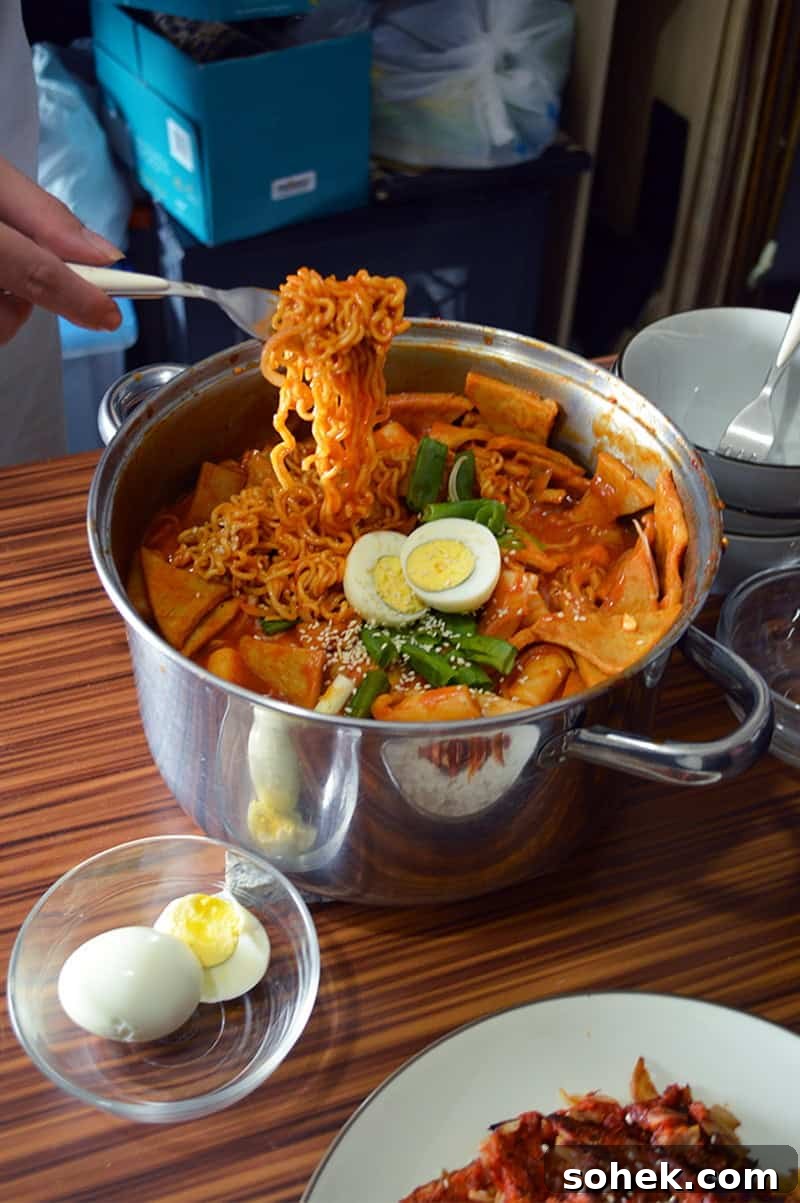
Add instant ramyeon and vegetables toward the end of cooking. If you add noodles too early they will over-absorb liquid and become soggy. Including the instant ramyeon seasoning can boost savory flavor—just be mindful of added sodium.
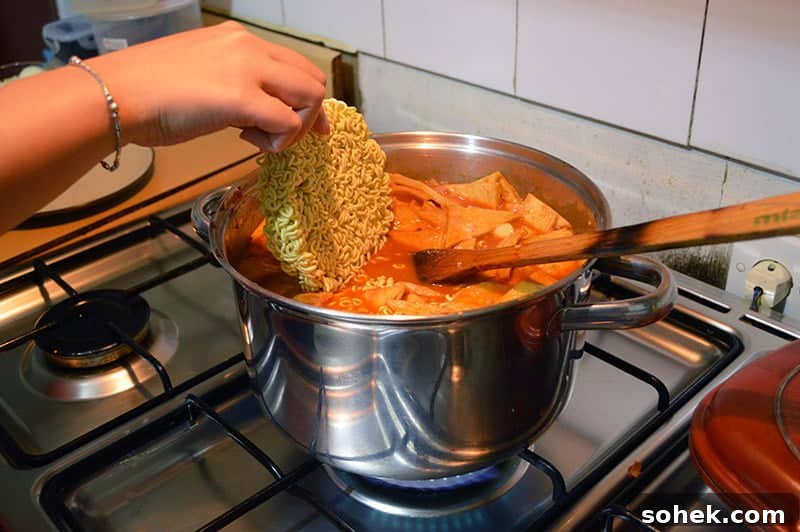
(Notes: I used NongShim Shin Ramyun, Gourmet Spicy.)
5. How to handle rabokki leftover
Rabokki is best eaten the day it’s made; leftovers don’t always reheat well. Before refrigerating, remove any cooked ramyeon to prevent it turning mushy. Reheat gently in a small pan over low heat with a splash of water the next day. For a different texture, try deep-frying leftover rice cakes and fish cakes—the sauce caramelizes and forms a crispy exterior while the inside stays soft. Fried rabokki is a delicious variation with a contrasting crunch.
(Notes: I made three times the recipe shown in these photos.)
More Korean Recipes
- Kimchi Fried Rice
- Kimchi Pancake
- Seaweed Rice Balls
- Kimchi Kimbap
- Bibimbap
Rabokki
Pin
Rate
Ingredients
- 17.5 oz (500 gr) fresh or frozen Korean rice cakes
- 5 oz (150 gr) eomuk/odeng/Korean fishcake, chopped into small triangular pieces
- 1 package Korean instant ramyeon
- 2 cups (500 ml) water
- 1 tsp dashi powder (optional)
- 3 tbsp gochujang
- 1 tsp gochugaru (optional)
- 2 tbsp granulated sugar
- 1 tbsp soy sauce
- 1 tsp sesame oil
- 1 tsp minced garlic
- 1/2 onion, thinly sliced
- 1 stalk green onion, cut into 1.5-inch/3.5 cm pieces
Topping
- Roasted sesame seeds
- Hard boiled eggs
Instructions
-
If using frozen rice cakes, soak them in warm water for 30 minutes until soft. Separate and cut into 3-inch (7.5 cm) pieces.
-
In a medium pot over medium-high heat, add water, dashi powder (if using), rice cakes, and fish cakes.
-
In a small bowl, mix gochujang, gochugaru (optional), sugar, soy sauce, sesame oil, and minced garlic.
-
When the pot comes to a boil, stir in the sauce with a wooden spoon.
-
Keep stirring until the sauce thickens, about 10 minutes. Add instant ramyeon noodles, ramyeon seasoning, and sliced onion.
-
Cook until the noodles are done, then add green onion and turn off the heat. Garnish with roasted sesame seeds and halved hard boiled eggs if desired.