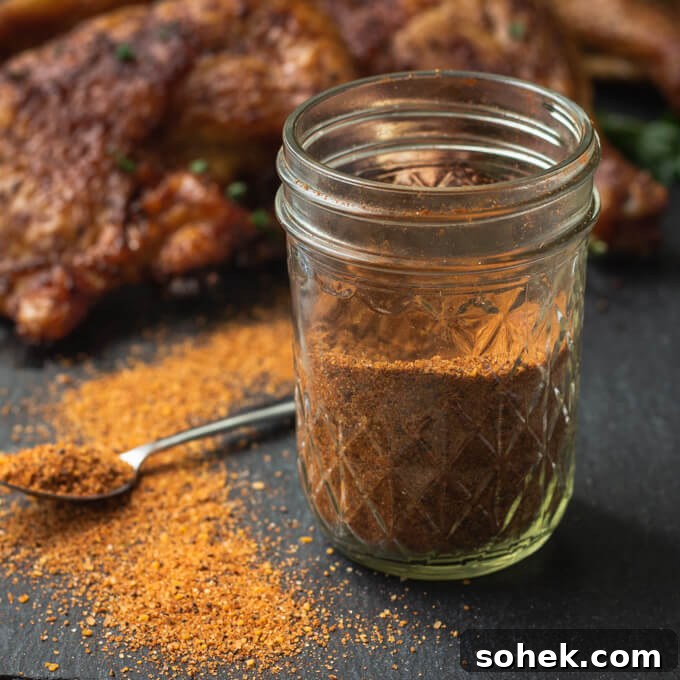
An irresistibly flavorful dry rub for chicken or pork. Sweet with a touch of heat, it’s perfect for chicken wings, beer-can chicken, pork chops and ribs — and it works great for keto barbecue.
Living in Southern California means I can grill year-round. With a little prep, dinner can be on the table in under 30 minutes: just grill the meat and add a simple salad or an easy side. A good dry rub makes quick grilling taste like something special.
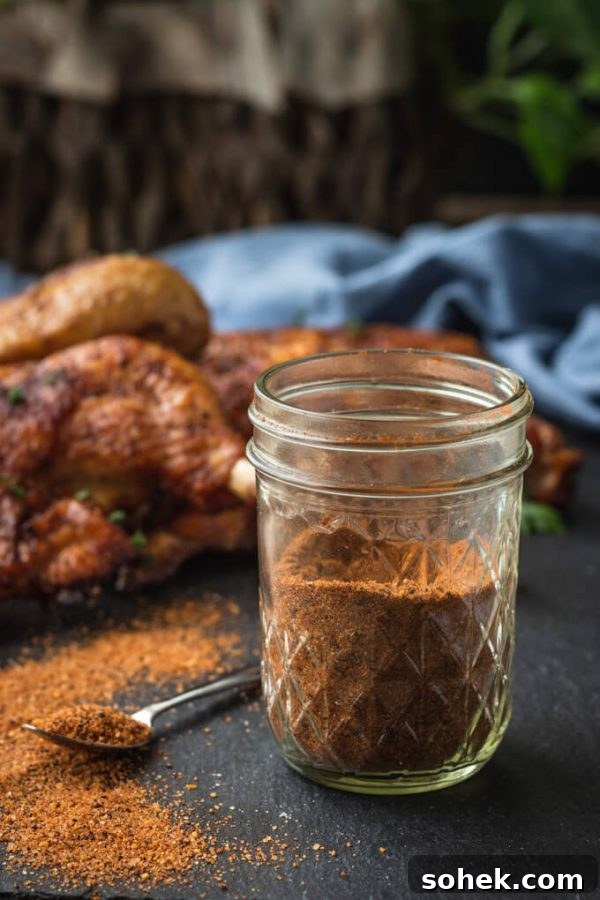
We season our meats with both marinades and dry rubs. Many store-bought barbecue rubs contain sugar, but with good low-carb sugar substitutes available, it’s easy to make a homemade, sugar-free dry rub that still delivers rich, smoky-sweet flavor.
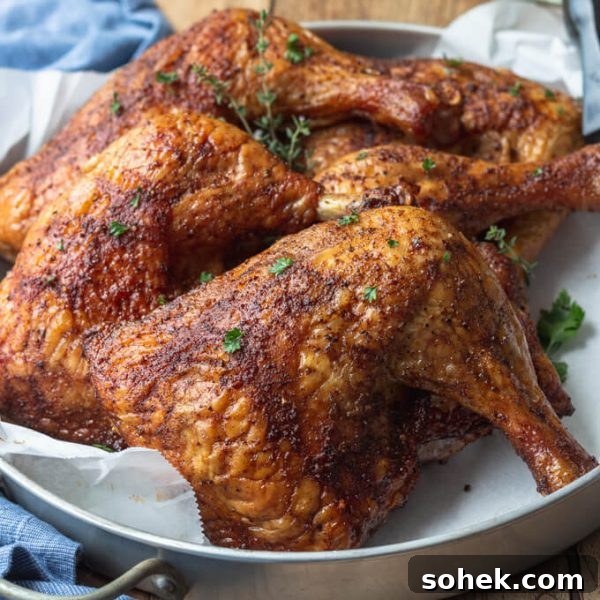
This keto-friendly rub is one of our favorites. Its smoky-sweet profile shines on smoked beer-can chicken, but it also complements turkey and pork. You can even mix it into ground pork for flavorful pork burgers.
What is a dry rub?
In its simplest form, a dry rub is a mixture of dried herbs and spices applied directly to the surface of meat. Traditionalists insist a dry rub be used without liquids so the spices stay dry and form a flavorful crust during cooking.
That said, salt and moisture interact: salt draws moisture from meat. If salt is combined with liquid or left too long on wet surfaces, the rub can become pasty. For this reason, some cooks apply the rub to dry meat and refrigerate it uncovered so the surface dries out and the seasoning remains concentrated.
Personally, I sometimes oil meat lightly, season with salt, then apply the rub and refrigerate on a sheet pan overnight. Other times I rub and cook immediately. Both approaches yield delicious results — flexibility is fine when the end result tastes great.
 Dry rub vs. barbecue sauce
 Dry rub vs. barbecue sauce
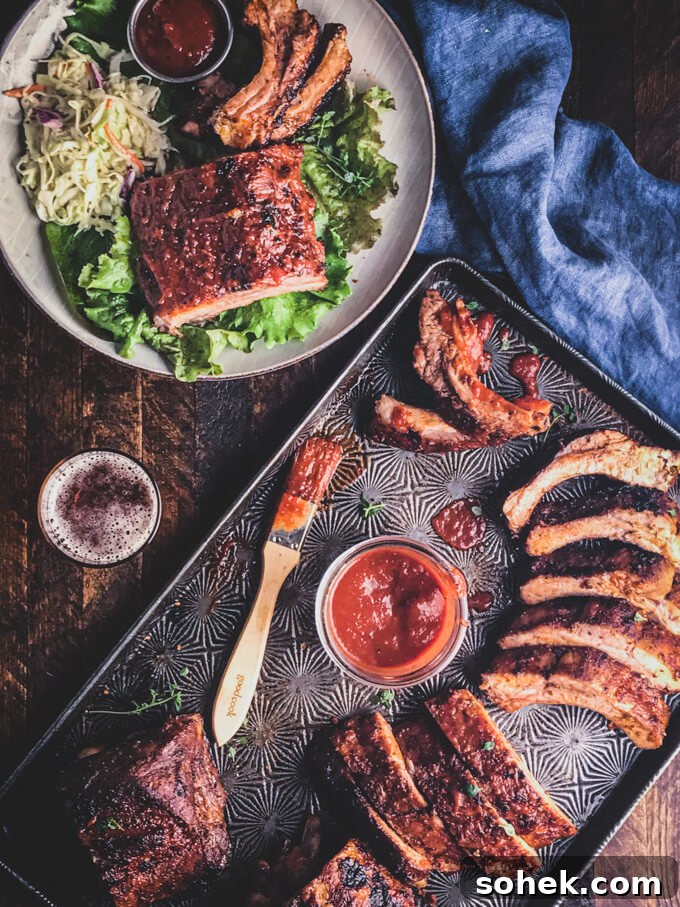
Dry rubs are applied before cooking and form a seasoned crust as the meat cooks. Barbecue sauces are usually brushed on later in the cook, often toward the end, to add glaze and extra flavor. Many commercial sauces are tomato-based and sweetened, so they can caramelize and burn if applied too early in high heat. A sugar-free or lower-sugar sauce is a better option for long cooks or high-heat grilling.
How to apply a dry rub to chicken
Pat the chicken dry with paper towels. Sprinkle the rub evenly over the surface and press it into the skin or meat so it adheres. For deeper flavor, refrigerate the seasoned chicken on a rack overnight. If you’re short on time, let the seasoned chicken sit for 20 minutes to absorb the flavors before grilling.
When to put the dry rub on chicken
You can apply the rub anywhere from the day before cooking to just before grilling. Longer resting times let the spices work into the meat and intensify the taste; shorter times still give a tasty crust. Serve the finished meat with a cooling sauce or a crisp coleslaw to balance the spice.
How much dry rub to use
Amount depends on the rub’s potency and whether it contains salt. Some blends recommend small amounts per serving. As a guideline, use about 1/4 to 1/2 teaspoon per side for chicken breasts or pork chops. Use more for larger cuts like ribs or for a bolder coating.
Note: This recipe uses Montreal steak seasoning as a base because it already contains salt, pepper, garlic and onion, reducing the number of separate ingredients you need to mix.
If you prefer an herb-forward profile, try a garlic-and-herb seasoning blend as an alternative. Both approaches create versatile, flavorful results across many grilled proteins.
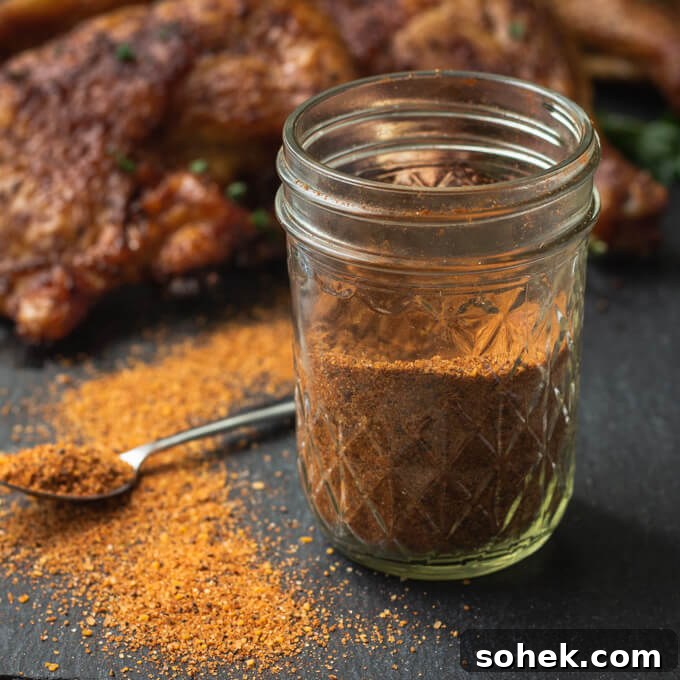
Keto BBQ Rub for Chicken
Ingredients
- ¼ cup Montreal Steak Seasoning (see notes)
- ¼ cup Low-carb brown sugar substitute (or coconut sugar or regular brown sugar if not low-carb)
- 1 tablespoon Smoked paprika
- 1 tablespoon Ground cumin
- ½ teaspoon Cayenne pepper (or more to taste)
Instructions
-
Combine all ingredients in a bowl and mix thoroughly. Transfer to an airtight container and store in a cool, dry place.
-
To season meat, use about ¼ teaspoon per side for a chicken breast or pork chop, adjusting upward for larger cuts or personal taste.
-
Makes approximately 10 tablespoons (about 60 servings at ½ teaspoon each).
Notes
Tip: Using a seasoned blend like Montreal steak seasoning as a base saves time because it already contains salt, pepper, garlic and onion — fewer separate spices to measure.
Nutrition
For a more herb-forward profile, try a versatile garlic-and-herb seasoning blend as an alternative — great in soups, dressings or as a rub for grilled meats.