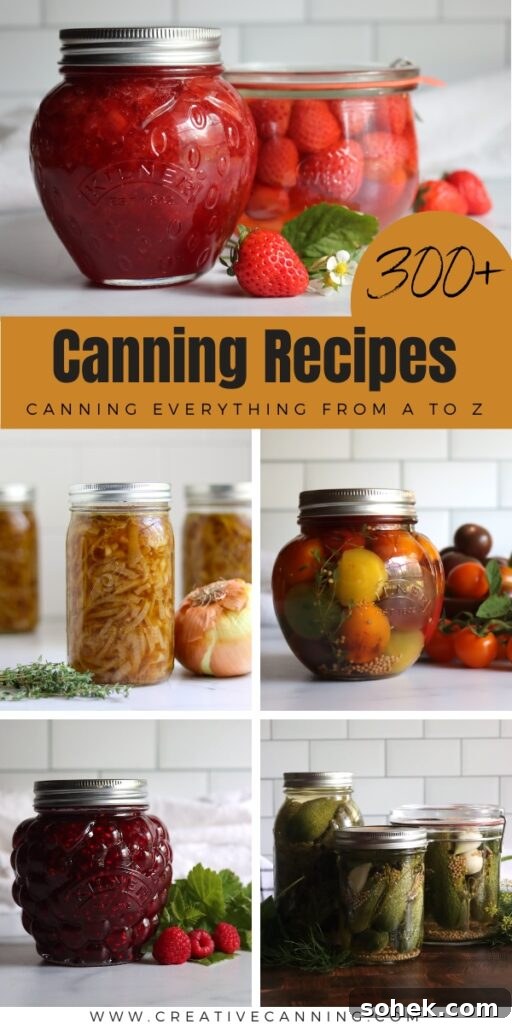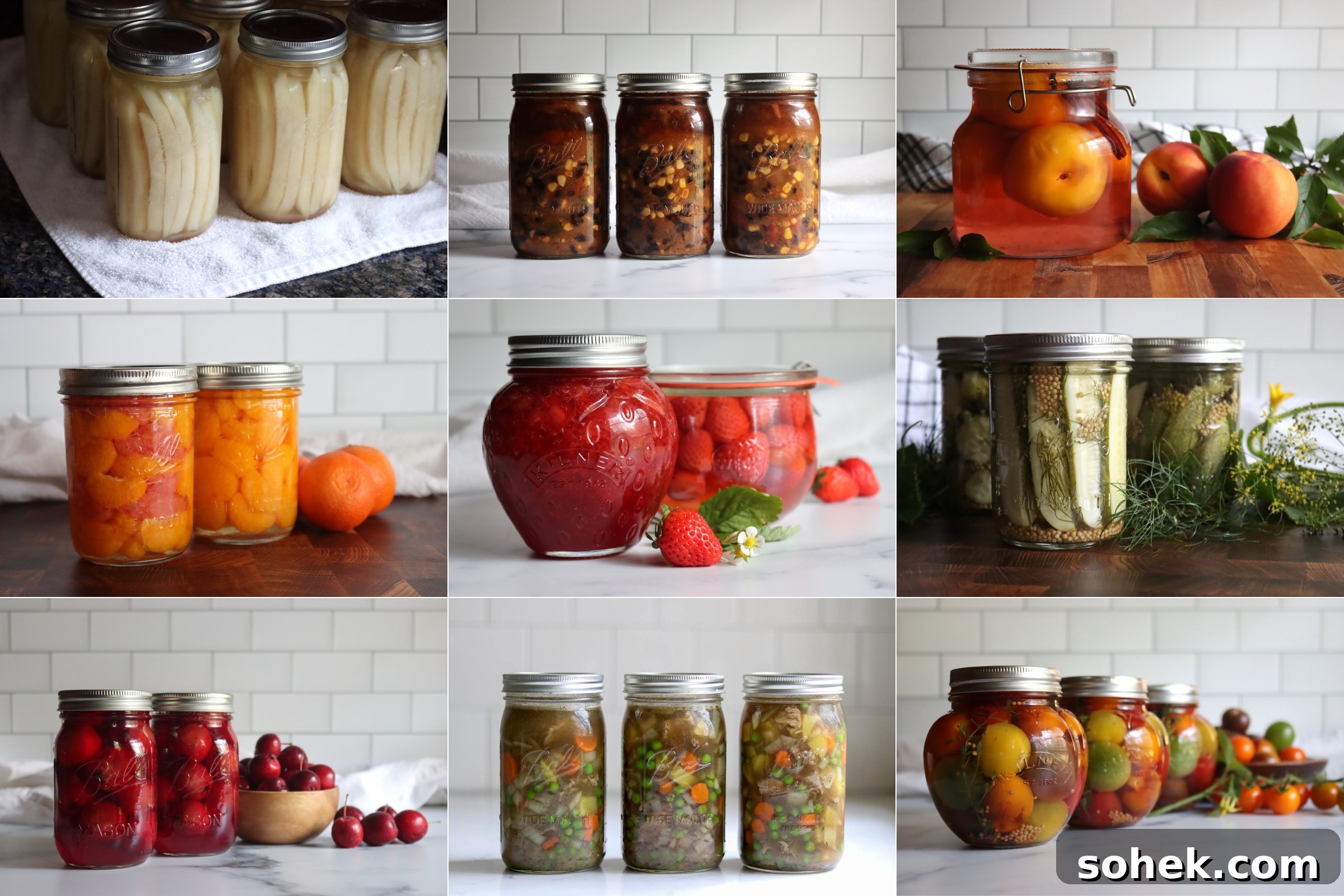
Finding the right canning recipe when your garden is overflowing can be a challenge. If you need ideas, this comprehensive collection covers hundreds of tested canning recipes organized by ingredient to help you preserve your harvest with confidence.
This exhaustive list walks through nearly every ingredient you might want to preserve, from fruits and vegetables to broths, meats, and more.
Each ingredient section highlights popular canning recipes. Click the “More” link under each section for additional options and variations.
Apples
Apples are forgiving for beginners. Their natural sugar and acidity make them ideal for water bath canning. You can can apples plain, add sugar to taste, or experiment with spices. Different varieties behave differently—some break down into silky applesauce, while firmer types hold up better in slices or pie fillings. Knowing your apple variety helps you choose the best preservation method.
Recipes include apple juice, jam, butter, relish, and more.
Cranberry Apple Jam
Apple Jam
Apple Blossom Jelly (Or Cherry, Peach, Pear, etc.)
Canning Apple Cider
Apricots
Apricots arrive all at once for many gardeners. Beyond the classic apricot jam, you can preserve apricots as pie filling, jelly, butter, or transform them into savory options like BBQ sauce. Tested recipes ensure you get safe, delicious results whether you prefer sweet or savory preparations.
Apricot Jam
Apricot Butter
Apricot Red Currant Jam
Apricot BBQ Sauce
Asparagus
Canned asparagus has a nostalgic appeal for many. Plain asparagus requires a pressure canner since it’s a low-acid vegetable, but pickled asparagus can be processed in a water bath and makes a delicious, slightly fancy snack alongside sandwiches.
Canning Asparagus Potato & Leek Soup
9+ Asparagus Canning Recipes
Canning Asparagus Soup Base
Canning Asparagus
Beans (Dry Beans)
Canning dry beans saves time on busy weeknights. Instead of soaking and simmering for hours, home-canned beans are ready to add to soups, chilis, and casseroles. You can can plain beans or prepare them as baked beans, chili, three-bean salads, and more. Canning dried beans in the off-season is a great way to stock your pantry.
Canning Boston Baked Beans
Canning Chili Con Carne
Canning Three Bean Salad
Canning White Chicken Chili
Beans (Green)
Green beans are a garden staple. Because they are low-acid, green beans require pressure canning unless you pickle them. Dilly beans and other pickled green bean recipes are ideal for water bath canning and make a crunchy, flavorful snack.
Pickled Dilly Beans (Dill Pickled Green Beans)
Piccalilli (English Style Mustard Pickles)
Amish Chow Chow
Beets
Beets can be pressure canned or pickled. The sweet, earthy flavor of beets pairs beautifully with warm spices and vinegar, and many people prefer them pickled rather than pressure-canned. Spiced pickled beets are a holiday favorite and a great way to use a harvest bounty.
Classic Pickled Beets
Dill Pickled Beets
Blackberries
Blackberries are prolific and high in both sugar and acidity, making them perfect for water bath canning. Popular preparations include classic jam (with or without pectin), seedless jam, pie filling, and syrup. Home-canned blackberry recipes capture the fresh flavor far better than store-bought jars.
Canning Blackberry Pie Filling
Old Fashioned Blackberry Jam (No Added Pectin)
Seedless Blackberry Jam (No Added Pectin)
Blackberry Syrup
Broth & Stock
Pressure canning broth and stock is a practical way to use kitchen scraps and leftover bones. Accumulate scraps in the freezer or plan a batch from fresh ingredients, then pressure can flavorful beef, chicken, turkey, or vegetable broths to keep on-hand for soups, stews, and sauces.
Canning Beef Broth
Canning Vegetable Broth
Canning Chicken Broth
Canning Turkey Broth
Cabbage
Cabbage stores well in cellars and can also be preserved as sauerkraut or pickled relishes. Plain cabbage does not can well on its own, but shredded and fermented sauerkraut or cabbage-based relishes like chow chow are classic preservation methods that yield flavorful results.
10+ Chow Chow Recipes (& Piccalilli too!)
Southern Chow Chow (Traditional Green Tomato Relish)
Green Tomato Piccalilli (New England Style)
Canning Sauerkraut
Currants
Currants are excellent for jams and jellies because they contain ample pectin and bright, tart flavor. Red, black, and white currants each bring distinct characteristics—white currants are milder and often used to boost pectin in blends—making them versatile for preserves and baking.
White Currant Jelly
Red Currant Jelly
Canning Currant Pie Filling
Carrots
Carrots can be stored fresh in a root cellar or preserved by canning. Because they are a low-acid vegetable, pressure canning is required for plain carrots; pickling allows water bath processing. Canned carrots are handy for soups, stews, and quick side dishes, and they make crisp, sweet pickles.
Canning Carrot Soup
Canning Beef Stew
Chicken Vegetable Soup
Canning Carrots
Cauliflower
Plain cauliflower does not can well on its own because it becomes mushy with pressure processing. However, cauliflower shines in pickles and mixed relishes—think chow chow, piccalilli, or spiced pickled cauliflower—perfect for boards and sides.
Pickled Cauliflower with Curry Spices
Cherry
Sour or pie cherries are excellent for canning—preserve them for pie filling, jam, or sauces. Sweet cherries can also be canned in syrup or made into jams like black cherry jam. Sugar balances tartness and helps maintain vibrant color in many cherry recipes.
Sour Cherry Jam
Cherry Jelly
Canning Cherry Limeade Concentrate
Black Cherry Jam
Corn
Sweet corn pressure-canned at peak freshness keeps flavor and texture well. Canned corn is a convenient addition to winter soups, casseroles, and pot pies. Because corn is low-acid, it requires a pressure canner unless pickled.
Canning Taco Soup
Corn Salsa Recipe for Canning
Southwestern Vegetable Soup
Corn Cob Jelly
Cranberries
Cranberries are naturally acidic and ideal for water bath canning. Classic cranberry orange sauce and other sweet or spiced cranberry recipes let you control sugar and seasoning, producing far fresher-tasting results than many store-bought options.
Christmas Jam
30+ Cranberry Canning Recipes
Cranberry Salsa
Pickled Cranberries
Cucumbers
Cucumbers are the classic pickling vegetable. From dill spears to bread-and-butter slices, pickled cucumbers are great on sandwiches, burgers, and boards. If your garden produces more than your family can eat fresh, pickling and canning cucumbers is an easy, tasty way to preserve the surplus.
Classic Bread and Butter Pickles
Dill Pickle Spears
Kosher Dill Pickles
Traditional French Cornichons
Elderberries
Elderberries are popular for syrups and medicinal preparations, and they also make delicious jellies and jams. They have a short harvest window and require stem removal before processing; freezing briefly makes stem removal easier. Elderberry jelly and jam are great ways to preserve this flavorful fruit.
Elderberry Jelly
Old-Fashioned Elderberry Jam
Elderflower Jelly
Figs
Figs are low-acid and require tested recipes that add lemon juice or citric acid to ensure safe canning. Popular preparations include fig jam, whole figs in syrup, and pickled figs. Follow approved recipes to preserve flavor and food safety.
Fig Jam
Canning Figs
Pickled Figs
Fish & Seafood
Pressure canning seafood requires experience and careful attention to tested recipes. Freshwater and saltwater species have different handling and processing methods. Only attempt fish and seafood canning after you’re comfortable with pressure canning meat and follow recipes precisely for safety.
Canning Shrimp
Canning Crab
Canning Salmon
Canning Fish Chowder Base
Flowers (Edible Varieties)
Edible flowers produce delicate, aromatic jellies and preserves. Petal jellies, dandelion jam, and preserved buds used as capers create whimsical, flavorful additions to desserts and boards. These recipes make the most of blossoms from the garden or foraged edibles you know are safe to eat.
How to Make Flower Jelly (with 20+ Recipes!)
Redbud Jelly (& Syrup)
Rose Petal Jelly
Spruce Tip Jelly
Gooseberries
Gooseberries are hardy and high in pectin, making them fantastic for jam, jelly, and whole-fruit canning. Make sure your variety is truly ripe—some remain green when ripe while others turn red or purple—then turn them into thick jam or preserves that showcase their tart-sweet character.
Gooseberry Jelly
Canning Gooseberries
Gooseberry Jam
Canning Gooseberry Pie Filling
Grapes
Homegrown grapes deliver intense flavor in jellies, jams, and juice. Grape juice and jelly are classic canning projects—grape juice even can be processed in larger jars—and whole grapes or grape pie filling are tasty alternatives when you want variety in the pantry.
Wild Grape Jelly
Canning Grapes
Muscadine Jam
Muscadine Jelly (or Scuppernong Jelly)
Lemons
Lemons provide acidity in many canning recipes, but they also make delightful preserves on their own—sliced in syrup, canned lemon juice or concentrates, marmalade, and lemon curd are all great ways to preserve citrus and add bright flavor to winter dishes and drinks.
Canning Strawberry Lemonade Concentrate
Canning Lemonade (& Lemonade Concentrate)
Canning Watermelon Lemonade Concentrate
Canning Lemon Curd
Meat
All home-canned meat recipes require a pressure canner for safety. Once you have a pressure canner, you can preserve meats alone or combined with vegetables and beans to create ready-to-eat meals like stews, chilis, and pot pies.
Canning Sausage Potato and Kale Soup (Copycat Zuppa Toscana)
Canning Chicken Pot Pie Filling
Canning Hamburger (Ground Beef)
Canning Chicken
Mushrooms
Only commercially grown domestic mushrooms with tight veils have a tested, safe pressure canning method. Wild foraged mushrooms generally lack approved canning guidelines—use caution and only follow proven recipes when canning mushrooms.
Canning Beef Stroganoff
Canning Mushroom Soup Base
Zesty Marinated Mushrooms (Canning Recipe)
Canning Chicken and Mushrooms in Garlic Sauce
Onion
Onions bring big flavor to many dishes, and canning them as jams, pickles, or ready-to-heat soups (like French onion soup) makes quick weeknight meals and flavorful condiments. Preserving onions adds convenience and variety to the pantry.
Caramelized Onion Jam
Canning French Onion Soup
Canning Enchilada Sauce (Ball Canning Recipe)
Canning Tikka Masala Simmer Sauce
Orange
Oranges and other citrus can be canned in sections, made into marmalade, or preserved as syruped slices. Home-canned citrus captures bright flavor and can be used in desserts, drinks, and baking throughout the year.
Canning Oranges
Canning Citrus Sections in Syrup or Juice
Cranberry Orange Sauce
Cranberry Orange Marmalade
Papaya
Papaya is suitable for water bath canning and appears in tested recipes. If you have access to fresh papaya, try jams and preserves developed for safe home canning.
Papaya Jam
Canning Papaya
Peaches
Peaches are a summer classic and are usually safe for water bath canning thanks to their natural acidity and sugar. Most peach canning projects—slices in syrup, jams, butters, and pie fillings—are straightforward. Note: white-fleshed peaches are lower in acid and require special, tested handling.
Peach Butter
Blueberry Peach Jam
Peach Salsa
Peach Jam
Pears
Pears are well suited to water bath canning and make excellent sauces, jams, and preserves. Asian pears are lower in acid and need specific tested methods, so use recipes developed for them when available.
Pear Jam
Pear Sauce
Pear Butter
Summer Fruit Salsa with Honey & Balsamic
Peas
Fresh peas take time to shell but reward you with sweet flavor. Plain peas require pressure canning, while snap peas can be pickled and water-bath processed. Home-canned peas are nostalgic and convenient additions to many dishes.
Canning Split Pea Soup
Canning Beef Pot Pie Filling
Peppers
Peppers are prolific and versatile—preserve them as pickled peppers, relishes, or hot sauces. Both sweet and hot peppers can be pickled and processed in a water bath, yielding jars perfect for sandwiches, pizzas, and tacos.
Pickled Banana Peppers
Zucchini Relish Recipe for Canning
Pickled Habanero Peppers
Tomato Salsa with Tomato Paste (Thickened Salsa)
Pineapple
Home-canned pineapple tastes far superior to most commercial cans—bright, sweet, and slightly tart. Pineapple is high in acid and suitable for water bath canning; you can also use pineapple juice when canning milder produce like zucchini.
Canning Zucchini in Pineapple Juice
Pineapple Mango Salsa
Spicy Pickled Pineapple
Spiced Pickled Pineapple
Plum
Plums are versatile and abundant in many homesteads. They preserve beautifully as jams, jellies, whole or sliced in syrup, and pie fillings. Varietal recipes like damson and greengage jams let you showcase specific flavors from different trees in the orchard.
Damson Jam
Greengage Jam
Canning Plum Lemonade Concentrate
Potato
While root cellars work for many, canning potatoes is a practical alternative that saves small potatoes from spoilage. Pressure-canned potatoes are convenient for quick mashed potatoes, stews, and ready-to-use sides.
Canning French Fries
Canning Pot Roast in a Jar
Canning Chicken and Gravy Meal in a Jar
Pumpkin (& Winter Squash)
Pumpkin and winter squash must be pressure canned in chunks—not pureed—to ensure safe heat penetration. Follow tested recipes carefully; chunks puree easily after processing and make great bases for pies and soups.
Pickled Sugar Pumpkin
Canning Pumpkin (& Other Winter Squash)
12+ Pumpkin, Butternut & Winter Squash Canning Recipes
Canning Butternut Squash Soup Base
Quince
Quince is very firm and benefits from cooking before eating. It contains plenty of pectin, so quince jam and jelly are classic preserves that require only fruit and sugar for thick, flavorful results.
Quince Jelly
Quince Jam
Canning Quince
Raspberry (& Black Raspberry)
Raspberries are fragile and perishable, so canning them as jam, jelly, pie filling, or syrup extends their season. Seedless jams can be made by straining seeds for a smoother texture, producing a crowd-pleasing result.
Raspberry Jelly
Seedless Raspberry Jam (No Added Pectin)
Raspberry Syrup
20+ Raspberry Canning Recipes
Rhubarb
Rhubarb is an early-season favorite and works well in both sweet and savory preserves. It makes tart jams, jellies, and even BBQ sauces. If you need a quick preservation method, rhubarb also freezes well, but canning is a great way to enjoy its sharp flavor year-round.
Rhubarb Juice Concentrate (with Canning Instructions)
Rhubarb Jelly
Canning Rhubarb Pie Filling
Strawberry Rhubarb Jam
Salsa
Salsa is easy to water bath can and there are countless variations beyond tomato-based salsas—corn, fruit salsas, and tomatillo salsas expand your options. Canned salsas are a convenient, flavorful pantry staple for chips, tacos, and meals.
Hearty Tomato Salsa (with Paste Tomatoes)
Salsa Ranchera
Restaurant Style House Salsa
Roasted Tomatillo Salsa
Soup
Soups are an efficient way to preserve a variety of vegetables and proteins in one jar. They’re ideal for quick meals; simply add rice, pasta, or grains at serving time. Pressure-canned soups and soup bases make comforting, convenient pantry staples.
18+ Beef Stew Canning Recipes
Canning Beef Stew with Mushrooms
Canning Vegetable Beef Stew
20+ Pork Canning Recipes (Soup, Chili and Meal in a Jar Recipes)
Strawberry
Strawberries often kick off the canning season. From jam and syrup to pie filling and whole berries in syrup, strawberries preserve beautifully, keeping summer flavor available year-round. There are many strawberry canning recipes to explore depending on how you like to use them.
Canning Strawberry Pie Filling
Low Sugar Strawberry Jam (with Pectin)
Old Fashioned Strawberry Jam (No Added Pectin)
Strawberry Syrup
Tomatillo
Tomatillos are tart and naturally acidic, excellent for canning into salsa verde, sauces, and simmer sauces for enchiladas. They’re a staple in southwestern preserves and hold up well to water bath processing.
Chipotle Tomatillo Salsa
Canning Tomatillo Sauce (Enchilada Sauce or Simmer Sauce)
Salsa Verde (Tomatillo Salsa)
Tomatoes
Tomatoes are a cornerstone of home canning. From whole tomatoes and sauces to jams and pickles, they feature in countless recipes. Tomatoes sit near the acidity threshold for safe water bath canning, so follow recipes and add the recommended amount of lemon juice or acid to ensure safety.
Classic Vegetable Soup
Old-Fashioned Green Tomato Jam
Pickled Green Tomatoes
Pickled Cherry Tomatoes
Tomatoes (Unripe Green)
Green tomatoes are even more acidic than ripe ones and work well for pickles, chutneys, ketchup, and savory jams. They’re perfect for preserving at the end of the season when many fruits are past their peak.
Spicy Pickled Green Tomatoes
Sweet Pickled Green Tomatoes
Dill Pickled Green Tomatoes
Green Tomato Chow Chow (Canadian Style)
Watermelon (& Other Melons)
Watermelon is hard to preserve intact, but creative recipes like watermelon rind pickles, preserves, and jelly capture its flavor and reduce waste. These projects make the most of the entire fruit when the harvest is abundant.
Watermelon Canning Recipes
Watermelon Rind Preserves
Watermelon Rind Pickles
Watermelon Jelly
What have I missed? Which canning recipes would help you stock your pantry?
Leave a note in the comments to share requests or suggestions.