As a longtime fan of tricep training, I can say there’s nothing quite like the confidence that comes with strong, toned arms. Your triceps play a major role in everyday strength, helping with pushing, lifting, and stabilizing motions. Targeted tricep work not only improves appearance but also supports joint health and daily function.
One of the most effective exercises for triceps is the overhead tricep extension. This move especially targets the long head of the tricep, an area that can be overlooked with other exercises. With consistent practice, you can expect noticeable improvements in strength and muscle definition.
If you want to reduce sagging under the arms—often called “bat wings”—overhead tricep extensions should be part of your routine. Strength training is the best approach to maintain toned upper arms as you age, and this exercise is central to that effort.
Tricep Overhead Extension Instructions
The overhead tricep extension is an isolation movement that focuses on the back of the upper arm using a dumbbell or pair of dumbbells. It’s a straightforward, effective exercise for building strength and tone, especially in the long head of the tricep. You can perform it seated or standing, at home or in the gym.
You’ll need:
- A single dumbbell or two lighter dumbbells
- Optional: a chair or bench for seated support
Instructions:
- Stand or sit with feet hip-width apart, core engaged, and spine long.
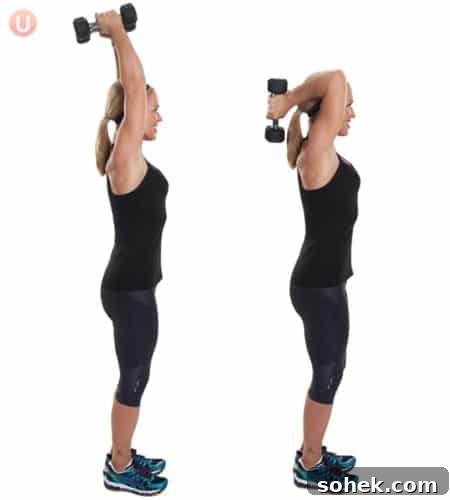
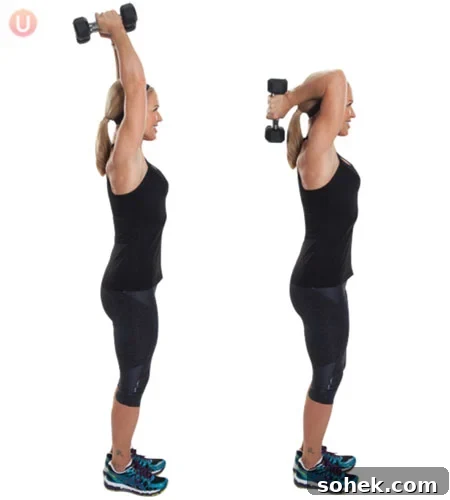
- Grip a dumbbell with both hands (palms facing up as if cupping the handle) and lift it overhead, fully extending your arms so the weight is directly above your head.
- Keep your elbows close to your ears to properly target the triceps and reduce shoulder strain.
- Slowly bend at the elbows, lowering the dumbbell behind your head toward your upper back. Keep your upper arms stable and elbows pointing up.
- When your elbows reach about 90 degrees (or as far as comfortable), pause briefly, then extend your arms to return to the starting position, squeezing the triceps at the top.
Reps and sets:
- Aim for 12–15 repetitions and perform 2–3 sets.
- Choose a weight that challenges you while allowing clean form—you should feel the work in your triceps near the end of each set.
Pro tips:
- Practice this exercise 2–3 times per week for consistent progress.
- Keep your elbows from flaring outward; flared elbows reduce effectiveness and can strain the shoulders.
- If you feel neck or shoulder discomfort, reduce weight or try alternative tricep moves like kickbacks or dips.
- If you experience lower back strain, adopt a split stance with one foot slightly in front of the other for more stability.
Tips for Doing Overhead Tricep Extensions
- Start light to learn the full range of motion and proper form. Increase weight gradually as your technique improves. Resistance bands are a useful alternative for beginners.
- Include overhead tricep extensions within a full-body routine or pair them with other tricep moves to create an arm-focused session.
- Combining overhead extensions with exercises such as the tricep kickback offers a powerful approach to sculpt and strengthen your upper arms.
Benefits of Tricep Overhead Extension
Incorporating the overhead tricep extension into your workouts delivers several benefits:
Strengthens Triceps
This exercise directly challenges the triceps, helping you build strength and tone. Using a light to medium weight, the triceps are primed to handle pushing movements and everyday tasks more efficiently.
Supports Shoulder Stability
While the triceps are the primary target, shoulder muscles assist in holding the weight overhead. Focus on keeping the shoulder blades down and back rather than shrugging toward the ears to maintain good shoulder mechanics.
Engages Upper Back
The upper back contributes to stabilizing your posture during the movement. Engaging these muscles helps maintain form, prevents excessive shoulder use, and reduces the risk of pinching or discomfort.
Easy Ways to Incorporate Tricep Overhead Extensions Into Your Workouts
Overhead tricep extensions work well on their own or combined with other exercises. They’re easy to add to upper-body days, full-body circuits, or targeted arm sessions.
Sample pairings and progressions:
- Combine with tricep kickbacks and tricep dips for a focused arm routine.
- Add overhead extensions into a circuit with bicep curls, lateral raises, and shoulder front raises for a balanced upper-body session.
- Use them at the end of a workout to finish your triceps with controlled, higher-rep sets.
How Many Calories Does a Tricep Overhead Extension Burn?
Strength training exercises like overhead tricep extensions don’t burn as many calories during the movement as intense cardio, but they build muscle, which increases resting metabolic rate over time. The harder and more intensely you train overall, the more calories you’ll burn. Focus on consistent resistance work to improve body composition and long-term calorie burn.
Final Thoughts
Strong arms are about more than appearance—they support daily activities, independence, and confidence. Overhead tricep extensions are a simple, effective exercise to help you build functional strength and sculpt your upper arms. With regular practice and attention to form, you’ll see gradual improvements in tone and performance. Keep progressing safely and enjoy the benefits of stronger triceps.