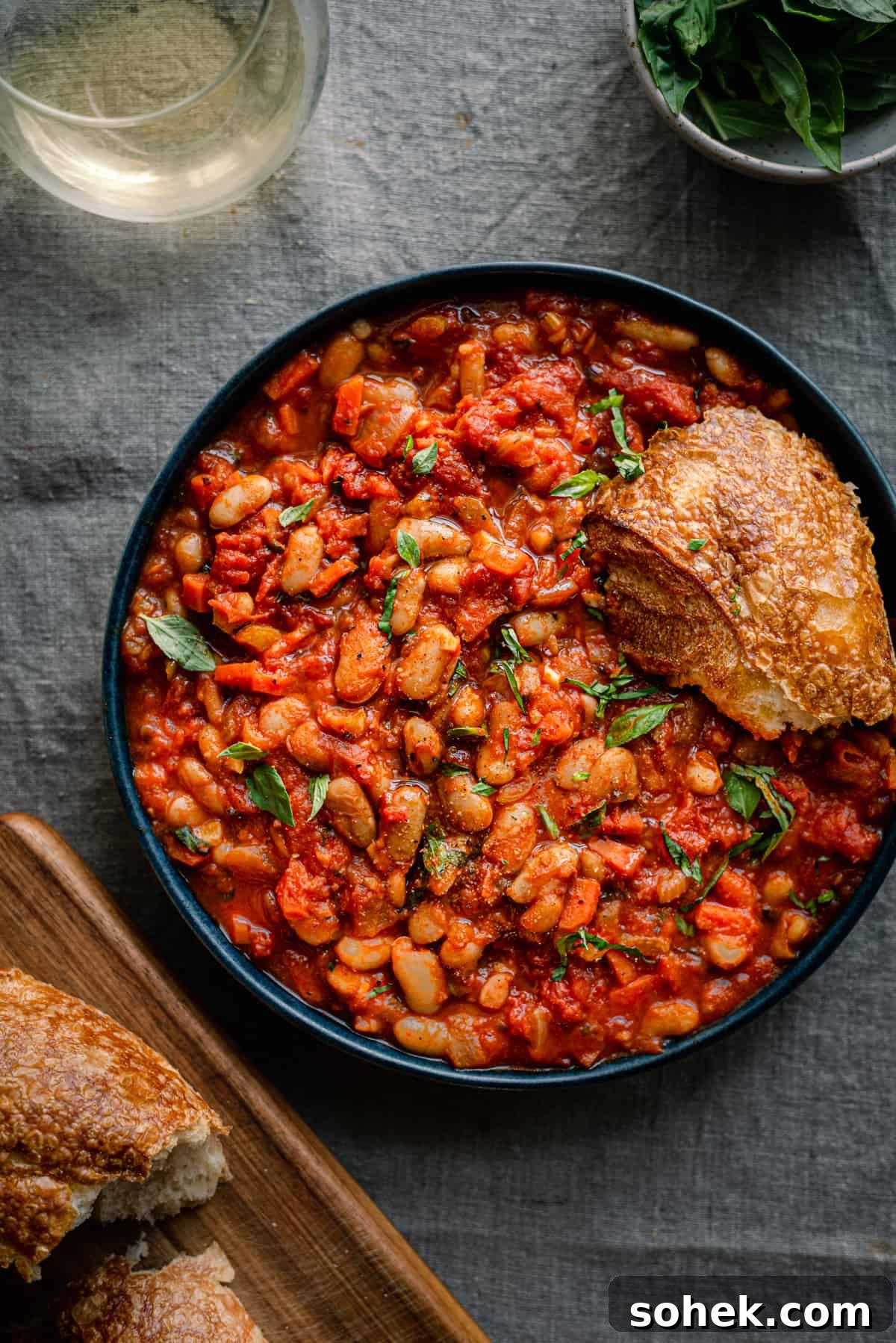
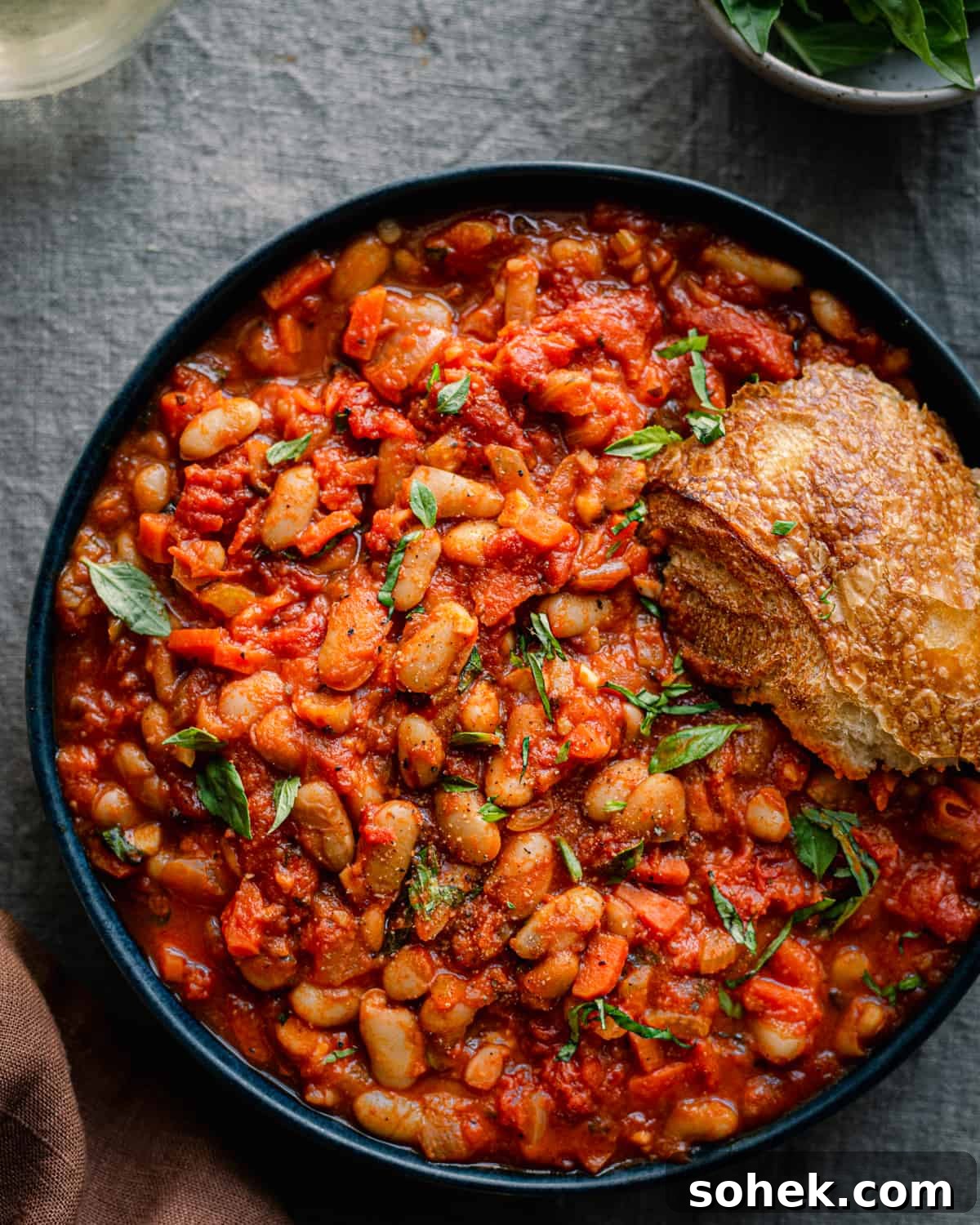
One of my favorite cuisines is rustic Italian cooking, and these Tuscan Stewed Beans are my newest obsession.
With a handful of simple, budget- and pantry-friendly ingredients—onion, carrots, celery, garlic, fresh herbs, tomato paste, canned tomatoes, white wine, and cannellini beans—this stew cooks down until the vegetables are sweet and jammy and the tomatoes concentrate into a rich, savory base. The beans are added and simmered until the whole pot becomes almost creamy and unbelievably flavorful.
This recipe fills your kitchen with the smell of an Italian trattoria and quickly becomes a favorite for chilly days.
Table of Contents
1. What are Tuscan Stewed Beans?
2. Why you’ll love this recipe
3. Ingredient notes
4. Step-by-step instructions
5. Tips for making this recipe
6. Frequently Asked Questions
7. Recipe card with notes
What are Tuscan Stewed Beans?
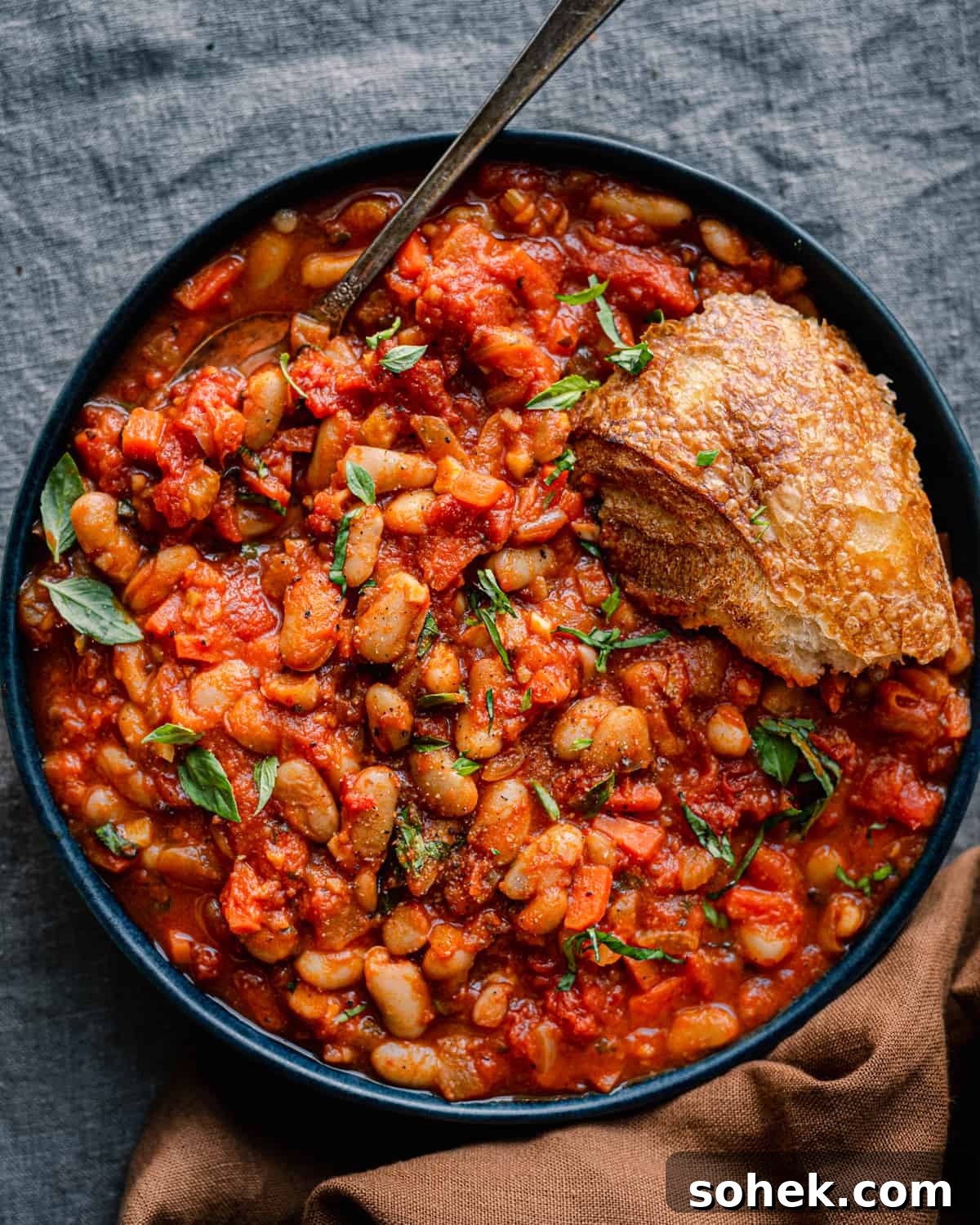
This is a rustic Italian-inspired stew that draws on flavors from Tuscany, particularly dishes from Livorno. It was inspired by regional Italian cooking and adapted here into a plant-based version that celebrates simple, high-quality ingredients rather than trying to replicate seafood or meat.
The stew leans on a traditional soffritto—onion, carrot, and celery—bright garlic and fresh herbs, concentrated tomato paste, and whole canned tomatoes cooked down until thick and jammy. Cannellini beans finish the dish, giving it a creamy texture and hearty body.
Why you’ll love this recipe
A Wholesome Hug in a Bowl
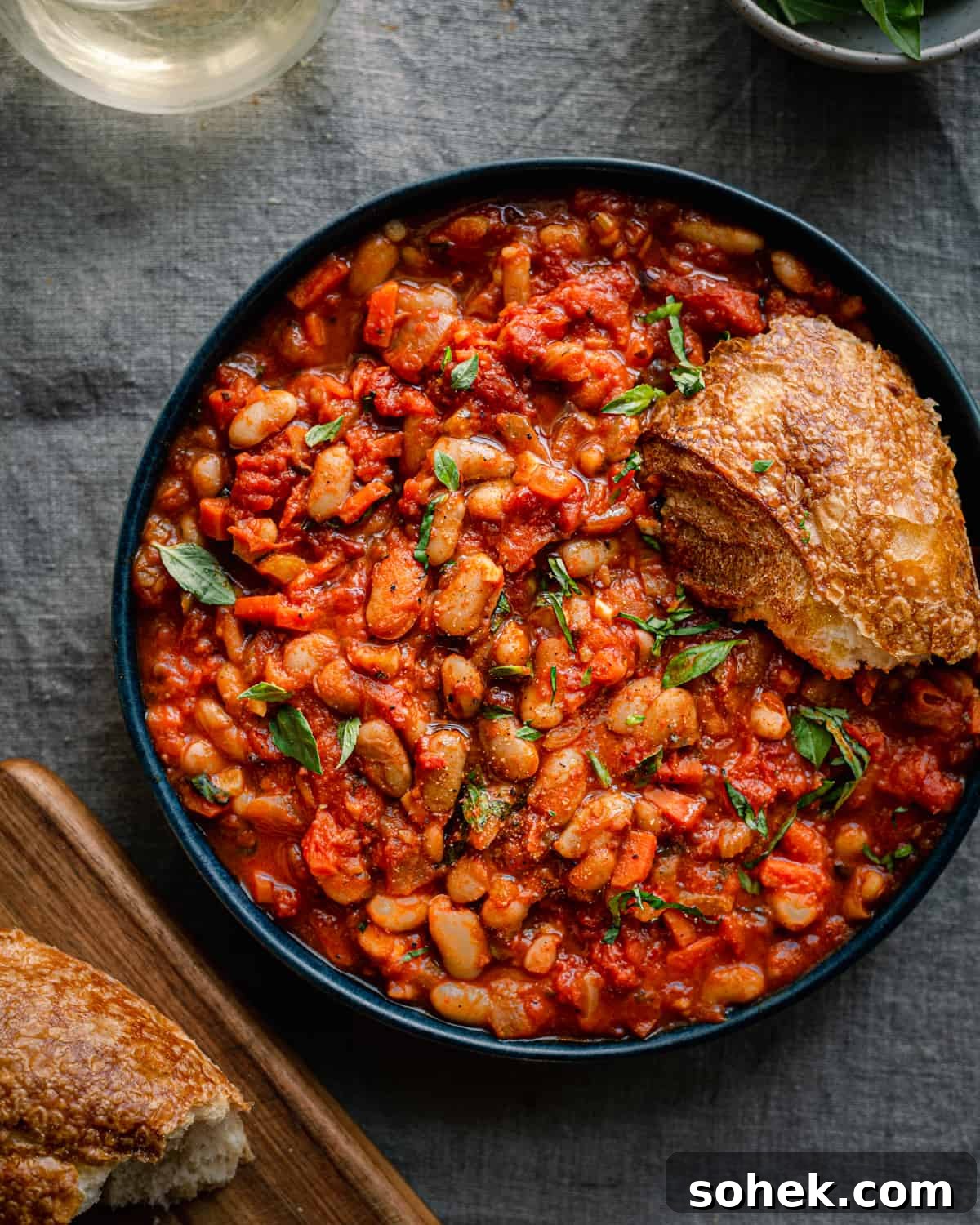
This is cozy winter food that’s both indulgent and wholesome. It’s made from pantry staples—beans, aromatics, tomatoes, olive oil, and broth—plus a splash of dry white wine for depth. The texture is thick and jammy, with comforting Italian flavors in every spoonful.
Rich Italian Flavor
Caramelized onions build the first layer of flavor, then carrot and celery add sweetness and structure. Garlic, red pepper flakes, and fresh herbs boost aroma; a generous amount of tomato paste provides umami; and slow simmering melds everything into a deeply flavored stew with sweet-tangy tomato notes and herb-scented warmth.
Allergen-, Prep-, and Freezer-Friendly
This recipe is vegan, gluten-free, nut-free, and soy-free. It’s great for meal prep and freezes well, so you can make a big batch and reheat portions throughout the week.
Ingredient notes
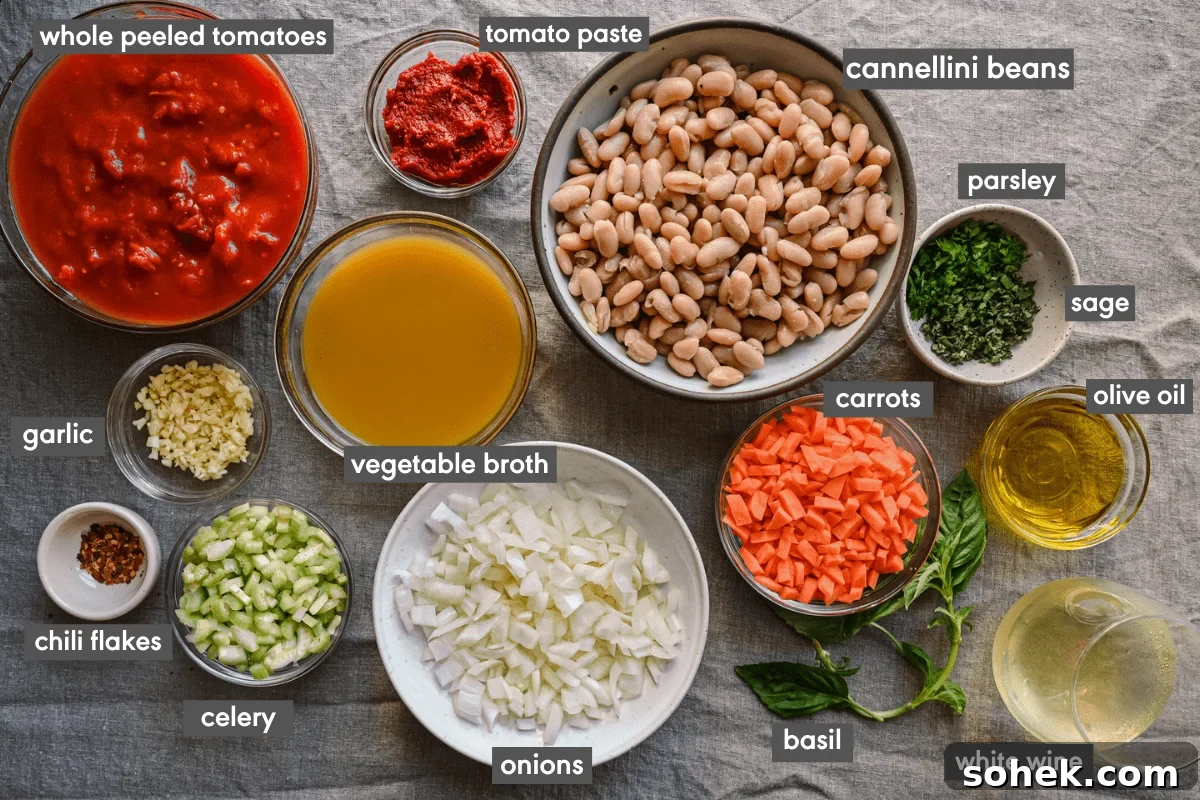
Soffritto. The base of the stew is a classic soffritto—onion, carrot, and celery gently sautéed in olive oil. This creates a savory foundation used across Italian soups, stews, and sauces.
Garlic and fresh herbs. Fresh sage and parsley are used here. If you can’t find sage, rosemary is a good substitute; dried herbs are less aromatic, so prefer fresh when possible.
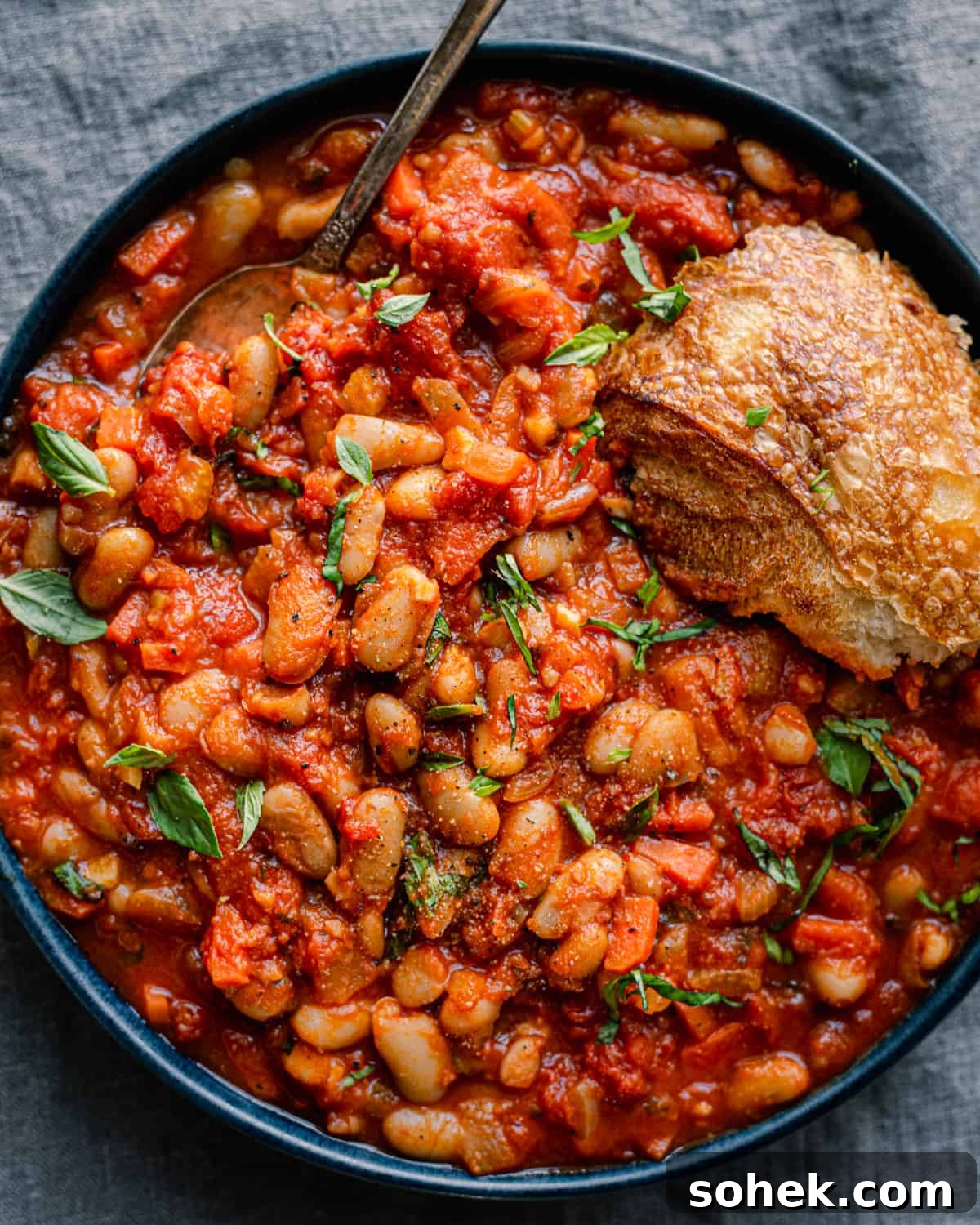
Cannellini beans. These creamy white beans give the stew its luxurious texture. They may be labeled “white kidney beans” in some regions; any white bean will work in a pinch.
Dry white wine. Wine brightens aromatics and releases flavor compounds from the tomatoes. Choose a dry, crisp white like Pinot Grigio, Sauvignon Blanc, or Pinot Gris. If you avoid alcohol, see the FAQ for substitutions.
Tomato paste. Tube tomato paste is recommended because canned tomato paste can carry a subtle metallic taste. Tube paste tastes fresher and mixes into the stew more smoothly.
Whole peeled canned tomatoes. Whole tomatoes offer better flavor and texture than pre-diced or crushed varieties, which often contain additives. Since this is a tomato-forward dish, use the best canned tomatoes you can find.
Step-by-step instructions
1. Heat 1/4 cup extra virgin olive oil in a Dutch oven or heavy pot over medium heat. Add 1 chopped medium yellow onion with a pinch of salt and cook, stirring occasionally, until golden, about 7–8 minutes.
2. Add 2 peeled, finely chopped carrots, 2 diced celery ribs, and 4 chopped garlic cloves. Cook 3–4 minutes until softened.
3. Stir in 1/2 teaspoon red pepper flakes, 1/4 cup minced flat-leaf parsley, and 1 tablespoon minced fresh sage. Cook 1 minute until fragrant.
4. Add 4 1/2 tablespoons tomato paste (from a tube if possible) and stir almost constantly for 1–2 minutes until it darkens and begins to caramelize.
5. Pour in 3/4 cup dry white wine and scrape up any browned bits from the bottom of the pot. Simmer until the wine aroma dissipates, about 3 minutes.
6. Add one 28-ounce can whole peeled tomatoes (crushed by hand), 1 teaspoon kosher salt, freshly cracked black pepper, and 1 bay leaf. Simmer rapidly, stirring occasionally, until most of the tomato liquid has evaporated and the tomatoes have broken down, about 12–13 minutes.
7. Add 1 1/2 cups vegetable broth and two 15-ounce cans cannellini beans (drained and rinsed). Reduce heat to low, cover, and simmer gently for 30 minutes, stirring occasionally. For a thicker texture, mash a small portion of the beans with the back of a spoon toward the end of cooking.
8. Taste and adjust seasoning; add a pinch of sugar only if the tomatoes are overly acidic. Remove the bay leaf and stir in 1/2 cup slivered fresh basil before serving.
Tips for making this recipe
Use the best tomato products you can
Because this dish depends on a few high-impact ingredients, use high-quality whole peeled tomatoes and tube tomato paste when possible. If your tomatoes are very acidic, taste the finished stew and add a small pinch of sugar if needed.
Don’t skimp on the olive oil
Extra virgin olive oil helps caramelize the onions and adds a luxurious mouthfeel. It’s the only fat in the dish and contributes significantly to the overall flavor and texture.
Adjust the texture
If you prefer a looser stew, add 1/2 to 1 cup (120–240 mL) more vegetable broth or water during the simmer.
Frequently Asked Questions
Use half the amount of no-sugar-added white grape juice (it’s sweeter, so use less), or mix 1/2 cup vegetable broth with 2 tablespoons white wine vinegar for a non-alcoholic alternative. These swaps will work, though they won’t replicate the exact complexity wine provides.
Yes. Finely chopped lacinato (Tuscan) kale is a natural addition—stir it in during the last 5 minutes of cooking and let it wilt into the stew.
Store in an airtight container for 5–6 days. Reheat gently on the stove over medium heat or in the microwave until warmed through.
Yes. Cool the stew, portion it into airtight containers or freezer-safe molds, and freeze for up to 4 months. Defrost in the fridge overnight or reheat from frozen on the stove until warmed through.
Tuscan Stewed Beans

Ingredients
- 1/4 cup (56 mL) extra virgin olive oil
- 1 medium yellow onion, chopped
- 2 medium or large carrots, peeled and finely chopped
- 2 celery ribs, diced
- 4 garlic cloves, finely chopped
- 1/2 tsp red pepper flakes
- 1/4 cup (4g) flat-leaf parsley, minced
- 1 tbsp minced fresh sage
- 4 1/2 tbsp (67g) tomato paste (tube recommended)
- 3/4 cup (180 mL) dry white wine
- 1 (28-ounce/800g) can whole peeled tomatoes, crushed by hand
- 1 tsp kosher salt, plus more to taste
- Freshly cracked black pepper
- 1 bay leaf
- 1 1/2 cups (360 mL) vegetable broth, plus more as desired
- 2 (15-ounce/425g) cans cannellini beans, drained and rinsed
- 1/2 cup (8g) fresh basil, slivered
Instructions
- Heat the olive oil in a Dutch oven over medium heat. Add the onion with a pinch of salt and pepper and cook 7–8 minutes until golden.
- Add the carrot, celery, and garlic with another pinch of salt and cook 3–4 minutes.
- Stir in red pepper flakes, parsley, and sage and cook about 1 minute.
- Add the tomato paste and cook, stirring almost constantly, 1–2 minutes until it darkens.
- Pour in the white wine and deglaze the pan, scraping up browned bits. Simmer until the wine aroma fades, about 3 minutes.
- Add the crushed tomatoes with juices, bay leaf, 1 tsp kosher salt, and cracked black pepper. Simmer rapidly, stirring often, until most liquid has evaporated, 12–13 minutes.
- Add vegetable broth and the drained beans. Reduce heat to low, cover, and simmer 30 minutes, stirring occasionally. For a thicker stew, mash a small portion of the beans near the end of cooking.
- Taste and adjust seasoning, adding a pinch of sugar only if needed. Remove the bay leaf, stir in basil, and serve.
Notes
* Tube tomato paste is recommended because canned paste can taste metallic; tube paste has a fresher tomato flavor.
** If avoiding alcohol, use half the amount of no-sugar-added white grape juice, or mix 1/2 cup vegetable broth with 2 tbsp white wine vinegar as a substitute.
*** If basil isn’t available, substitute flat-leaf parsley.
Nutrition
Calories: 472 kcal | Carbs: 59 g | Protein: 18 g | Fat: 16 g | Sodium: 1117 mg | Fiber: 14 g
Nutrition information is an estimate.